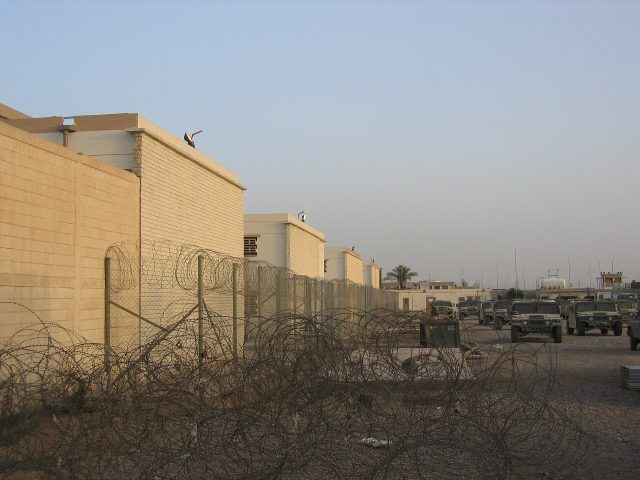
Al-Faw Palace in Abu Ghraib is one of those places that feels suspended in time, a silent witness to an era of ambition and upheaval. Built in the late 20th century, it was conceived as a symbol of power, a statement of authority meant to endure. Yet history had other plans. Today, the palace stands as a relic of a fallen regime, a reminder of how swiftly fortunes can shift—for individuals, for nations, for the very ideas that once seemed unshakable.
The architecture is unmistakably of its time: grand, imposing, and designed to overwhelm. Massive columns rise toward high ceilings, vast halls stretch into the distance, and every detail seems calculated to project strength. Inside, the remnants of opulence remain—marble floors, plasterwork, faded murals that once celebrated the ruler’s stature. But time has not been kind. Paint peels from the walls, corners gather dust, and the grandeur now feels hollow, as if the building itself is slowly surrendering to the weight of its own history.
This was never just a residence. Al-Faw was part of a larger complex intended for high-ranking officials and foreign dignitaries, a stage for diplomacy and statecraft. Its halls were meant to impress, to convey authority through sheer scale and luxury. Meetings were held here, decisions made, and guests left with the intended impression of a regime at its peak. But when that regime collapsed, the palace was abandoned, its purpose forgotten. Now, its walls hold stories that may never be fully told—whispers of power, ambition, and the quiet moments in between.
The surrounding area carries its own complicated legacy. Abu Ghraib is a name that evokes strong associations, many of them difficult, tied to events in the early 2000s. Yet the palace itself sits apart from the town’s more troubled reputation, isolated in a semi-arid landscape where the wind moves cautiously, as if reluctant to disturb the stillness.
There are no crowds here, no noise, just the occasional rustle of dry grass and the distant hum of a place that has been left behind.
Visiting Al-Faw is not like visiting a typical tourist site. There are no guided tours, no gift shops, no carefully curated exhibits. The palace is open to those who seek it out, though few do. Most who come are drawn not by the architecture itself, but by the history it represents—the kind that exists in the margins of official narratives. Inside, you can wander through empty chambers, trace the outlines of what once was, and try to imagine the palace in its prime.
The experience is less about admiration and more about reflection, a chance to stand in a space where the past feels almost tangible.
There is no heavy security here, no barriers keeping visitors at a distance. That absence of formality adds to the palace’s strange atmosphere. You are left alone with the silence, the dust, and the sense that time has stopped moving forward in this place. For some, it may feel unsettling. For others, it offers something rare: a direct encounter with history, stripped of polish and pretense.
Is it worth visiting? That depends on what you’re looking for. If your idea of travel includes more than ancient ruins and museum pieces—if you’re curious about the layers of history that lie just beneath the surface—then Al-Faw might surprise you. It won’t dazzle you, but it will make you think. About how quickly the world changes. About how easily the past can be forgotten. And about the quiet power of places that refuse to be erased, even when the stories they hold are left untold.