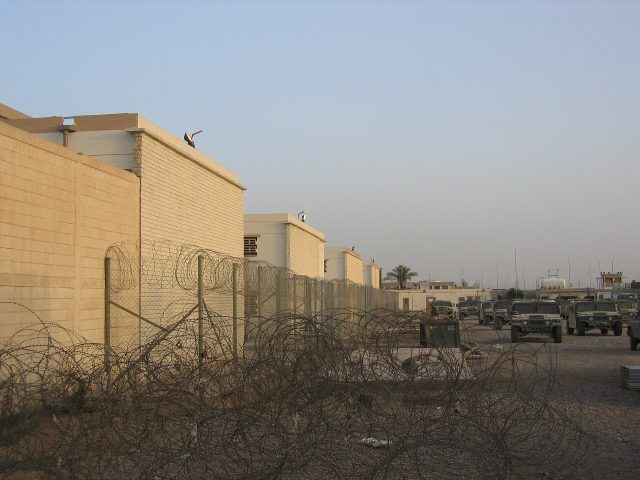
Al-Nukha Mosque in Abu Ghraib is the kind of place that rarely makes it into guidebooks, yet it’s in these quiet corners where you can still catch the unfiltered pulse of Iraq. Tucked away on the outskirts of a small town, far from the clamor of Baghdad’s highways, it feels as though time moves at its own unhurried pace here. The mosque itself is modest, but its minaret rises above the flat rooftops of the surrounding houses, a silent beacon for those seeking a moment of calm in the midst of daily life.
The story of Al-Nukha is woven into the fabric of Abu Ghraib itself. The town, now often associated with more recent and troubled history, has roots that stretch much deeper. It began as a settlement along ancient trade routes linking Mesopotamia to Syria, a crossroads where cultures, faiths, and peoples have mingled for centuries. The mosque, named after the prophet Nuh—known as Noah in the biblical tradition—likely dates back to a period when Islamic architecture flourished in the region, though its exact origins have faded with time. Some suggest it was built during the Ottoman era, when many such structures were erected across Iraq, but locals speak of it as if it has always been here, as much a part of the landscape as the palm trees or the dusty roads.
The architecture of Al-Nukha is simple and practical, much like many provincial mosques in Iraq. Built from mud brick, a material used in these parts since time immemorial, the walls keep the interior cool in the scorching summers and warm during the brief winters. The minaret is slender, tapering slightly toward the top, adorned with the kind of understated geometric patterns common in rural mosques. Inside, the prayer hall is spacious but low-ceilinged, supported by columns, with carpets covering the floor and walls left bare. There’s no gilding or intricate tilework like in the grand mosques of Baghdad or Najaf, but that simplicity is precisely what gives the place its quiet dignity.
For the people of Abu Ghraib, Al-Nukha is more than just a place of worship. It’s a hub of community life, where people come not only to pray but to talk, share news, settle disputes, or simply sit in the shade of the courtyard watching children play. On Fridays, the mosque fills with worshippers, and its courtyard becomes a kind of town square, where neighbors gather, vendors bring their goods, and elders recount stories. In those moments, it’s clear how faith and daily life intertwine here—not as something separate or performative, but as an organic part of existence.
Abu Ghraib itself is a town with a complicated reputation. In recent decades, its name has often been tied to conflict and hardship, shaping how outsiders perceive it. But those who have spent time here know that beyond the headlines, life goes on in its ordinary rhythms: children walking to school, women haggling at the market, men sipping tea in the shade of trees. Al-Nukha Mosque stands as a symbol of that everyday resilience, a reminder that even in difficult times, people continue to live, work, and find moments of peace.
The mosque is nestled in one of Abu Ghraib’s older neighborhoods, where narrow streets wind between tightly packed houses made of mud and straw, their walls holding the warmth of generations. There are no wide boulevards or modern buildings here, just a maze of alleys where it’s easy to lose your way but where every turn reveals something small and unexpected—a spice shop, a clock repair stall, a courtyard where old men sit beneath a date palm. The mosque sits at the heart of this labyrinth, its presence lending the area a sense of steadiness.
Visiting Al-Nukha means seeing Iraq without the gloss of tourism. There are no guided tours, no crowds of foreigners, no souvenir stands—just the quiet, broken only by the call to prayer or the rustle of palm fronds in the wind. For those used to the noise of big cities, it might feel unsettling at first, even uncomfortable. But it’s in this stillness that the true character of the place reveals itself. The mosque doesn’t try to impress; it simply exists, as do the people who come here day after day.
In recent years, Iraq has begun to open up to travelers, drawing visitors eager to explore its ancient Mesopotamian ruins, its sacred Shiite cities, or the footsteps of legendary rulers. Yet those who venture into places like Abu Ghraib often leave with some of their most vivid memories. Not because there’s anything architecturally or historically extraordinary here, but because it’s where you can feel the quiet, persistent rhythm of life away from the well-trodden paths. Al-Nukha Mosque is just one of many such places, but it’s these unassuming spots that make a journey truly unforgettable.