The José Peón Contreras Theatre in Mérida is one of those rare places that feels suspended in time, as if the early 20th century never quite faded away. More than just a building, it has long been a cornerstone of Yucatán’s cultural life, where art and history intertwine with the rhythms of the city. Even today, the theatre remains alive with activity—concerts, plays, and festivals fill its schedule, and each time its doors open, the auditorium seems to breathe with the same energy it did over a hundred years ago.
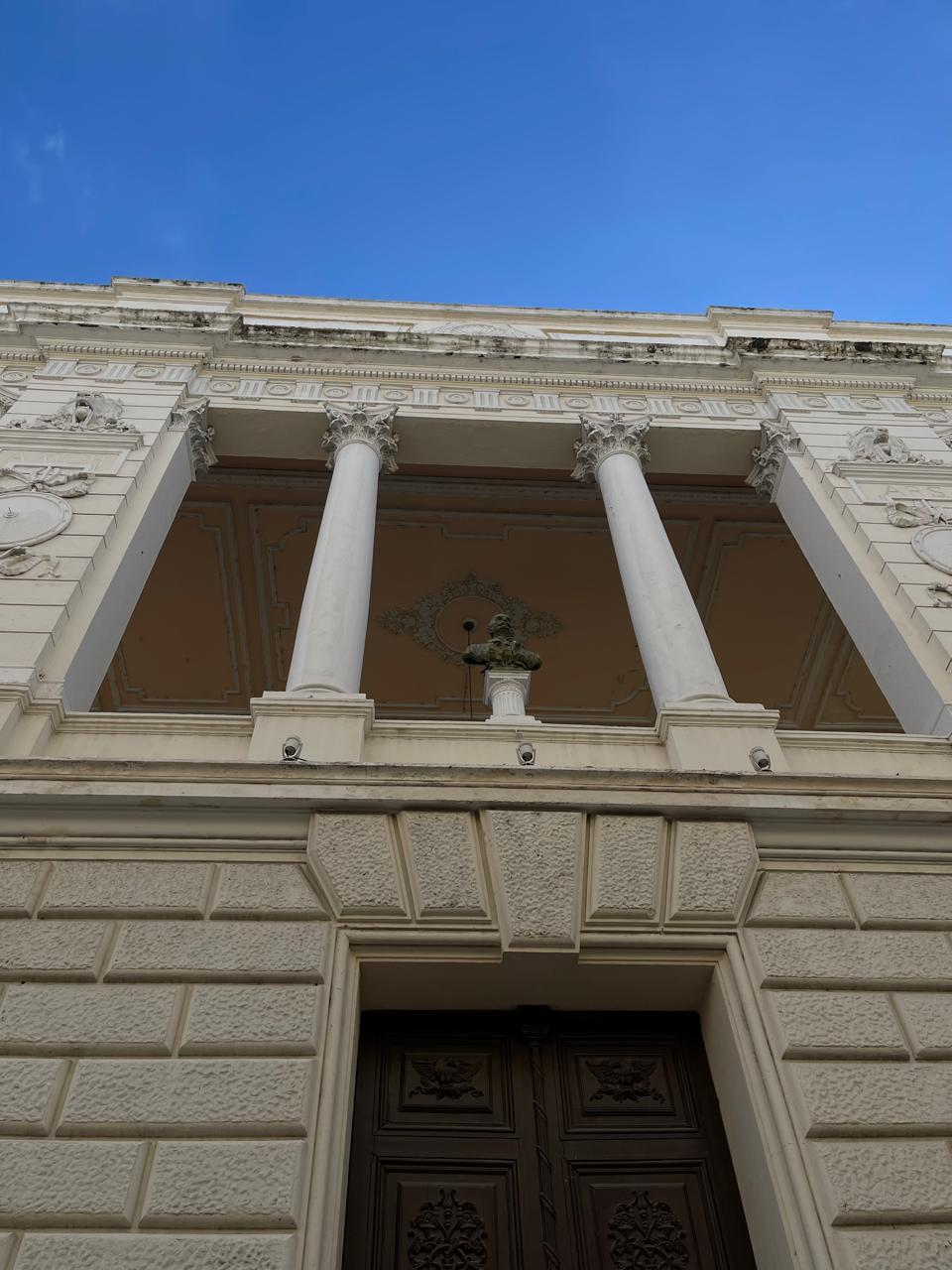
The architecture reflects a blend of European elegance adapted to the tropics and local sensibilities. The façade, with its columns and intricate stucco work, echoes the grand theatres of 19th-century Europe, yet the details reveal a distinctly Yucatecan touch, shaped by colonial influences. Inside, the space is designed to draw the audience into the performance: soaring ceilings, comfortable seating, and acoustics fine-tuned for live sound. Even now, the hall impresses not with opulence, but with the care put into every element, from the curve of the balconies to the warmth of the wooden trim.
The theatre takes its name from José Peón Contreras, one of Mexico’s most celebrated playwrights and poets of the late 19th and early 20th centuries. His work was deeply rooted in Yucatán, and Mérida in particular inspired many of his plays. Contreras wasn’t just a writer—he was a cultural force in the region, and naming the theatre after him was a natural choice. His legacy lingers in the building’s walls, a reminder of how literature and performance can bridge generations.
Mérida has always been a city where culture holds a special place. When the theatre opened in the early 1900s, Yucatán was experiencing an economic boom driven by henequen, a fiber used to make rope and sacks. The wealth from this industry allowed the city to flourish, and the theatre became a symbol of that prosperity. Alongside other cultural institutions that emerged during this period, the José Peón Contreras Theatre stood out as a gathering place for locals and visitors alike, drawing audiences from across Mexico and beyond.
Today, the theatre remains a vital part of Mérida’s cultural scene. Beyond plays and concerts, it hosts lectures, exhibitions, and festivals. The auditorium often welcomes school groups on field trips, students attending classical music performances, and regulars who treat an evening here as a ritual. The atmosphere hasn’t changed much over the decades—the voices of actors still fill the air, the chandeliers still cast their soft glow, and time seems to move at its own pace within these walls.
In recent years, the theatre has also become a point of interest for those studying Mexico’s architectural and cultural history. A careful restoration preserved original details like the ceiling frescoes and wooden panels, making the building appear almost new while retaining its storied past. It’s a place where the craftsmanship of a bygone era is still visible, from the hand-carved moldings to the way light filters through the windows.
Visiting the theatre isn’t just about catching a show. Occasionally, guided tours offer a deeper look at the building’s history, its architectural nuances, and how Mérida’s cultural life has evolved over the past century. Even if you don’t time your visit with a performance, stepping inside is worth it—even for a few minutes. The space carries a sense of history that’s palpable from the moment you enter.
Mérida is a city where past and present coexist seamlessly, and the José Peón Contreras Theatre is one of the best examples of that balance. It doesn’t chase modernity or trends; it simply continues to do what it was built for—bringing art to the people. In an age where so much feels fleeting, that quiet consistency is its greatest strength.