Dzibilchaltún is one of those places on the Yucatán Peninsula where time seems to slow down. Just a thirty-minute drive from Mérida, this ancient Maya city doesn’t have the fame of Chichén Itzá or Uxmal, and that’s part of its quiet charm. The ruins here aren’t roped off like museum exhibits—they’re woven into the landscape, half-hidden by thick vegetation, as if the jungle itself is still deciding whether to reclaim them. Dzibilchaltún was one of the largest Maya settlements in northern Yucatán, with a history stretching back over two thousand years, from early villages to its peak during the Classic period and its gradual decline after the Spanish arrived.
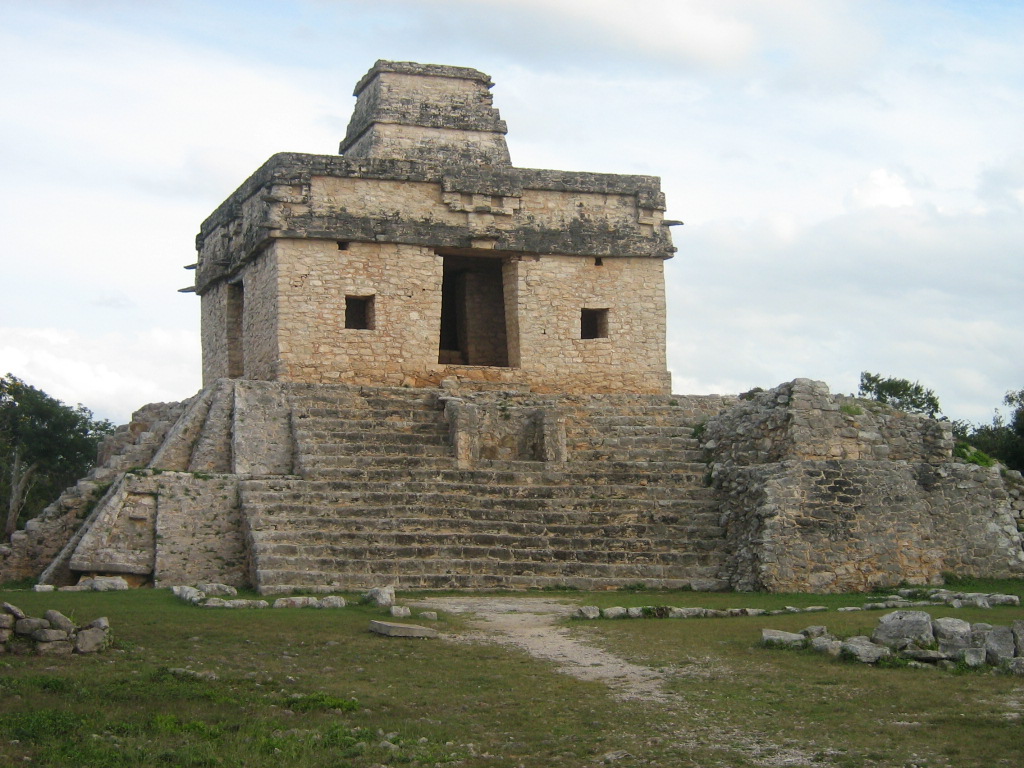
The architecture here isn’t about grand scale. Instead, there’s a kind of understated harmony in the way the structures blend with their surroundings. The most notable building is the Temple of the Seven Dolls, named for the small clay figures discovered inside. It’s a modest pyramid, its walls still bearing traces of faded murals, with an unusual feature: during the spring and autumn equinoxes, the sun aligns perfectly with its central opening, casting a precise beam of light through the darkness. Nearby, scattered among the trees, are the remains of palaces, platforms, and ceremonial plazas, many still buried beneath the earth or swallowed by the undergrowth.
One of Dzibilchaltún’s most striking features is its cenote, a natural sinkhole that was both a vital water source and a sacred site for the Maya. Unlike the more famous cenote at Chichén Itzá, this one feels secluded, its clear water framed by limestone walls that drop steeply into the depths. Local stories say it was a place of offerings, and archaeologists have found everyday objects and jewelry in its waters. Today, you can swim here, and on a hot day, the cool, still water is a relief after wandering through the ruins.
What makes Dzibilchaltún unusual is how layers of history overlap here. After the Maya civilization faded, Spanish colonists moved in, followed by mestizo settlers. In the colonial era, new buildings were constructed using stones from the old temples, some of which still stand among the trees, creating an odd but fascinating contrast between pre-Columbian and European styles. This mix of eras gives Dzibilchaltún a sense of continuity—it’s not just an archaeological site but a place where the past feels alive, not frozen in time.
Visiting Dzibilchaltún isn’t like ticking off a tourist attraction. There are no rigid paths or crowds, just narrow trails winding through the trees. In the early morning, when the air is still cool and dew clings to the leaves, the place feels especially peaceful. The only sounds are the calls of birds, the rustle of the wind through the branches, and sometimes the distant beat of a drum or the murmur of voices—locals paying their respects. It’s easy to see why the Maya considered this land sacred.
Despite being so close to Mérida, Dzibilchaltún remains overshadowed by more famous ruins. That might be why it still feels authentic. The guides here, many of them descendants of the Maya, don’t just recite facts—they talk about the city as if it’s still part of their world. They point out plants growing among the ruins that are still used today for medicine, cooking, or rituals. There’s no sense of distance between past and present; history here feels like something that’s still unfolding.
If you’re in Mérida, Dzibilchaltún is worth a visit for a glimpse of the Yucatán without the tourist gloss. There are no flashy signs, no souvenir stalls, just the ruins, the jungle, and silence. You could spend hours sitting on the edge of an ancient platform, watching shadows stretch across the ground, or climb down into the cenote to feel the cool water against your skin. Either way, the place leaves you with the sense that you’ve touched something real—not just a landmark, but a living piece of history.