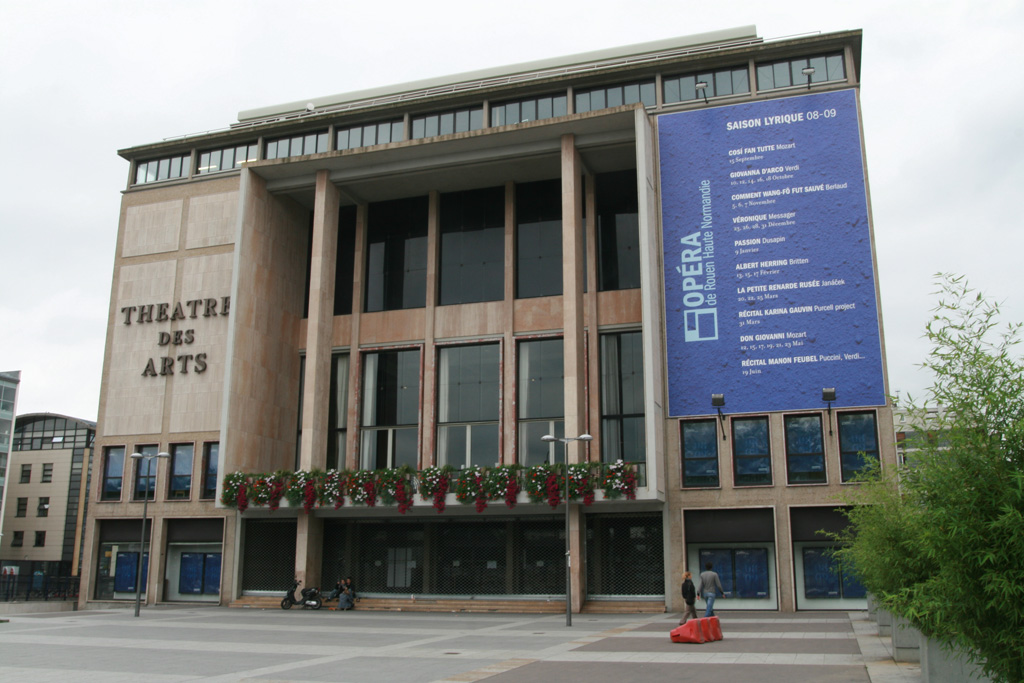
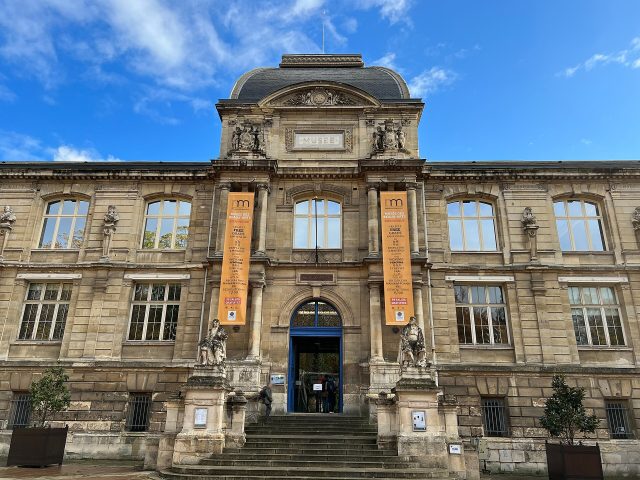
Rouen’s opera house is one of those rare places where the city’s past and present intersect with quiet elegance. Built in the mid-19th century, it has stood for over a hundred and fifty years as a testament to Rouen’s cultural ambitions, a stage not just for performances but for the social rhythms of the city itself. When it first opened, it wasn’t merely a theater—it was a gathering place for Normandy’s elite, a space where aristocrats, artists, and intellectuals mingled between acts, turning each evening into a spectacle of its own. The building’s very presence in the heart of Rouen feels deliberate, as if it were always meant to be the quiet center around which the city’s life revolved.
The architecture is a love letter to the era that birthed it, when grandeur was measured in gilded details and sweeping curves. The facade is adorned with columns and sculptures, their forms softened by time, while the interiors unfold like a carefully staged illusion. The auditorium is the heart of the experience—velvet seats arranged in perfect symmetry, a chandelier that seems to float above the crowd, and frescoes on the ceiling that tell stories without words. Every element, from the carved woodwork to the plush drapes, was designed to transport the audience, not just to another world, but to a version of their own world made more beautiful. It’s easy to imagine the rustle of silk gowns and the murmur of conversation in the foyers, the way the space must have hummed with anticipation before the curtain rose.
Yet the opera house was never just a backdrop for art. In the 19th century, it was where Rouen’s bourgeoisie shaped its identity, where deals were struck over champagne and opinions were formed in the glow of the footlights. The theater reflected the city’s aspirations—its desire to be seen as cultured, sophisticated, connected to the wider currents of European life. Even now, when the way people engage with culture has changed, the opera house remains a place of shared experience. A night here isn’t just about the performance; it’s about the people around you, the way a single note can silence a room, the collective breath held before the applause begins.
Over the years, the stage has welcomed some of the most celebrated names in opera and ballet. Legends like Sarah Bernhardt and Enrico Caruso performed here, their voices filling the auditorium in an age before amplification. Rouen’s audiences were known for their discernment, their ability to recognize greatness—and their willingness to let performers know when they fell short. That tradition hasn’t faded. Today, the program balances the classics with contemporary works, but the expectation of excellence remains. The theater has always been a place where art is taken seriously, where the line between performer and audience is respected, even revered.
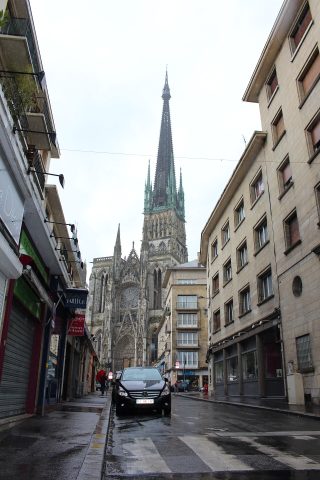
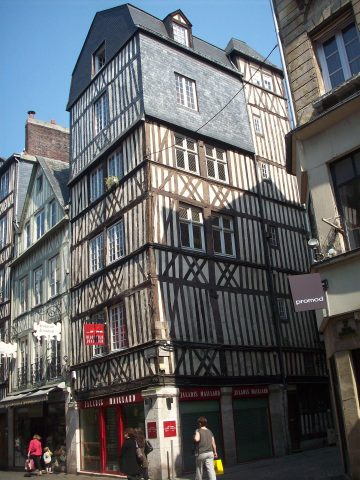
But you don’t have to be an opera aficionado to appreciate the building. Many visitors come simply to wander its halls, to linger in the foyers with a coffee, or to admire the way the light filters through the stained glass. The opera house sits in a pedestrian-friendly part of the city, surrounded by narrow streets that feel untouched by time. It’s an easy stop on a walking tour, a place where you can step inside for a moment and step back out into the rhythm of Rouen’s daily life. The contrast between the opulence of the interiors and the quiet charm of the surrounding neighborhood is part of what makes the experience feel so authentic.
The building has endured more than its share of hardship. During World War II, Rouen was heavily bombed, and while the opera house survived, it bore the scars of the conflict. The post-war restoration was carried out with painstaking care, a deliberate effort to preserve not just the structure but the spirit of the place. Today, it stands as both a working theater and a monument to resilience, a reminder that art has a way of outlasting even the darkest chapters of history. The fact that it continues to function, to evolve, feels like a quiet act of defiance.
For those curious about the theater’s past, the opera house offers more than just performances. It’s a living archive of Rouen’s cultural history, a place where you can trace the shifting tastes of audiences, the scandals that erupted over controversial productions, the triumphs that became local legend. Each season adds another layer to its story, another memory etched into the walls. Even if you’re not particularly drawn to opera, the building itself has a way of drawing you in. It’s as if the weight of all those performances, all those emotions, has seeped into the very stone, making the air feel charged with something intangible.
Today, the opera house remains a vital part of Rouen’s cultural landscape. While it still hosts traditional opera and ballet, its programming has expanded to include symphonic concerts, festivals, and even modern performances that push boundaries. There are initiatives to make the space more accessible—workshops for children, lectures, guided tours—efforts to ensure that the theater doesn’t become a relic but stays relevant. It’s a balancing act, honoring the past while embracing the present, and for the most part, it succeeds.
A visit to Rouen’s opera house is more than just a cultural outing; it’s a chance to connect with the city in a way that feels personal. Whether you come for a performance, a tour, or just to sit in the foyer and watch people pass by, the experience lingers. There’s something about the way the light catches the gilding, the way the acoustics carry even the softest sound, that makes the place feel alive. It’s a reminder that theaters aren’t just buildings—they’re vessels for emotion, for memory, for the quiet moments that define a city. And in Rouen, the opera house has been holding those moments for generations.