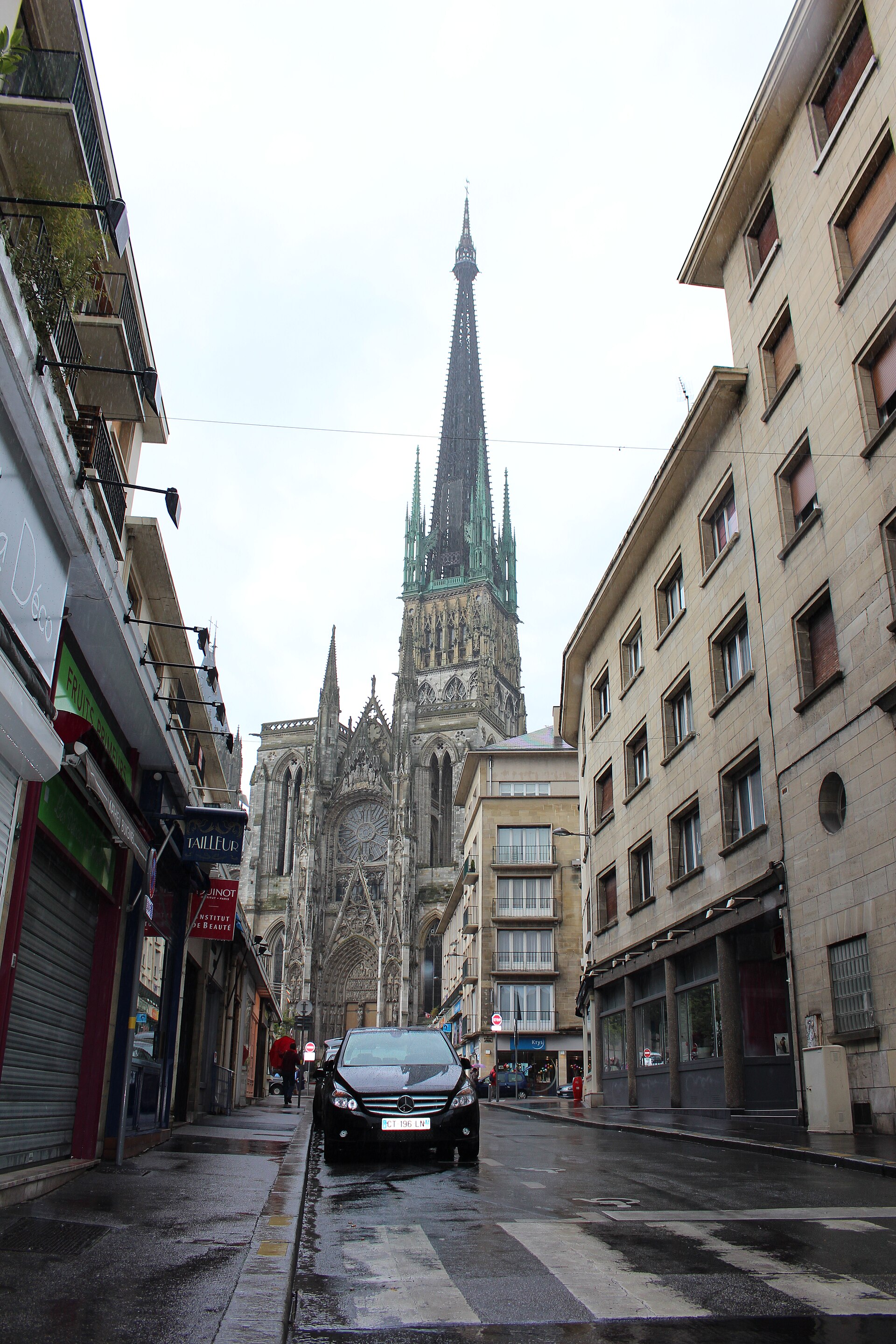
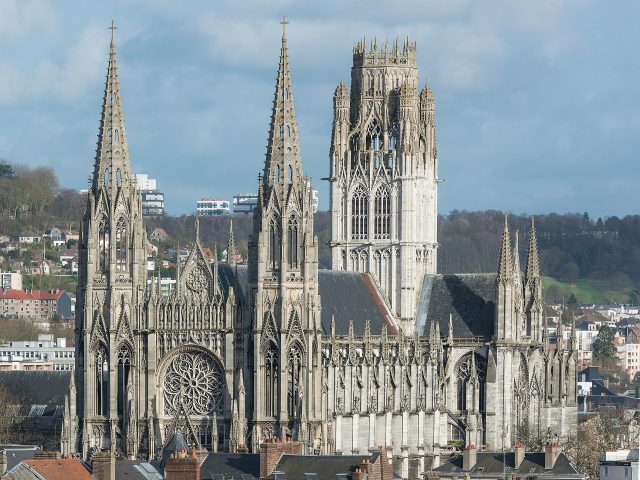
Rouen Cathedral stands as a quiet giant over the city, its spires cutting into the sky like the hands of a clock frozen in time. Built where an older church once stood, it grew slowly, stone by stone, over centuries. The Gothic style that defines it didn’t appear all at once—first came the nave and transept, then the Tour Saint-Romain, and much later, in the sixteenth century, the central tower crowned with its delicate iron spire. For a long time, that spire was the tallest in the world, a testament to the ambition of its builders. Even now, it looms over Rouen, a reminder of how the past once reached for the heavens.
Inside, the cathedral feels vast yet intimate, as if the air itself moves more slowly. The high vaults, supported by slender columns, give the space a sense of weightlessness, while the stained glass filters light into soft, shifting hues. The rose window in the northern transept is particularly striking, its biblical scenes intertwined with figures of Norman dukes. In the side chapels, tombs and monuments line the walls, including the resting place of Richard the Lionheart’s heart, buried here according to his wishes. The stone effigies seem to watch over the space, their stories half-erased by time.
The cathedral has long been a stage for history. Kings were crowned within its walls, and grand ceremonies marked the turning points of nations. During the Hundred Years’ War, it witnessed the coronation of the young Henry VI as King of France, an attempt by England to assert its claim over Normandy. When the region eventually returned to French rule, the cathedral regained its role as a symbol of unity. Its stones have seen power shift, alliances form and fracture, and the slow ebb and flow of empires.
Artists, too, have been drawn to its presence. Claude Monet painted the cathedral’s façade more than thirty times, capturing how light transforms its surface at different hours of the day. His series became one of the defining works of Impressionism, showing how architecture can dissolve into atmosphere. Visitors today often compare the real building to Monet’s paintings, searching for the same fleeting colors and moods that once captivated him. The cathedral, in turn, seems to shift under their gaze, as if still responding to the light.
Yet for all its history, the cathedral remains alive. Services are held regularly, and the sound of the organ—one of the largest in France—fills the space with music that resonates through the vaults. Concerts and exhibitions bring in crowds, blending the sacred with the secular. In summer, the square outside buzzes with festivals and markets, the ancient walls echoing with laughter and conversation. The past doesn’t feel distant here; it simply exists alongside the present.
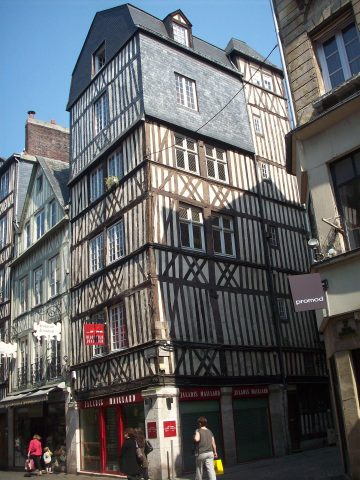
Walking through its halls, you sense the layers of time. The masons who carved the stone, the kings who knelt in prayer, the artists who tried to capture its essence—all left their mark. The city around it, with its narrow streets and half-timbered houses, feels just as rooted in history. Together, they create a place where the past isn’t just remembered but still lingers, waiting in the shadows of the arches and the quiet corners of the chapels. Rouen Cathedral isn’t just a monument; it’s a living conversation between centuries.