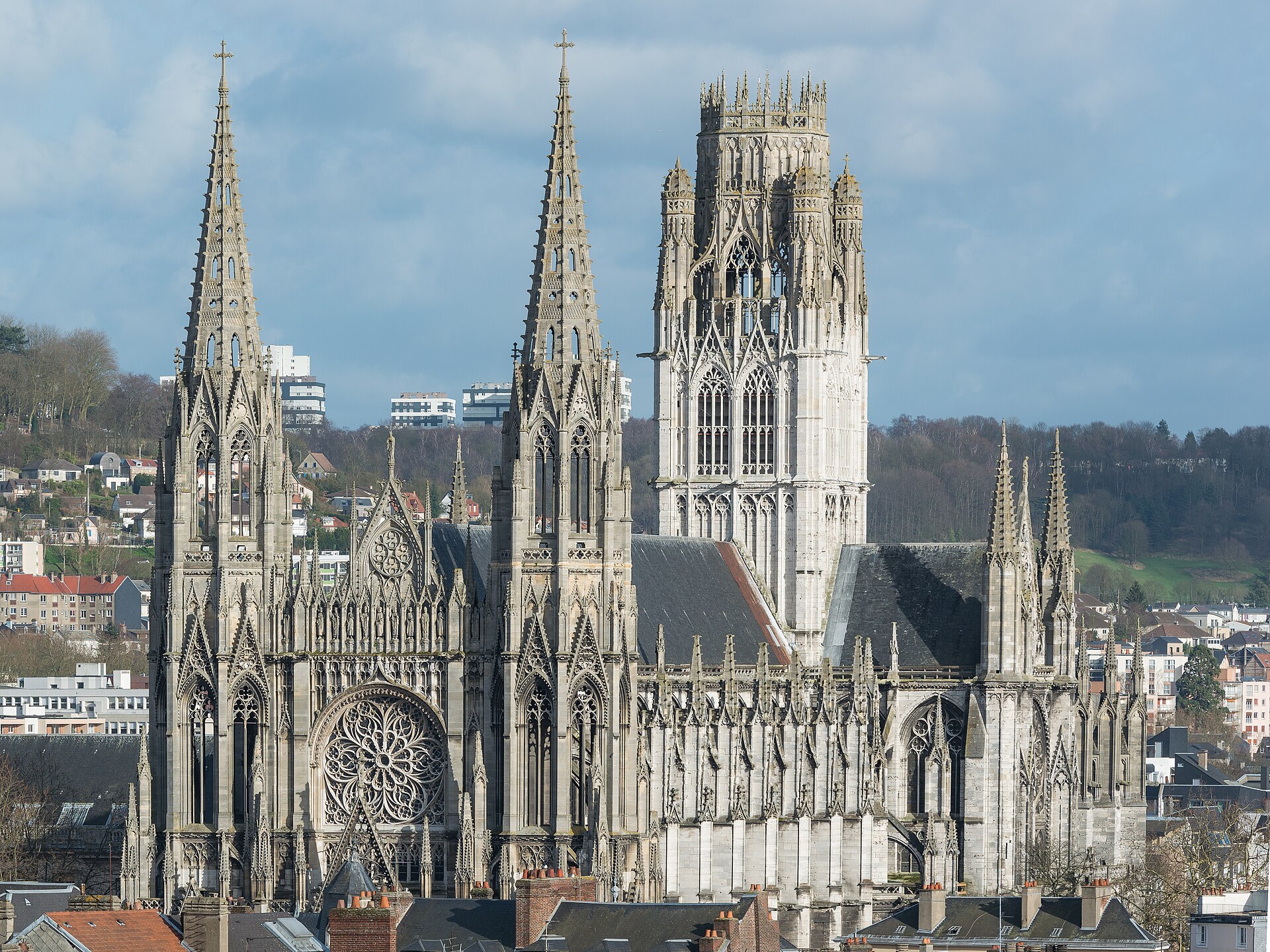
Saint-Ouen Abbey Church in Rouen is the kind of place that makes you pause, even if you’ve never been particularly drawn to Gothic architecture or history. It stands on a square where a medieval market once bustled, now just another spot where people hurry past, their eyes rarely lifting to its towering spires. But if you stop and look up, it becomes clear this is more than just a church—it’s a monument to persistence and faith, built over centuries.
Construction began in the 14th century, when Rouen was one of France’s wealthiest cities, and its merchants and craftsmen dreamed of a cathedral that could rival Paris’s Notre-Dame. Yet the work dragged on for nearly three hundred years, interrupted by wars, plagues, and financial crises. By the time the church took its final form in the 17th century, Gothic architecture had already given way to classicism. The result is something of an anomaly: the façade, with its pointed arches and stained glass, seems frozen in time, while the interior breathes with Baroque opulence.
The church’s greatest treasure is its vast collection of stained glass, much of it dating back to the 15th century. While not as famous as the windows in Chartres or Bourges, they are no less striking. Light filters through the colored panes, bathing the nave in soft hues of blue, red, and gold, creating an atmosphere that makes the outside world feel distant. The most remarkable is the Last Judgment window, where the figures seem almost alive, as if they might stir at any moment.
Inside, the church feels vast and airy. The high vaults, supported by slender columns, draw the eye upward, while the absence of excessive ornamentation keeps the space uncluttered. Unlike other Gothic cathedrals, Saint-Ouen avoids overwhelming detail, favoring clean lines and balanced proportions. The architects seemed to say that quality mattered more than quantity. The side chapels hold ancient tombs and sculptures, but they don’t distract—they only add depth to the experience.
Saint-Ouen is deeply woven into Rouen’s history. During the Hundred Years’ War, when the city was the English capital of Normandy, it was here that English kings were crowned. Joan of Arc was also buried here after her execution, though her trial and death took place at Rouen Cathedral. Still, her name lingers in conversations about Saint-Ouen, as her fate became part of the city’s legend.
The church remains active, with services held every Sunday. On those days, the nave fills with the sound of the organ and choir. On weekdays, it’s quiet, the only noises the occasional footsteps of visitors or the rustle of prayer books. In those moments, Saint-Ouen doesn’t feel like a museum—it feels alive, where past and present coexist.
From the outside, the church appears austere. Its gray stone, weathered by time and rain, contrasts with the bright facades of nearby buildings. Yet this severity gives it a quiet charm. On overcast days, when the sky hangs low over Rouen, Saint-Ouen blends into the cityscape, becoming one with it. In the midday sun, its spires cast long shadows on the cobblestones, a reminder that time here moves differently.
If you enter through a side door, you might find yourself in a small courtyard where monks were once buried. Now it’s peaceful, with only birds flitting between branches. From here, you get an unusual view of Rouen’s rooftops—red tiles, chimneys, and towers stretching into the distance. The city seems to hold its breath, and Saint-Ouen stands as its silent guardian.
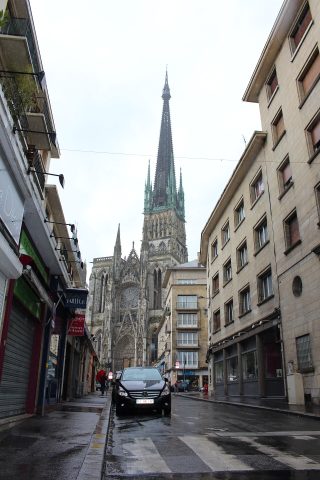
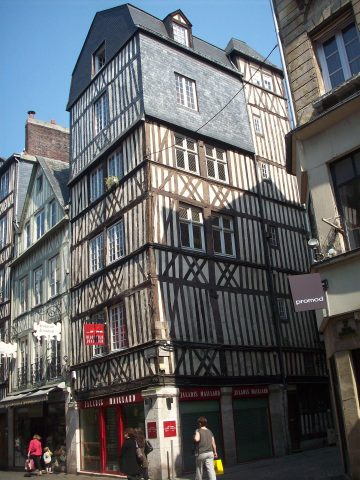
Rouen has many landmarks, but Saint-Ouen is one of those places that doesn’t demand attention. It simply exists, as much a part of the city as the Seine or the half-timbered houses. You could walk past it a hundred times and never notice, or you could stop one day and realize that within these walls, history feels tangible. And then it doesn’t matter how many centuries have passed—the church endures, as all true works of art do.