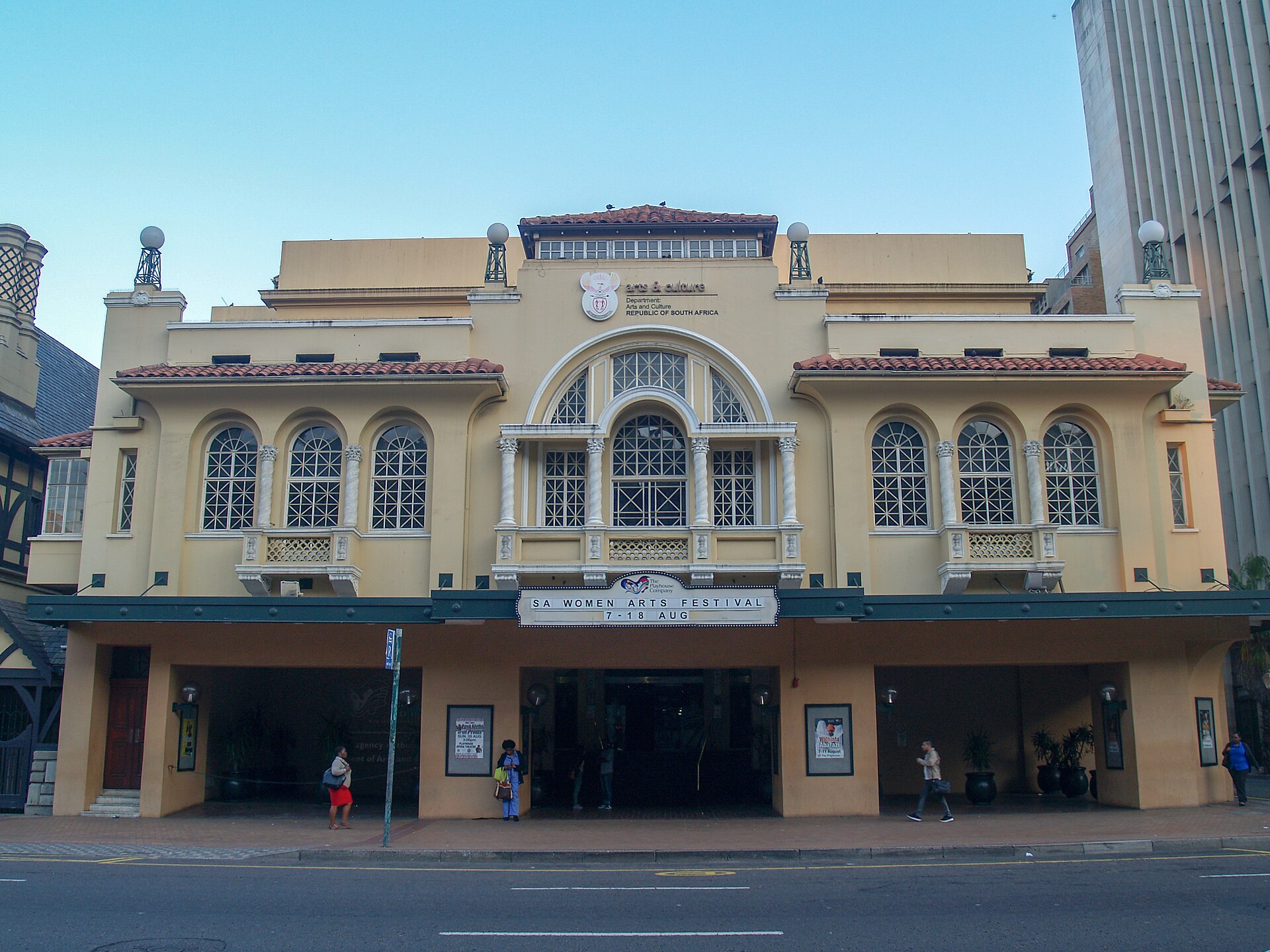
The Playhouse Theatre in Durban is one of those rare places where the city’s past and its cultural heartbeat intersect. Built in the early 20th century, it began as a cinema, a glittering venue for silent films and early talkies, before evolving into something far more enduring. Over the decades, it has grown into Durban’s premier stage for theatre, music, and festivals, its walls holding stories of performances that have shaped the city’s artistic identity. The building itself is a striking example of colonial architecture, its facade adorned with intricate plasterwork and tall, arched windows that hint at the grandeur within. Inside, the interiors have been modernised over the years, yet they still carry the weight of history—wooden panels, vintage chandeliers, and sweeping staircases with wrought-iron railings all contribute to an atmosphere that feels both timeless and alive.
Today, the Playhouse is more than just a theatre; it’s a cultural hub with multiple spaces, each serving a different purpose. The main auditorium, with its vast stage and plush seating, is where large-scale productions come to life—classical operas, Broadway-style musicals, and ambitious contemporary plays all find a home here. The smaller theatre, more intimate in scale, is perfect for jazz nights, poetry readings, or chamber performances where the audience sits close enough to feel the energy of the performers. Then there are the studio spaces, where experimental works and workshops take place, offering a glimpse into the creative process behind the productions. This variety ensures that there’s always something on offer, whether you’re in the mood for a grand spectacle or a quiet, thought-provoking evening.
Durban has long been a city of cultural convergence, where African, Indian, and European influences blend in unexpected ways, and the Playhouse reflects this diversity. Its stage has hosted everything from traditional Zulu dance performances to Shakespearean tragedies, from cutting-edge South African plays to international hits. The theatre has a strong commitment to nurturing local talent, providing a platform for emerging playwrights, directors, and actors. Festivals dedicated to African music, theatre, and film are a regular feature, drawing audiences from across the country and beyond. These events don’t just entertain; they spark conversations, challenge perspectives, and celebrate the richness of the region’s artistic traditions.
For many Durban residents, the Playhouse holds a special place in their memories, particularly those who grew up attending its children’s productions. The theatre has a long-standing tradition of engaging young audiences, offering school programmes and family-friendly shows that introduce children to the magic of live performance. During the summer months, the Playhouse often hosts dedicated children’s festivals, where kids can not only watch plays but also take part in workshops, learning about acting, puppetry, or stage design. These initiatives help foster a love of the arts from an early age, ensuring that the theatre remains a vital part of the community for generations to come.
The architecture of the Playhouse is as much a part of its charm as the performances it hosts. Constructed in the 1920s, the building has undergone several renovations, yet it has managed to retain its historical character. The exterior, with its decorative mouldings and colonial-era details, stands out in Durban’s cityscape, while the interior exudes a sense of elegance and history. The foyer, in particular, is a space where art and architecture merge—local artists frequently exhibit their work here, adding a contemporary layer to the theatre’s heritage. Wandering through the building, you might stumble upon a hidden corner with a vintage poster or a staircase that creaks underfoot, each detail adding to the sense of stepping into another era.
Beyond its role as a performance venue, the Playhouse is a cornerstone of Durban’s cultural infrastructure. It houses acting studios where aspiring performers train, and it collaborates with local universities and schools to offer internships and educational programmes. For many young artists, performing on the Playhouse stage is a rite of passage, a moment when their work is recognised by a wider audience. The theatre also serves as a gathering place for the city’s creative community, hosting discussions, rehearsals, and networking events that keep the arts scene vibrant and connected.
There’s something inherently inviting about the atmosphere at the Playhouse. Before a show, the café on the ground floor buzzes with conversation as people sip coffee and flip through programmes. The foyer, with its walls lined with photographs of past productions, feels like a gallery of memories, each image telling a story of a performance that once captivated an audience. During intermission, the hum of voices fills the air as people share their thoughts on what they’ve seen so far. And after the final curtain, it’s not uncommon to find actors mingling with the crowd, answering questions or simply enjoying the shared experience of the evening.
Durban is a city with a layered history, and the Playhouse has played a quiet but significant role in shaping it. More than just a venue for entertainment, it’s a place where people come together, where different cultures and generations intersect, and where the past is kept alive through storytelling. Whether you spend an evening watching a play, attend a workshop, or simply wander through its halls, the theatre offers a reminder of why the arts matter. It’s a living institution, one that evolves with the city while remaining true to its roots, a space where creativity is celebrated and community is built.