The Indian Gate stands at the entrance to Durban’s harbor district, built in the early 1900s. It was the first sight for thousands of Indian laborers arriving under indentured contracts to work on sugar plantations. Many settled here, turning Durban into one of the largest Indian diaspora communities outside India. The gate marks where African rhythms meet the scent of spices and Hindi film songs from street stalls.
The architecture combines tall columns and a dome, echoing traditional Indian design but built in a restrained European style. The gate is small, yet its waterfront position makes it a focal point. Locals pass by daily, while tourists stop for photos. A street musician’s guitar or vendors selling jalebi and chai might fill the air.
Durban’s history is tied to these gates.
In the late 19th and early 20th centuries, the city became a hub for Indian workers brought by British colonizers. Many stayed, building neighborhoods and embedding their traditions into the city. The gate was a symbol of opportunity and displacement—some saw it as a new beginning, others as a reminder of home left behind.
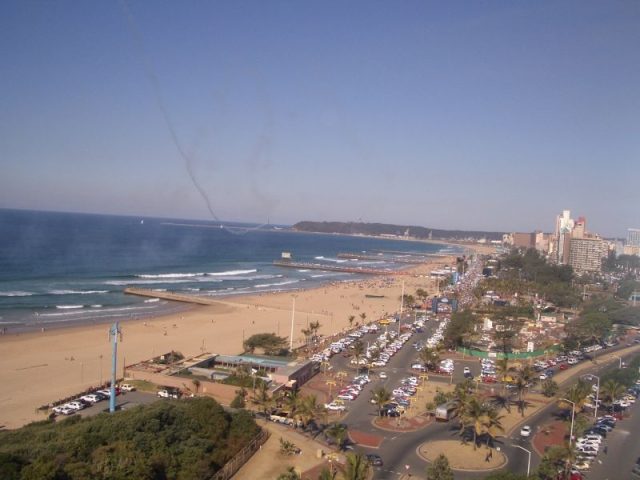
The area around the gate is busy. Indian restaurants line the streets, their kitchens sending out the smell of curries and roti. Shops sell fabrics, spices, and handcrafted jewelry. Stalls offer henna tattoos and Bollywood DVDs. In the evening, the waterfront lights up with families strolling, friends at cafés, and the scent of masala chai mixing with the ocean breeze.
For residents, the Indian Gate is part of daily life—a meeting point, a landmark, or a familiar sight on the way home. During Diwali, it’s decorated with lanterns, and the streets host fairs, music, and dance. The celebrations show Durban’s diversity, where Hindu, Muslim, and Christian communities share traditions.
The gate doesn’t feel like a relic. It sits among office buildings, shopping centers, and apartments. This mix of old and new defines Durban, where colonial architecture stands beside modern development. The past isn’t preserved in isolation but lived alongside the present.
If you want to understand South Africa’s history, the Indian Gate is a starting point. It tells how migration, labor, and cultural exchange shaped the region. Durban’s identity blends Zulu, Indian, and European influences, even in the local dialect, which borrows from all three. History isn’t just in museums—it’s in the food, the language, and the streets.
The Indian Gate also looks to Durban’s future. As the city grows, it remains a symbol of the diversity that defines it. You can browse spice shops, watch the sunset over the harbor, or sit on a bench listening to the waves. It’s where history feels alive, cultures intersect, and the city’s energy is clear. Whether you come for the past or the present, the gate shows what makes Durban unique.