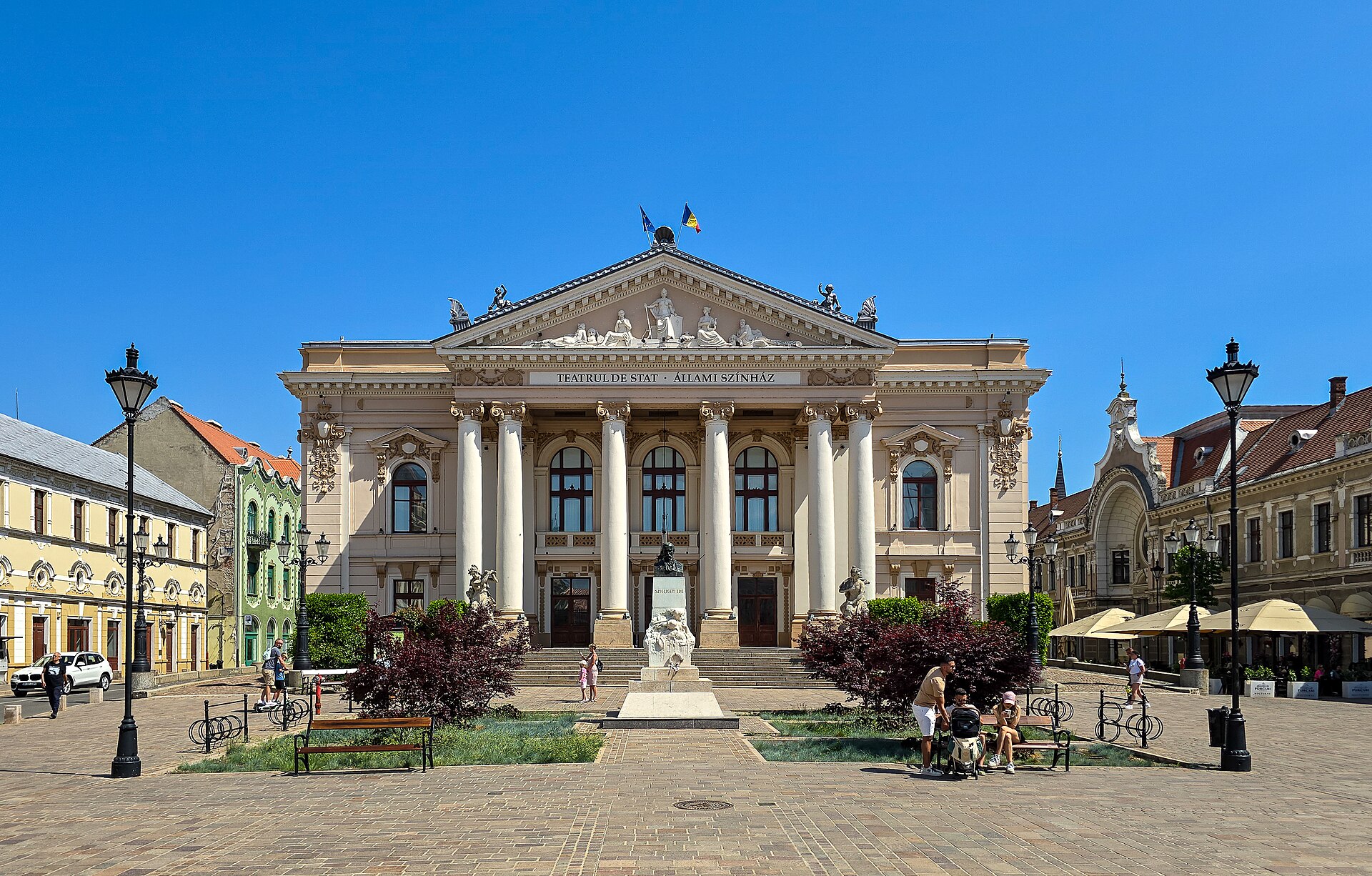
The Queen Marie Theatre in Oradea opened in 1900. It was designed to be more than a building—it became the center of the city’s cultural life, where architecture and history met daily life. Over a century later, the theatre is still in use, hosting performances, concerts, and gatherings that have filled its halls for generations.
The building mixes styles common in Romanian architecture at the turn of the 19th and 20th centuries. The façade has stucco, columns, and sculptures. Inside, the original décor remains: chandeliers, carved balconies, and painted ceilings. The auditorium was built for natural acoustics, a choice made before microphones existed.
The theatre is named after Marie of Edinburgh, Queen of Romania, who ruled in the early 1900s. She supported the arts, making her a natural choice for the city’s main venue. At the time, Oradea was part of the Austro-Hungarian Empire, and its architecture and culture reflected Hungarian, German, and Romanian influences.
The theatre has seen change. During World War I, it was a hospital. In the socialist era, it hosted political events alongside performances. After 1989, it returned to its original purpose, though the post-communist years brought new challenges. Today, it is one of the few theatres of its kind left in the region, staging both classical and contemporary works.
Visiting isn’t only about the show. Walking through the foyer or looking at the details inside feels like stepping into the past. The wooden floors creak. The scent of stage curtains mixes with coffee from a nearby café. During intermissions, people gather in the same halls where, a century ago, aristocrats and the bourgeoisie talked. Now, locals and occasional visitors fill the space.
Oradea isn’t crowded with tourists. The theatre has no rush, no jostling crowds—just a quiet atmosphere. The schedule includes opera, ballet, drama, and classical concerts. Sometimes, festivals bring performers from Romania and abroad.
The Queen Marie Theatre is part of Oradea’s identity. For locals, it’s a meeting place, a memory bank, a point of pride. For visitors, it offers history you can touch—every corner holds a story.
If you’re in Oradea, visit even if there’s no performance. The building tells its own stories, richer than any guidebook. If you catch a show, you’ll see how old stories still live on a stage that has witnessed over a century of human emotion.