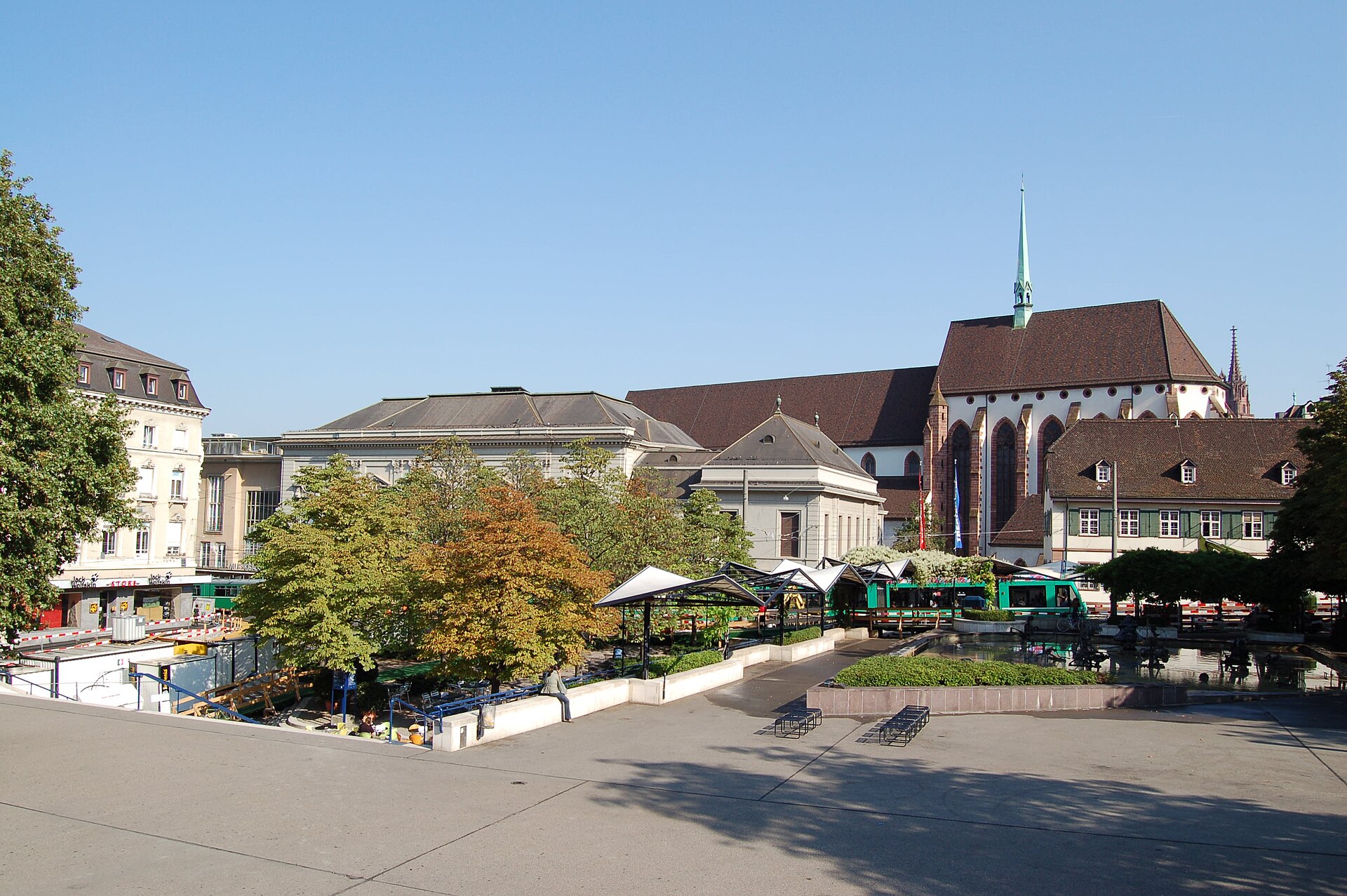
Basel’s theater is where the city’s quiet elegance meets its cultural roots. It doesn’t dominate the skyline or demand attention with flashy modernism. Instead, it sits along the Rhine, its neoclassical facade blending into the old town. Columns, arched windows, and a pediment give it the look of a public building, but here it hosts music, drama, and the occasional hush of an audience.
The theater has stood in some form since the late 18th century. The current structure dates to the 1970s, rebuilt after a fire destroyed its predecessor. That earlier building reflected Basel’s growing cultural ambitions as it evolved from a medieval trading hub. The fire was a setback, but the reconstruction wasn’t just about restoring what was lost. It reimagined the theater as a place for the city to gather, debate, and reflect. The new design kept the old proportions but introduced a more open interior, balancing tradition with adaptability.
The main auditorium is intimate, with seating arranged so the stage feels close even from the back rows. The acoustics are precise—the first notes of an orchestra or an actor’s voice carry clearly. The decor is understated: wood paneling, soft lighting, and warm neutrals. The space fades into the background, letting the performance take over.
What sets Basel’s theater apart is its role in the city’s cultural life. Unlike larger opera houses in Zurich or Geneva, it feels local. School groups attend matinees, retirees join lectures on theater history, and communities gather for performances in German, French, and other languages. The programming reflects this mix—classical operas and ballets share the stage with contemporary plays, experimental works, and puppet shows. There’s no single identity, no rigid idea of what the theater should be. It changes with the city around it.
The theater’s location along the Rhine adds to its character. Before or after a performance, people stroll along the riverbank, stop at nearby cafes, or watch the water. The river has always been Basel’s lifeline, and the theater’s position near it feels deliberate. On summer evenings, when the windows are open and rehearsals drift outside, the line between the theater and the city blurs. Someone might pause on the sidewalk, listening for a moment before moving on.
The theater has hosted significant figures in European performing arts—Richard Strauss and Igor Stravinsky among them—but it has never traded on celebrity. The focus is on the work, not the personalities. A well-executed production of a lesser-known play can draw as much respect as a star-studded opera. The audience is attentive and knowledgeable but not pretentious. There’s no dress code, no need to perform appreciation. People come as they are, and the theater meets them where they are.
The building houses a ballet company, an opera ensemble, and a drama troupe, all contributing to Basel’s reputation as an arts center. The ballet has a strong following, with a repertoire ranging from classical to contemporary. The opera is known for innovative stagings, collaborating with artists who push boundaries while respecting the music.
The theater doesn’t take itself too seriously. One season might include silent film screenings with live music; another could feature a festival of new Swiss playwrights. Education programs offer workshops for children, lectures for adults, and behind-the-scenes tours. This accessibility makes the theater feel like a public space—not just a venue, but a place to learn, be moved, or sit in the dark and listen.
On a quiet afternoon, the theater is easy to overlook. The facade doesn’t shout for attention, and the entrance is modest. But that’s part of its charm. It doesn’t need to announce itself because it’s woven into the life of the city. Whether you’re there for a world premiere, a classic play, or just to see what’s on, the experience is about the quiet moments—a line of dialogue lingering in your mind, or the final notes of a performance making you pause before stepping back into the city’s rhythm. In Basel, the theater isn’t just a place to go; it stays with you.