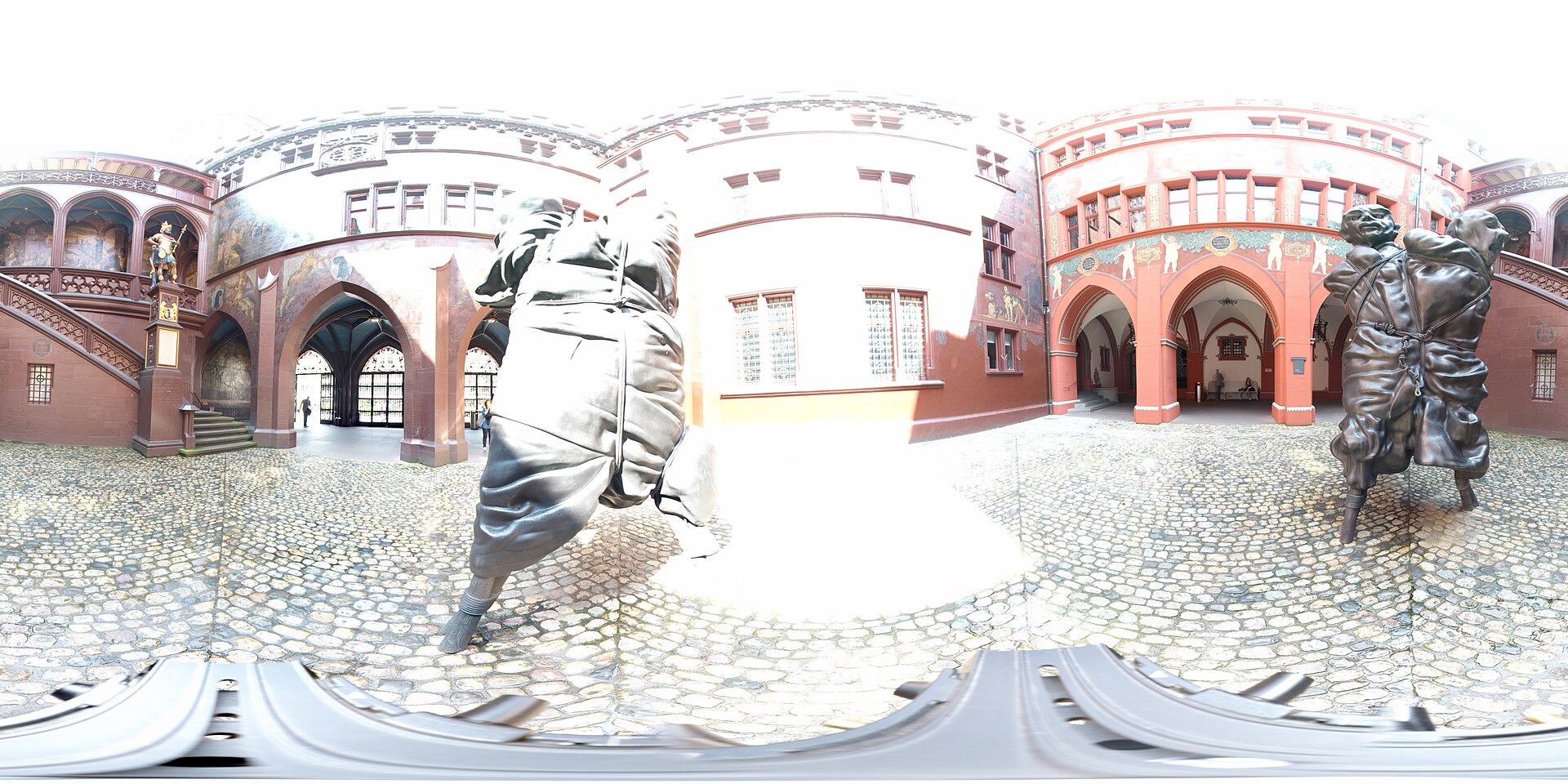
Basel’s Town Hall, or Rathaus, stands at the heart of the city’s old quarter, a striking presence on the Marktplatz. Built in the early 16th century, it has witnessed centuries of political life, serving as the seat of local government since its construction. The building’s most recognizable feature is its vivid red facade, a bold contrast to the muted tones of the surrounding medieval architecture. Over the years, it has been expanded and restored, but its original character remains intact—a blend of Gothic and Renaissance styles that reflects Basel’s historical significance as a center of trade, culture, and diplomacy.
The Rathaus was commissioned after the devastating earthquake of 1356, which leveled much of the city. The new structure was meant to symbolize Basel’s resilience and ambition, and its construction coincided with the city’s growing influence within the Swiss Confederation. The original building was completed in 1514, though later additions, such as the tower and the arcaded courtyard, were added in the 19th century. The facade itself is adorned with intricate frescoes, depicting scenes from Basel’s history and allegorical figures representing justice, wisdom, and civic virtue. These murals, though restored over time, still convey the grandeur of the city’s past.
Inside, the Rathaus is just as impressive. The Great Council Chamber, with its high vaulted ceiling and ornate woodwork, was where the city’s leaders once gathered to make decisions that shaped Basel’s future. The walls are lined with portraits of former mayors and dignitaries, a quiet reminder of the continuity of power. The smaller rooms, such as the Registry Hall, are equally rich in detail, with carved wooden panels and stained-glass windows that filter light into warm, muted hues. The building’s interior has been modernized where necessary, but the original craftsmanship is still evident, offering a glimpse into the artistry of the Renaissance period.
One of the most striking features of the Rathaus is its courtyard, an open space surrounded by arched walkways. This area was once used for public gatherings and ceremonies, and today it remains a lively part of the building’s daily life. The courtyard is often filled with the sounds of footsteps and conversation, as locals and visitors pass through on their way to the nearby market stalls or cafes. The arcades themselves are supported by slender columns, their capitals decorated with delicate carvings—a subtle but unmistakable nod to the building’s historical roots.
The Rathaus is not just a relic of the past; it remains an active part of Basel’s political life. The city’s government still operates from within its walls, and the building is occasionally open to the public for guided tours. These tours offer a chance to explore areas that are usually off-limits, such as the historic meeting rooms and the archives, where centuries-old documents are preserved. For those interested in Basel’s history, the Rathaus provides a tangible connection to the city’s evolution from a medieval trading hub to a modern cultural center.
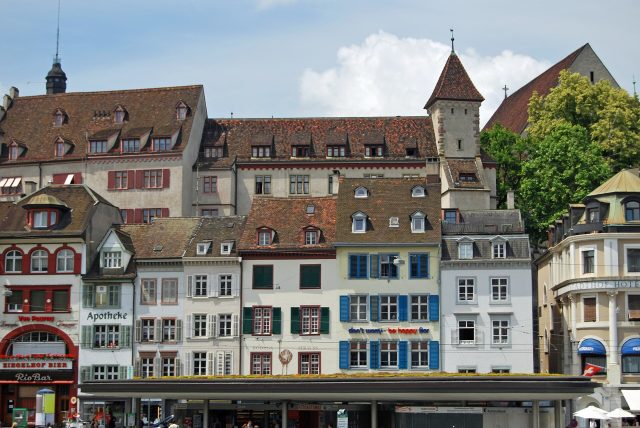
Beyond its political function, the Rathaus holds a place in the daily rhythm of Basel. The Marktplatz in front of it is one of the city’s busiest squares, hosting a market several times a week. Vendors sell fresh produce, flowers, and local specialties, while the scent of roasted nuts and coffee drifts through the air. The square is also a popular meeting spot, where people gather to chat, enjoy a meal at one of the outdoor cafes, or simply watch the world go by. The Rathaus, with its imposing presence, serves as a backdrop to these everyday moments, grounding them in the city’s long and storied history.
Visitors to Basel often find themselves drawn to the Rathaus not just for its architectural beauty, but for the atmosphere it embodies. There’s a sense of continuity here, a feeling that the past is not distant but alive in the details—the worn stone steps, the creaking wooden doors, the way the light falls through the stained glass. It’s a place where history is not just remembered but lived, where the decisions of centuries ago still echo in the halls of power. Whether you’re admiring the frescoes, wandering through the courtyard, or simply sitting in the square with a cup of coffee, the Rathaus offers a quiet reminder of what makes Basel unique.
For those who take the time to look closer, the Rathaus reveals layers of meaning. The frescoes on the facade, for instance, are more than just decorative—they tell stories of Basel’s role in the Swiss Confederation, its struggles and triumphs, its place in the wider world. The figures of justice and wisdom are not just allegories; they reflect the values that have shaped the city’s identity. Even the building’s location is significant. The Marktplatz has always been the center of Basel’s public life, a place where commerce, politics, and culture intersect. The Rathaus, standing at the heart of it all, is a symbol of that intersection.
In many ways, the Rathaus is a microcosm of Basel itself. It’s a city where the old and the new coexist, where tradition and innovation walk side by side. The building has adapted over the centuries, just as the city has, yet it retains a sense of permanence. It’s a reminder that while Basel may be known for its modern art scene, its pharmaceutical industry, or its vibrant festivals, its soul is rooted in history. The Rathaus, with its red facade and timeless elegance, is a testament to that soul—a place where the past is always present.