Liepāja’s St. Nicholas Maritime Cathedral is one of those rare places where history, faith, and the rhythm of everyday life merge so seamlessly that it feels as though the building has always been part of the city. Built in the late 19th century, the cathedral was more than just a place of worship—it became a symbol of Liepāja’s deep connection to the sea. For a city that had long depended on its port and fishing industry, a spiritual guardian for sailors was essential, and St. Nicholas, revered as the protector of those who venture onto the water, was the natural choice. The cathedral was funded by local residents and donations from naval officers, giving it a special significance. Here, prayers were offered not only for the salvation of souls but also for safe returns from distant voyages.
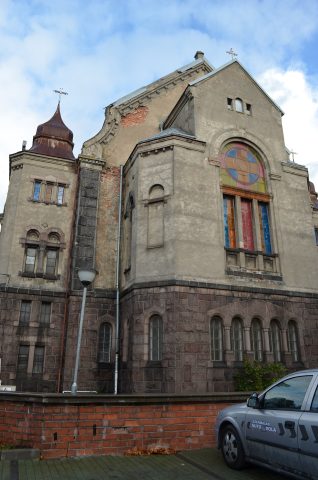
The architecture of the cathedral blends Neo-Byzantine elements with the traditional features of Orthodox churches from that era. Its exterior is striking: a massive dome crowned with a cross, tall arched windows, and a facade of red brick that has mellowed into a rich, weathered hue over the years. Inside, the space feels vast yet welcoming, with high vaulted ceilings supported by columns that create a sense of grandeur without overwhelming visitors. The iconostasis, crafted in the traditional style, is adorned with gold carvings and icons painted in strict accordance with Orthodox canons. Among them, the image of St. Nicholas holds a place of honor, where sailors and their families still light candles to this day.
Liepāja has always been a city of intersecting cultures and faiths. Latvians, Russians, Germans, and Jews all contributed to its history, and St. Nicholas Cathedral became one of the places where this diversity was most visible. In the early 20th century, when Liepāja was part of the Russian Empire, the cathedral served not only as a religious center but also as a meeting place for people from all walks of life—from fishermen to officers of the Baltic Fleet. After World War I, when the city came under Latvian rule, the cathedral retained its importance, though the number of parishioners dwindled. The Soviet era brought difficult times: the cathedral was closed, repurposed as a warehouse, and nearly lost. Yet, in the end, it was returned to the faithful.
Today, St. Nicholas Cathedral remains an active place of worship, drawing both locals and visitors curious about Liepāja’s past. Inside, the atmosphere is one of quiet reverence, a stark contrast to the bustling city just beyond its walls. Visitors can stand before the icons, listen to the solemnity of the choir, or simply sit on a wooden bench, reflecting on the countless lives that have passed through these doors. On feast days, the cathedral fills with people, and its role as a spiritual heart of the city becomes especially palpable. Services are conducted in Church Slavonic, but even those who don’t understand the words can sense the weight of the moment.
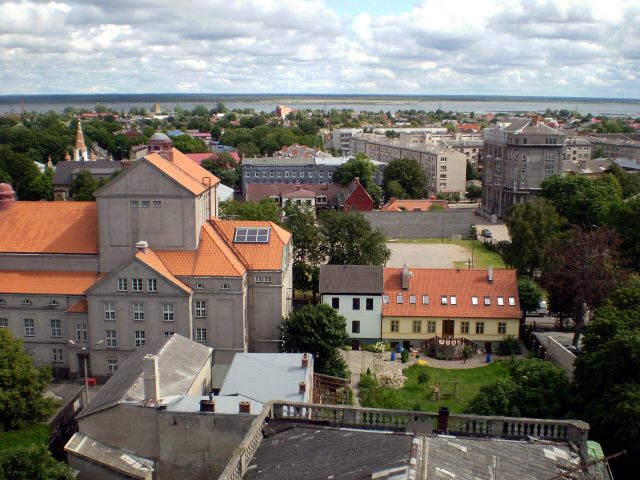
The area around the cathedral is worth exploring as well. Located not far from Liepāja’s center, the neighborhood preserves many historic buildings. Walking through the streets, you’ll notice the city’s layers—from the austere facades of pre-revolutionary houses to more modern structures. Yet the cathedral remains a constant landmark, a reminder that Liepāja is more than just a port and an industrial hub; it’s a place with a rich spiritual heritage. Nearby, a small park offers a peaceful spot where locals gather in warmer months. Here, you might see elderly men playing chess, groups of young people chatting on benches, or families with children enjoying the shade.
St. Nicholas Maritime Cathedral is more than an architectural monument; it’s a living testament to Liepāja’s history. It has endured wars, political upheavals, and economic hardships, yet it remains a place where people find solace and hope. For sailors, it’s still a symbol of protection on their journeys. For residents, it’s woven into the fabric of daily life. And for visitors, it offers a chance to connect with the city’s past. What makes the cathedral truly special is that it hasn’t just stood the test of time—it has evolved alongside the city, adapting while staying true to its essence. In that way, it’s not just a relic of history but a part of Liepāja’s living story.