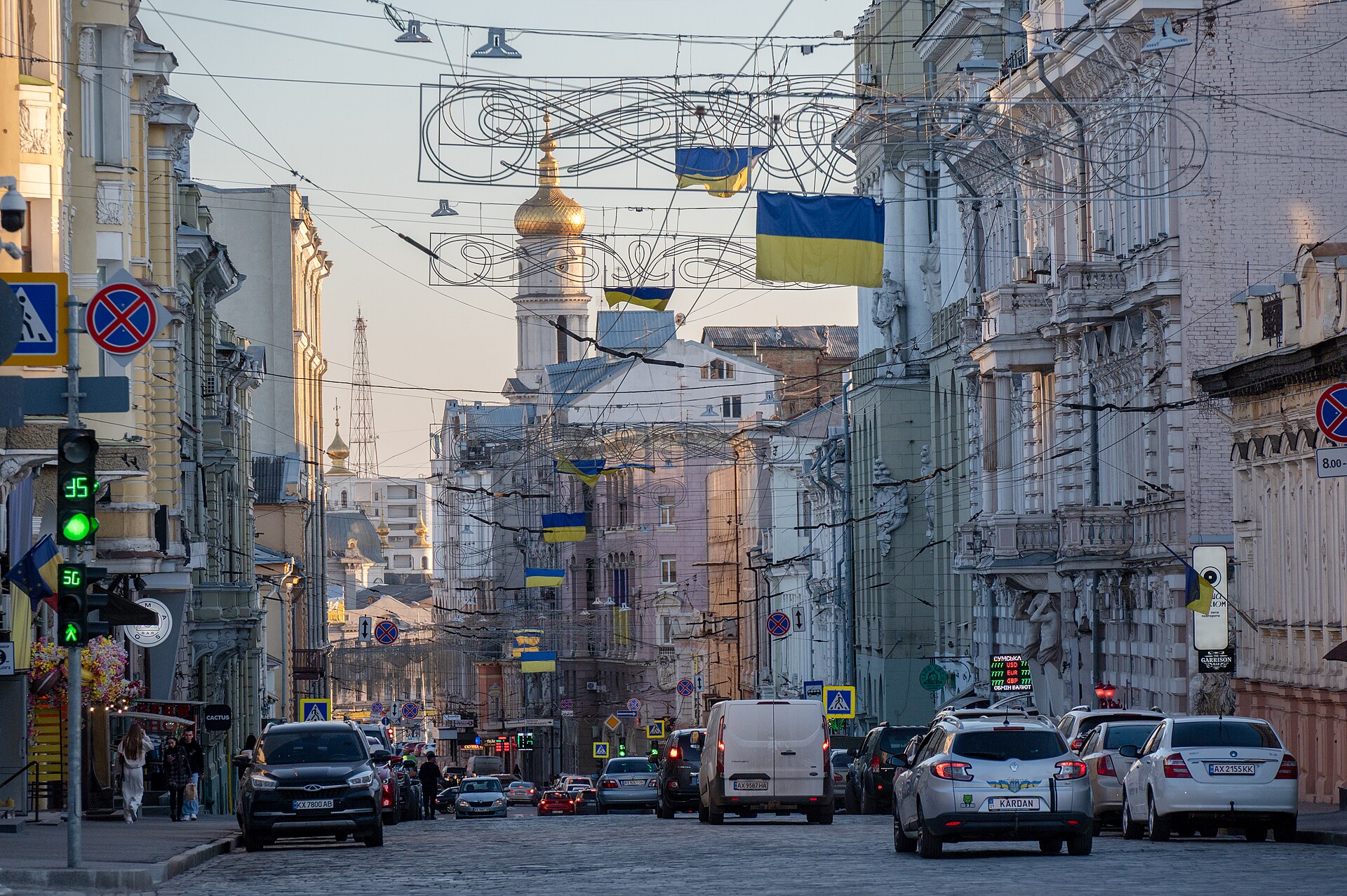
Sumska Street is the kind of place that doesn’t announce itself with grand monuments or tourist crowds, yet it quietly holds the pulse of Kharkiv. Stretching through the heart of the city, it has been a witness to generations of daily life, political shifts, and cultural transformations. If you walk its length on a weekday afternoon, you’ll see students hurrying between lectures, office workers grabbing coffee, and elderly couples strolling at a leisurely pace. The street doesn’t demand attention—it simply exists, as it has for over two centuries, adapting to each era while retaining its own character.
The history of Sumska begins in the late 18th century, when Kharkiv was still a provincial town in the Russian Empire. Originally a dirt road leading toward the nearby Sumy region, it gradually evolved into the city’s main thoroughfare as Kharkiv grew into an administrative and educational center. By the 19th century, it had become a symbol of urban progress, lined with the mansions of merchants and officials, many of which still stand today. The architecture here is a mix of styles—neoclassical facades with columns and pediments, art nouveau curves, and Soviet-era utilitarian buildings—each layer telling a different story about the city’s past.
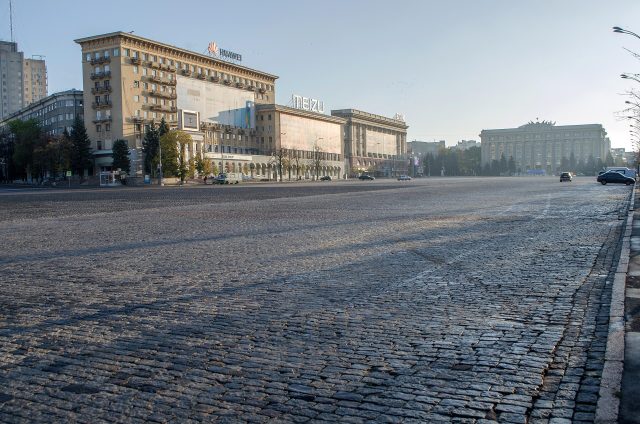
One of the most striking features of Sumska is how it balances grandeur and intimacy. The northern end, near Freedom Square, is dominated by imposing structures like the Kharkiv State Academic Opera and Ballet Theater, its white facade and arched windows a nod to European influences. Nearby, the Derzhprom building, a constructivist masterpiece from the 1920s, looms over the street with its geometric concrete forms, a reminder of Kharkiv’s brief stint as the capital of Soviet Ukraine. Yet just a few blocks south, the scale shifts. Here, the street narrows slightly, and the buildings become more human-sized, with small cafes, bookshops, and galleries tucked into their ground floors. It’s in these quieter stretches that Sumska feels most alive, where the city’s rhythm isn’t dictated by monuments but by the people who use the space every day.
For much of the 20th century, Sumska was a stage for public life. During the Soviet era, it was a place for parades, demonstrations, and official gatherings, its wide sidewalks designed to accommodate crowds. Even today, traces of that history remain in the form of plaques and memorials, though they’re easy to overlook amid the everyday bustle. After Ukraine gained independence, the street took on a different role, becoming a hub for the country’s emerging cultural scene. In the 1990s and early 2000s, it was here that Kharkiv’s first modern cafes, art spaces, and independent bookstores began to appear, offering an alternative to the state-controlled institutions of the past. That spirit of experimentation still lingers, though it’s now woven into the fabric of the city rather than standing out as something new.
What makes Sumska unusual is how it manages to feel both central and unassuming. Unlike the grand boulevards of Paris or Vienna, it doesn’t impose a single aesthetic or purpose. There’s no strict symmetry, no unifying architectural theme—just a gradual unfolding of the city’s layers. The street is long enough that you can walk it in half an hour or spend an entire day drifting between its different sections. Near the university, it’s lively with students and street musicians; closer to the city center, it’s more polished, with well-maintained flower beds and the occasional outdoor seating area. In winter, the trees are bare, and the street takes on a stark, almost melancholic beauty, while in summer, the linden trees fill the air with their scent, and the sidewalks become a blur of movement.
Sumska has also been a place of resilience. During World War II, much of Kharkiv was destroyed, and the street suffered alongside the rest of the city. The post-war reconstruction was pragmatic, with some buildings restored to their former glory while others were replaced with simpler, functional designs. More recently, the street has weathered the challenges of the 21st century—economic instability, political upheaval, and, most painfully, the full-scale Russian invasion in 2022. While parts of Kharkiv have faced severe damage, Sumska has remained a symbol of the city’s endurance. Even in difficult times, it continues to function as a space for public life, a place where people gather not out of obligation, but because it’s where the city naturally comes together.
There’s no single attraction that defines Sumska, and that’s perhaps its greatest strength. It’s not a place you visit for a specific landmark or experience, but rather for the sense of being in the midst of something real. On a quiet morning, you might stop at a small bakery for fresh bread, or browse the shelves of an old bookstore where the owner knows the regulars by name. In the evening, the streetlights cast a warm glow over the pavement, and the sound of conversation spills out from the cafes. It’s the kind of place where you can sit on a bench and watch the city go by, or strike up a conversation with a stranger over a cup of coffee. Sumska doesn’t offer grand narratives or dramatic views—just the quiet, persistent rhythm of urban life, as it has for generations.