The Western Wall, often called the Wailing Wall, is one of the most enduring symbols of Jerusalem and a place of profound significance for Jewish people around the world. This ancient limestone structure stands in the Old City, a remnant of the Second Jewish Temple’s retaining wall, which was destroyed by the Romans in 70 CE. For centuries, it has been a site of pilgrimage, prayer, and reflection, drawing visitors not only for its religious importance but also for its deep historical resonance.
The wall itself is imposing, its massive stones weathered by time yet still bearing the marks of centuries of devotion. The lower courses date back to the time of Herod the Great, who expanded the Temple Mount in the first century BCE, while the upper layers were added later. The largest stones, some weighing over 500 tons, were placed with remarkable precision, a testament to the engineering skills of the ancient world. The wall stretches about 488 meters in length, though only a portion of it is accessible to the public today.
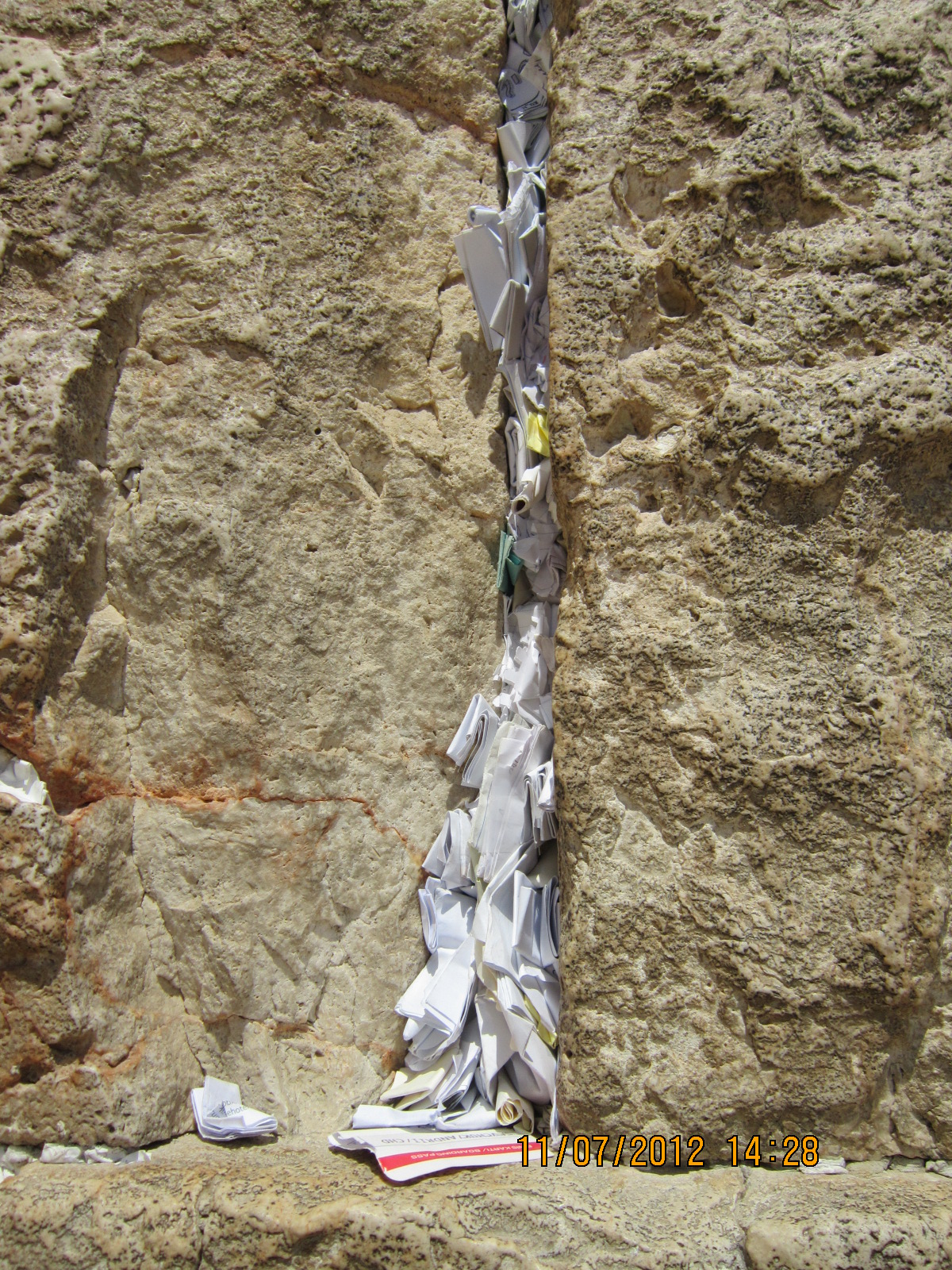
For Jewish tradition, the Western Wall is the holiest site where prayer is permitted, as the Temple Mount itself is considered too sacred for most to enter. The area in front of the wall is divided into separate sections for men and women, a practice that reflects long-standing customs. Visitors often place handwritten notes into the crevices between the stones, a tradition that has endured for generations. These notes, containing personal prayers or wishes, are left in the belief that the divine presence lingers here more powerfully than anywhere else.
The atmosphere at the Western Wall is unlike anywhere else in Jerusalem. On weekdays, the plaza hums with quiet devotion, the murmur of prayers blending with the rustle of prayer shawls and the occasional sound of a cantor’s chant. On Fridays, as the Sabbath approaches, the area fills with worshippers, their voices rising in song and prayer as the sun sets over the city. During Jewish holidays, the wall becomes the center of large gatherings, with thousands of people coming to celebrate, mourn, or simply bear witness to the continuity of tradition.
The wall’s significance extends beyond religion. It has been a silent witness to the ebb and flow of empires, from the Romans to the Byzantines, the Arabs to the Crusaders, and the Ottomans to the British. Each era left its mark, sometimes literally, as inscriptions and carvings from different periods can still be found on the stones. The wall has also been a focal point of political and cultural tensions, particularly in the modern era, as Jerusalem’s status remains one of the most contentious issues in the Israeli-Palestinian conflict.
For many visitors, the Western Wall is not just a historical monument but a living connection to the past. The layers of history are palpable here, from the ancient stones to the modern rituals that unfold daily. Whether approached with reverence or curiosity, the wall invites reflection on the passage of time and the enduring power of faith. It is a place where personal and collective histories intersect, where the weight of centuries feels both distant and immediate.
The surrounding area adds to the wall’s atmosphere. The narrow streets of the Old City, with their arched doorways and stone buildings, lead visitors through a labyrinth of history. Nearby, the Temple Mount looms above, its golden Dome of the Rock visible from the Western Wall plaza. The contrast between the two sites—one a place of Jewish prayer, the other a sacred Islamic shrine—underscores the complex layers of Jerusalem’s identity.
Despite its solemnity, the Western Wall is also a place of unexpected moments. Children play in the plaza, tourists snap photos, and soldiers in uniform pause to pray before continuing their duties. The wall absorbs all of this, its stones indifferent to the passage of time yet deeply connected to the lives of those who come here. It is a reminder that history is not just something to be studied but something that is lived, day by day, in the hearts of those who stand before it.