Nestled within the labyrinth of Jerusalem’s Old City, the Church of Saint Mark occupies a quiet corner of the Armenian Quarter, where narrow stone streets hum with centuries of whispered stories. Unlike the grand facades of more famous holy sites, this church doesn’t announce itself—its modest exterior, tucked behind the high walls of neighboring buildings, blends into the surroundings. Yet for those who seek it out, it offers something rare: a tangible connection to the earliest days of Christianity, preserved through layers of history and devotion.
The church is believed to stand on the very spot where the Upper Room once stood, the place where Jesus shared the Last Supper with his disciples. This tradition, held by the Armenian Apostolic Church for over fifteen hundred years, lends the site a profound significance. The current structure dates to the 12th century, built by Crusaders, but its roots stretch back even further, to the time when Jerusalem was first becoming a center of pilgrimage. Over the centuries, the church passed into Armenian hands, surviving wars, conquests, and upheavals while remaining a steadfast symbol of faith.
Inside, the church feels intimate, almost secretive. Low vaulted ceilings, flickering candlelight, and walls adorned with faded frescoes create an atmosphere of quiet reverence. The most sacred relic here is an ancient icon of the Virgin Mary, said to have been painted by the evangelist Luke. Kept in the altar, it draws pilgrims who believe in its miraculous power. Another treasure is a stone slab, thought to be part of the table from the Last Supper. These artifacts are not displayed for spectacle but are treated with the quiet dignity of objects that have witnessed centuries of prayer.
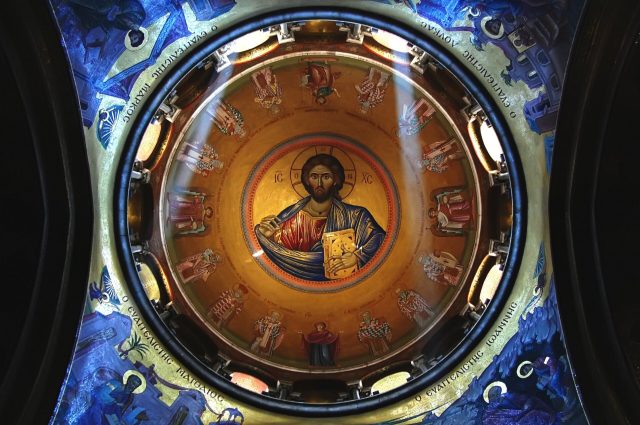
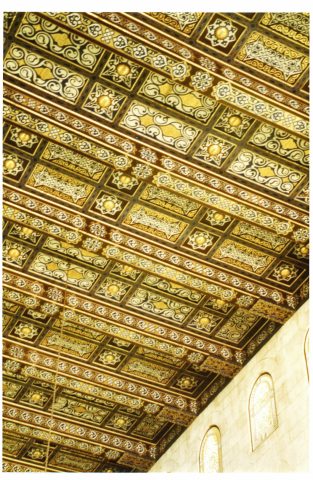
The architecture is simple yet striking. Thick walls of Jerusalem stone, small barred windows, and wooden beams overhead give the space a sense of shelter, as if time itself has slowed within these walls. The interior reflects traditional Armenian design—frescoes depicting saints, a carved wooden iconostasis, and the soft glow of candles in the dim light. There is no grandeur here, no soaring arches or gilded domes, but something more enduring: the unbroken thread of a living tradition.
For the Armenian community of Jerusalem, one of the oldest Christian communities in the world, the church is more than a place of worship. Armenians first settled in the city in the 4th century, and by the 7th century, they had established their own quarter, which became a spiritual and cultural hub. Through invasions, sieges, and occupations, the community endured, and the Church of Saint Mark stood as a testament to their resilience. It safeguarded manuscripts, icons, and relics, passing them down through generations like a sacred trust.
Today, the church remains active, its doors open to those who wish to step into its quiet embrace. Visitors are few, and the absence of crowds allows for a rare sense of stillness. The only sounds are the soft shuffle of footsteps on stone and the occasional murmur of prayer in Armenian. Time here feels suspended, as if the weight of history has pressed pause, offering a moment to reflect on the city’s earliest Christian roots.
For pilgrims, the church is a bridge to the past—a place where the first Christian communities might have gathered, where the memory of Christ was kept alive in times of persecution. There are no tour groups here, no flashing cameras, just the quiet glow of candles and the ancient walls that have absorbed countless prayers. It is this sense of continuity, of history not just remembered but actively lived, that makes the Church of Saint Mark one of Jerusalem’s most quietly profound places. In a city where every stone seems to tell a story, this small church holds its own, whispering of faith that has endured against all odds.