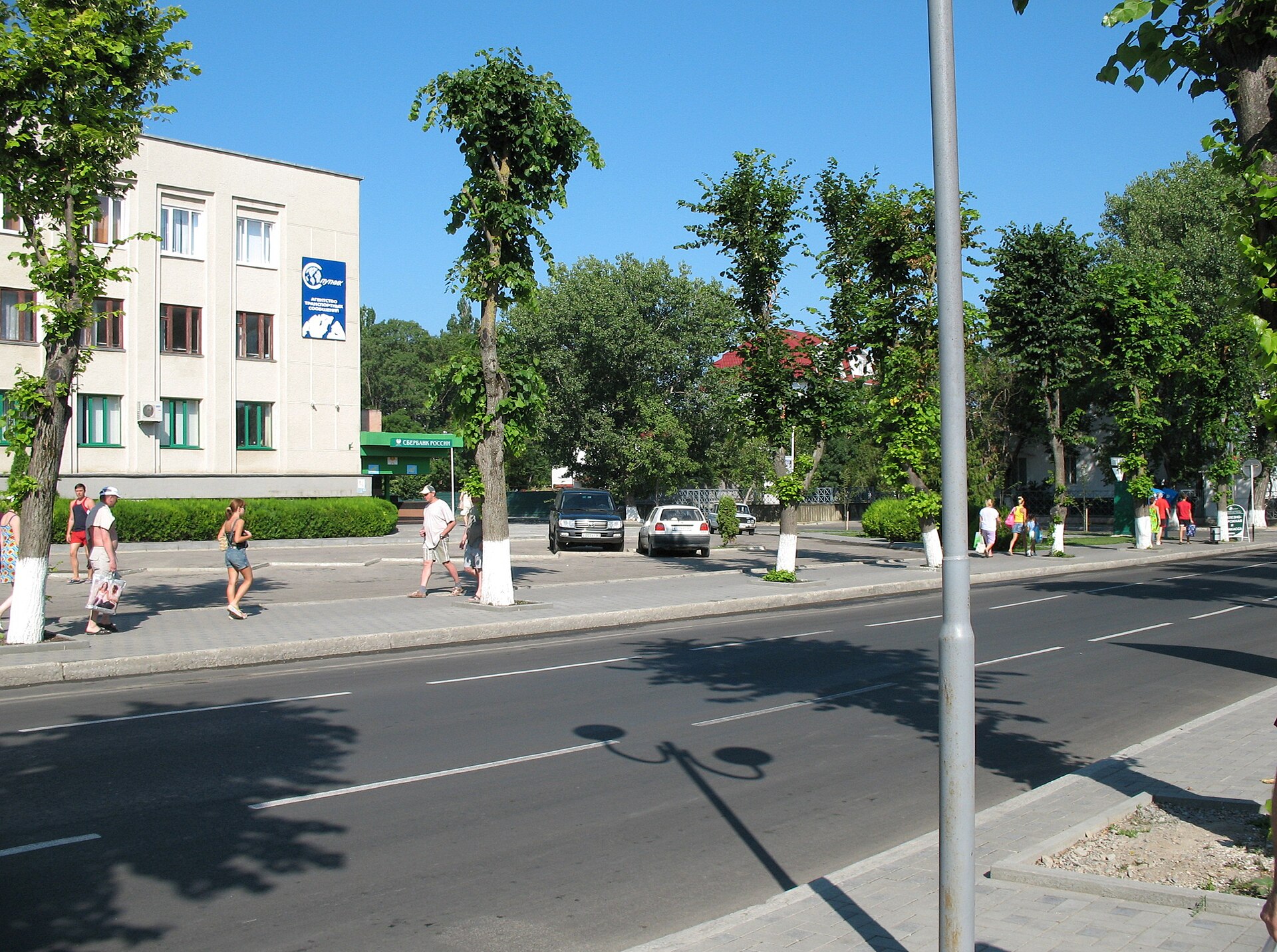
The Kacha River town, a quiet settlement on the Crimean Peninsula, carries a weight of history that belies its modest size. At its entrance stands a granite obelisk, a monument not just to the past, but to the enduring memory of those who defended this land during the Second World War. Known as the "City of Military Glory" stele, it marks Kacha’s role in a conflict that shaped the fate of the entire region. The town itself is unassuming—low-rise buildings, tree-lined streets, and the distant hum of aircraft from the nearby airfield—but its significance in wartime was anything but ordinary.
Kacha’s story is inseparable from aviation. Before the war, it was home to a military airfield and a flight school, institutions that would become critical to the defense of Sevastopol and the broader Crimean front. When the German invasion began, the skies above Kacha turned into a battleground. Soviet pilots, many of them trained here, took off daily to intercept enemy bombers, protect supply routes, and support ground troops. The airfield was a prime target, subjected to relentless airstrikes, yet it never stopped functioning. After the war, the town’s military legacy continued with the Kacha Higher Military Aviation School, which trained generations of pilots until its closure. Though the school is gone, its influence lingers in the names of streets and the stories passed down through families.
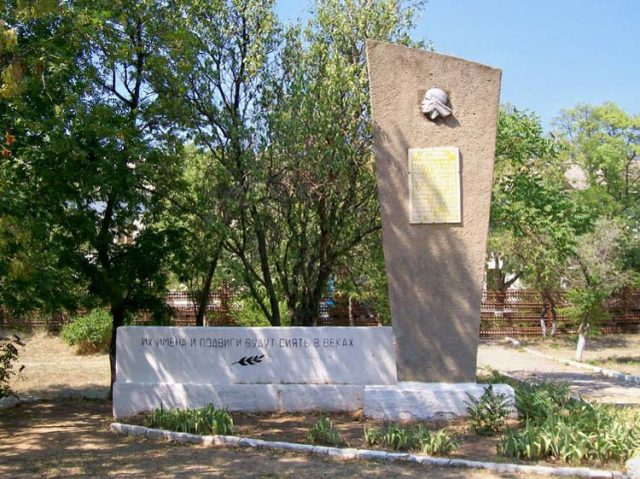
The stele itself was erected in 2015, when Kacha was officially designated a "City of Military Glory," a title awarded to settlements that played pivotal roles in the war. Like similar monuments across Russia, it follows a standardized design: a towering granite column topped with the national emblem, flanked by bronze reliefs depicting key moments from the town’s wartime history. These aren’t just decorative elements—they’re a visual narrative of Kacha’s contribution. One panel shows pilots scrambling to their planes under fire; another depicts medics tending to the wounded; a third captures the quiet resilience of civilians working in defense factories. Together, they transform the monument from a static memorial into a living record of the past.
The location of the stele wasn’t chosen at random. It stands at a crossroads where the roads to Sevastopol and Simferopol diverge—a route that was vital during the war for transporting supplies, reinforcements, and the wounded. Today, the same roads carry tourists and locals, but the monument serves as a reminder that this land was once a front line. For residents, it’s a gathering place on Victory Day and other commemorative occasions, where veterans, students, and families come to lay flowers and reflect. The stele isn’t just a backdrop for ceremonies; it’s a focal point for collective memory, a place where the past feels tangible.
Architecturally, the monument blends into its surroundings without fanfare. The granite column rises against the backdrop of rolling Crimean hills, its simplicity contrasting with the intricate bronze reliefs at its base. These details humanize the history it represents—no grand heroic poses, just snapshots of ordinary people in extraordinary circumstances. The reliefs don’t glorify war; they acknowledge the cost of it. For visitors, the stele offers a starting point to explore Kacha’s other wartime sites: the mass graves where fallen soldiers are buried, the buildings that once housed military hospitals, or the airfield that still operates today. There are no flashy museums here, no guided tours with dramatic reenactments—just the quiet persistence of history in everyday places.
Kacha’s wartime role was strategic, but its post-war story is one of quiet resilience. After the fighting ended, the town rebuilt itself, constructing homes for returning soldiers and later for the cadets of the aviation school. The airfield, though no longer a training ground, remains active, a reminder of the town’s enduring connection to the military. The stele, in many ways, embodies this duality: it honors the past while standing in the midst of the present. For those who grew up here, the monument is a familiar landmark; for outsiders, it’s an introduction to a history that’s often overshadowed by larger battles and more famous cities.
What makes the stele particularly moving is its lack of pretense. There’s no attempt to romanticize war or turn history into spectacle. Instead, it invites contemplation. A visitor can stand before the reliefs, trace the outlines of a pilot’s helmet or a nurse’s apron, and imagine the lives behind those images. For some, it’s a personal connection—a grandfather who trained here, a relative who fought in the skies above Crimea. For others, it’s a chance to understand a chapter of history that’s often reduced to dates and statistics. Kacha doesn’t offer grand narratives; it offers something more intimate: the sense that history isn’t confined to textbooks or documentaries, but lives in the land itself.
The monument also serves as a reminder of how deeply the war shaped even the smallest communities. Kacha wasn’t a major city, but it was a place where people lived, worked, and fought. The stele doesn’t just commemorate soldiers; it honors the collective effort of a town that contributed to the war effort in its own way. After the war, life here returned to normal—children played in the streets, families rebuilt their homes, and the airfield continued its work—but the memory of those years never faded. Today, the stele stands as a testament to that continuity, a bridge between past and present.
Visiting the monument doesn’t require a guide or a special occasion. It’s enough to pause, read the inscription, and let the reliefs tell their story. For locals, it’s a place of reflection; for travelers, it’s an unexpected encounter with history. Kacha itself is easy to overlook—it’s not a tourist hotspot, and there are no crowds or souvenir stands. But that’s part of its appeal. Here, history isn’t packaged for consumption; it’s simply present, woven into the fabric of the town. The stele, with its quiet dignity, ensures that the sacrifices of the past aren’t forgotten, even as life in Kacha goes on.