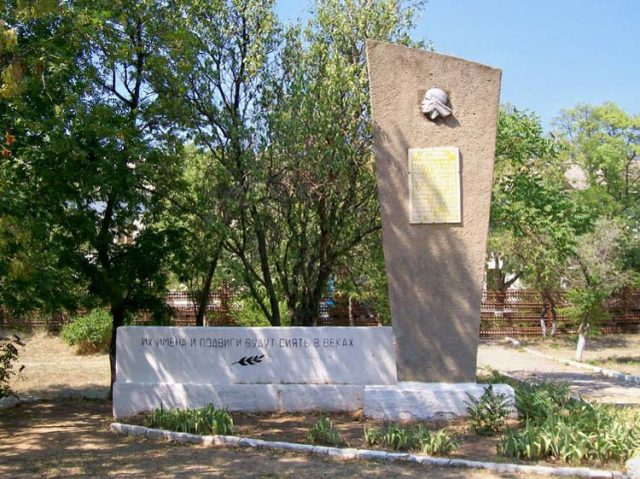
Kacha Aviation School is one of those rare places where the history of flight isn’t just remembered—it lingers in the air, in the buildings, even in the way the wind carries the distant hum of engines. Tucked away in the small Crimean settlement of Kacha, this isn’t just a military academy; it’s a living monument to an era when aviation was transforming from a daring experiment into the backbone of both military and civilian life. The school has trained generations of pilots who would go on to shape Soviet aviation, and its legacy is woven into the very fabric of the place.
Founded in 1910 as a private flying school, it quickly became a state institution, reflecting the growing importance of aviation in the early 20th century. Back then, flying was still a novelty—aircraft were fragile, flights were perilous, and pilots were seen as adventurers rather than professionals. Yet it was here, on the dusty runways of Kacha, that the first standards of pilot training were established, laying the groundwork for what would become the Soviet flight school. In the 1930s, the academy was named after Alexander Myasnikov, a pioneering military aviator and Civil War hero whose name became synonymous with the school’s ideals of courage and discipline.
The architecture of the academy tells its own story, a mix of eras and styles that mirror the evolution of aviation itself. The oldest hangars and training buildings, dating back to the pre-war years, stand alongside more modern structures from the Soviet period. The most striking is the headquarters building—a solid, imposing structure with the unmistakable hallmarks of Stalinist architecture. Inside, the past feels tangible: wooden panels, high ceilings, and large windows that once framed the view of planes taking off. These details haven’t changed much over the decades, and walking through the halls, it’s easy to imagine the cadets who once stood in the same spots, watching the skies.
Kacha wasn’t just a school; it was a forge for legends. Its graduates include some of the most celebrated names in aviation history. Alexander Pokryshkin, a three-time Hero of the Soviet Union and one of the most successful fighter pilots of World War II, trained here. So did Alexei Maresyev, whose story of flying with prosthetic legs after a crash became a symbol of resilience. And then there was Georgy Beregovoy, who went from pilot to cosmonaut, orbiting the Earth in the 1960s. The academy didn’t just teach technical skills—it instilled a mindset of discipline, responsibility, and devotion to the craft. Many who passed through its gates later said that Kacha was where they learned what it truly meant to be a pilot.
Today, the academy still operates, though its role has shifted with the times. It remains a key center for training military pilots, but civilian specialists also study here now. The airfield is still active, and if you’re lucky, you might see modern aircraft taking off or landing. Yet the real draw of this place isn’t its current operations—it’s the atmosphere. Walking through the grounds, you can almost hear the echoes of the past: the murmur of cadets in 1930s uniforms, the roar of old biplanes warming up on the tarmac. The sense of history is palpable, as if the decades have folded in on themselves.
For aviation enthusiasts, Kacha is a treasure trove. The school’s museum, housed on the premises, holds a collection of artifacts that bring the past to life. There are photographs, documents, and personal items belonging to the pilots who trained here. Models of the aircraft they flew—some now long retired—are displayed alongside uniforms, weapons, and letters from the front lines of World War II. The museum is small, but every exhibit has a story to tell. One display might show the worn leather jacket of a pilot who flew in the Battle of Stalingrad; another might hold a logbook filled with meticulous notes from training flights. It’s the kind of place where history feels personal.
Kacha itself is a quiet settlement, a world away from the bustle of larger cities. The locals have long lived alongside the academy, and there’s a mutual respect between the military and the community. The streets are lined with Soviet-era buildings, and it’s not uncommon to meet people whose lives have been touched by aviation in some way. The pace here is slow, unhurried, and the past isn’t just preserved in museums—it’s part of everyday life. A walk through the village can feel like stepping back in time, especially when you pass the old houses or hear stories from those who remember the academy in its heyday.
But Kacha Aviation School isn’t just for aviation buffs. It’s a place where history comes alive, where you can touch the artifacts of the past and feel connected to something larger than yourself. It serves as a reminder of how important it is to preserve the stories of those who came before us, especially when those stories are as dramatic and inspiring as the ones born here. The academy isn’t a static museum—it’s a living institution, evolving while staying true to its roots. That’s why it still commands such respect and fascination. Whether you’re drawn by the history, the architecture, or the sheer romance of flight, Kacha offers a glimpse into a world where the sky was the ultimate frontier.