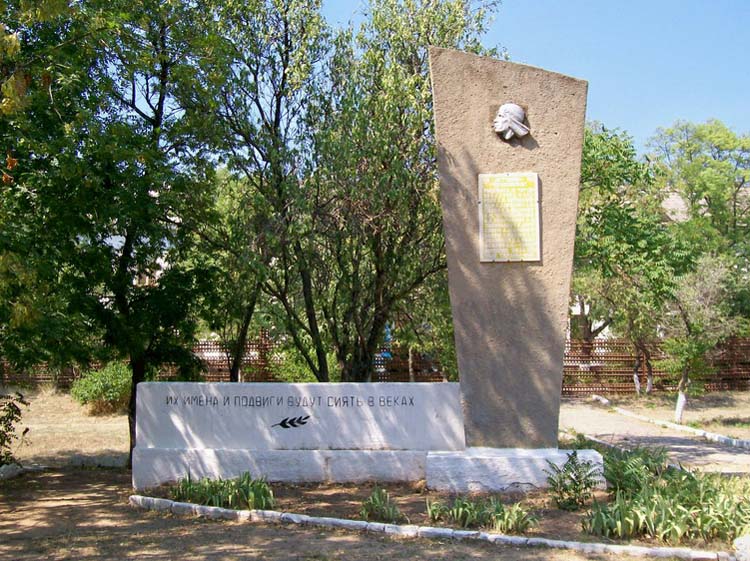
The memorial to the Black Sea Fleet pilots who performed aerial rams stands quietly on the outskirts of Kacha, a small settlement near Sevastopol. It’s not a grand or imposing monument, but that’s precisely what makes it so moving. Here, on the edge of what was once a wartime airfield, the past feels close enough to touch. The pilots honored here gave everything in their final, desperate act—crashing their planes into enemy aircraft to stop them from reaching their targets. There are no dramatic speeches or towering statues, just a simple stone stele with names carved into it, each one a life cut short in the skies over Crimea.
Kacha has always been tied to aviation. Long before the war, it was home to one of Russia’s oldest flight schools, founded in 1910. The Kacha Aviation School trained pilots for the Imperial Russian Air Service and later the Soviet Air Forces. When the war began, the school was evacuated, but the airfield remained active, serving as a base for fighter sorties. Many of the pilots who took off from here never returned. After the war, the airfield continued to operate, and the school eventually reopened. Today, the memorial is a quiet reminder of that era, a place where the history of military aviation in Crimea is preserved not in museums, but in the open air.
The memorial itself is understated. The central stele, made of light-colored stone, bears the names of pilots who performed aerial rams. Beside it stands a MiG-15, a jet from a later era, not the type these men flew, but a symbol of the enduring legacy of military aviation. A path leads to the monument, lined with information boards displaying photographs and brief biographies of the fallen. The details are sparse—dates of birth, ranks, the circumstances of their deaths—but that only makes the stories more personal. Each name represents a life that ended too soon, a young man who climbed into a cockpit one last time.
Among the names, one stands out: Lieutenant Viktor Talalikhin. He was one of the first pilots to perform a nighttime aerial ram, a feat that became legendary. Talalikhin trained at Kacha, flew over these very fields, and died just months after his famous battle. His story is often the first that comes to mind when visitors stand before the memorial. He wasn’t just a hero; he was someone who walked these streets, who knew this land before the war changed everything. His name is etched into the stone alongside dozens of others, but his legacy lingers in the way people speak of him here.
The atmosphere at the memorial is one of quiet reflection. There are no crowds, no tour buses—just the occasional school group or veterans paying their respects. Locals bring flowers on Victory Day and Aviation Day, leaving them at the base of the stele. The surrounding steppe stretches out in all directions, and the wind carries the names of the fallen like a whisper. On clear days, the sea is visible in the distance, its surface shimmering under the same sky where these pilots once flew. It’s easy to imagine that the land itself remembers.
Kacha has always been a place where aviation shaped daily life. Before the war, it was a community of pilots, mechanics, and their families. After the war, the airfield remained in use, and the flight school returned. Today, Kacha is a quiet settlement where time moves slowly. But the memorial serves as a bridge to the past. The old barracks, the overgrown runways, even the tall poplars that line the roads—all of them bear silent witness to the events of those years. Turning off the main street toward the memorial feels like stepping into another era.
Visiting the memorial doesn’t require much planning. It’s always open, and there’s no admission fee. The best time to come is in the morning, when the sunlight falls on the stele and the MiG-15, making the details stand out. Walking along the path, reading the names and stories, you can’t help but feel the weight of what happened here. Standing at the monument, looking up at the sky, it becomes clear that heroism isn’t just about grand gestures. Sometimes, it’s about doing what needs to be done, no matter the cost.
This memorial is more than just a monument. It’s a piece of living history, a reminder that even in a quiet place like Kacha, the war left its mark. There’s no pomp here, no exaggerated patriotism—just the simple truth of what these men did. Decades have passed, but their names remain, carved into stone and carried on the wind. They’re part of the land now, part of the sky, part of the story that Crimea still tells.