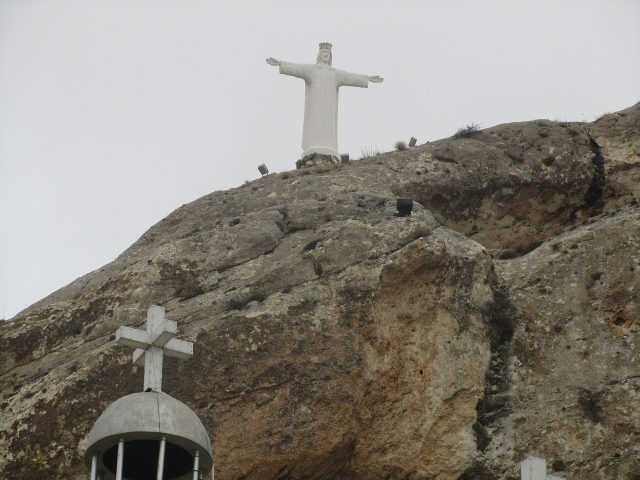
The statue of José Eduardo dos Santos in Lubango is one of those monuments that does more than simply occupy a public space—it carries the weight of Angola’s recent history. Standing in the heart of the city, it depicts the country’s first post-independence president, a figure whose name is inseparable from Angola’s political narrative in the late 20th century. For locals, the statue is more than a tribute to a leader; it’s a symbol of an era when Angola emerged from colonial rule and struggled to define its own future.
Lubango itself is a city with a distinct character, nestled among mountains and known for its cooler climate. Founded by Portuguese settlers in the late 19th century, it served as an important administrative and commercial hub in southern Angola for decades. The city retains traces of its colonial past—cobblestone streets, low-rise buildings with European architectural touches, and an atmosphere where African traditions blend with lingering Portuguese influences. The statue of dos Santos fits naturally into this landscape, becoming another layer in the city’s story, one that speaks of different chapters in its history.
The monument itself is a classic example of mid-to-late 20th-century monumental sculpture. The figure of the president stands tall in a formal suit, his expression one of quiet confidence. His hands are slightly bent, as if in mid-gesture—perhaps addressing a crowd or acknowledging those around him. The pedestal is simple, unadorned, emphasizing the man rather than the embellishments. Made of bronze or a similar durable alloy, the statue has a permanence that matches its significance.
For many Angolans, José Eduardo dos Santos remains a polarizing figure. He governed the country from 1979 to 2017, a period marked by civil war, economic turmoil, and attempts at stabilization. His leadership coincided with Angola’s efforts to assert itself as a nation rich in oil and diamonds, yet burdened by internal conflict and external pressures. The statue in Lubango is not just a memorial to an individual but a reminder of the complex path the country has traveled—one of resilience, struggle, and unfinished progress.
The location of the monument was chosen deliberately. The square where it stands often becomes a gathering place for the city’s residents. Here, people attend rallies, festivals, and official ceremonies, or simply sit on benches to chat or enjoy the view of the surrounding mountains. On national holidays like Independence Day or Armed Forces Day, the statue becomes the focal point for wreath-laying ceremonies and speeches. For visitors, it may not be an obvious tourist attraction, but it offers a glimpse into the pulse of modern Angola—its aspirations, its frustrations, and the quiet moments in between.
Architecturally, the statue doesn’t aim to break new ground, but it fits seamlessly into Lubango’s urban fabric. The city isn’t known for skyscrapers or avant-garde design; instead, it’s a place of modest buildings, open spaces, and a rhythm that moves to the beat of mountain winds and daily life. The monument doesn’t dominate the skyline, but its presence feels natural, as if it has always been part of the city’s identity.
For those interested in Angola’s history, the statue invites reflection on how the country’s modern identity was shaped. After gaining independence in 1975, Angola was plunged into a brutal civil war that lasted until 2002. Dos Santos came to power during this turbulent time and remained in office as the nation slowly began to rebuild. His legacy embodies both the achievements and failures of that era, and the monument in Lubango serves as a starting point for considering what has been accomplished—and what still lies ahead.
There’s no tourist infrastructure around the statue—no souvenir stalls, no cafes, no guides offering their services. This isn’t a place for mass tourism; it’s for those who want to experience Angola beyond the usual itineraries. Here, you can stand in silence, watching the city go about its business, or strike up a conversation with locals, many of whom are happy to share their perspectives on the country’s past and present. That’s the quiet power of such monuments—they don’t entertain; they provoke thought.
Lubango, with its statue of dos Santos, isn’t just a stop on the way to more famous Angolan landmarks. It’s a place where history and the present intersect, where the city lives on its own terms, unconcerned with meeting tourist expectations. The statue isn’t just a photo opportunity; it’s part of a living, breathing organism that continues to evolve despite its challenges. That’s why it’s worth seeing—not as a piece of bronze and stone, but as a witness to a time that keeps moving forward.