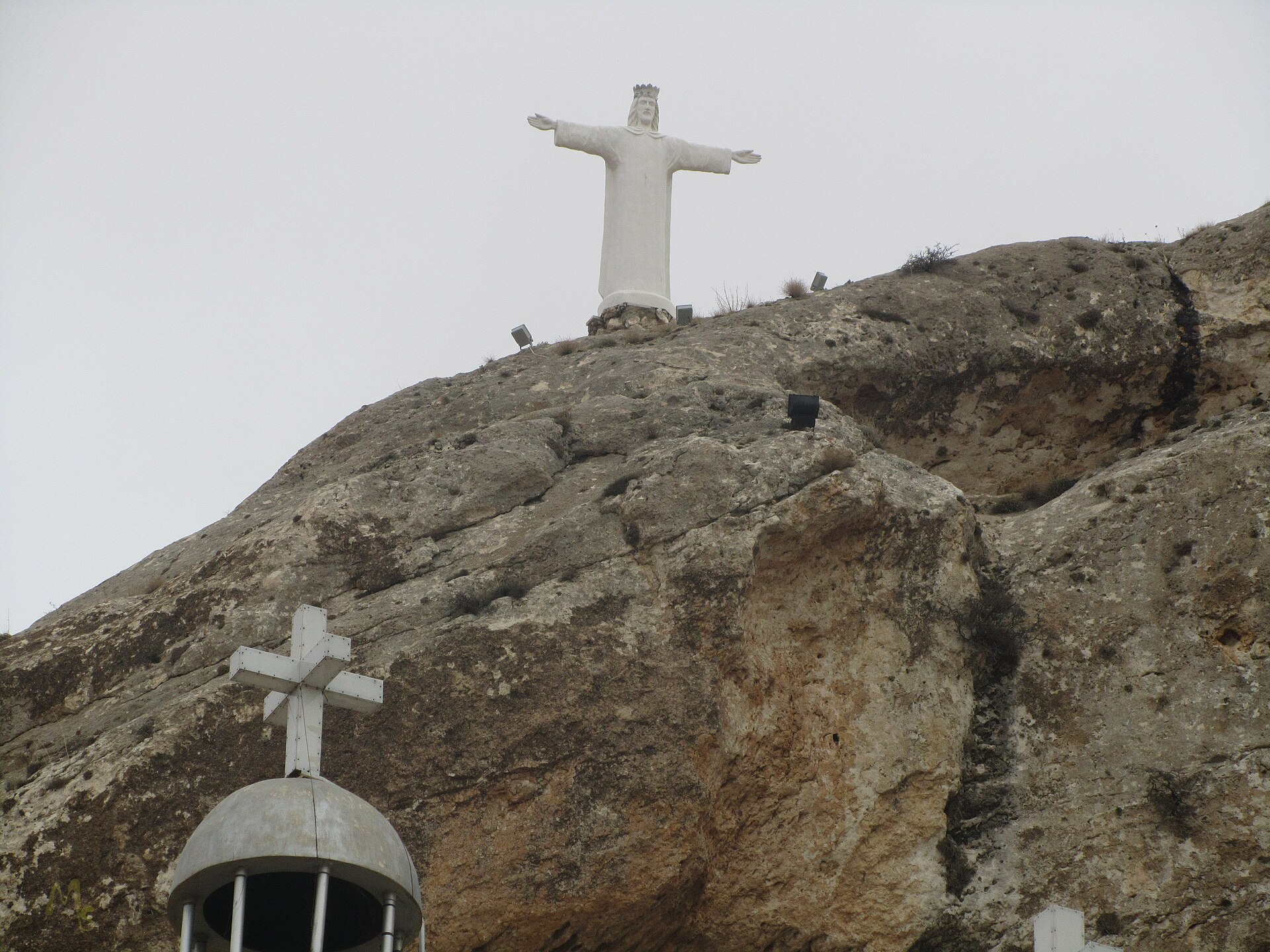
Perched on a hill overlooking Lubango, the Cristo Rei statue stays in memory not for its size, but for the way it watches over the city. It’s a place few travelers visit, yet it stands as a quiet landmark—one shaped by faith, history, and the unhurried pace of southern Angola.
The statue was erected in 1957 under Portuguese colonial rule. A local bishop commissioned it to strengthen Catholic influence in the region. Made of concrete, it reaches twenty-seven meters, including its pedestal. The figure’s arms stretch outward, though not as wide as in Rio—here, the gesture feels deliberate, as if offering something steady rather than grand. At the time, Lubango was a small town surrounded by coffee and maize fields, and the statue’s arrival drew the community together.
Architecturally, Cristo Rei is plain. No intricate carvings or embellishments—just concrete, slightly rough to the touch. It doesn’t compete with European cathedrals or Latin American shrines. Instead, it belongs to the hillside, as if it grew there. To reach it, you walk a steep path through rocks and sparse grass. From the top, Lubango’s valley unfolds, with the Serra da Neve mountains rising in the distance. On clear days, the city below looks close enough to touch.
Lubango’s history is marked by conflict. The Cristo Rei statue has seen much of it—Angola’s war for independence, the civil conflict that followed. The pedestal still bears bullet scars. The colonial-era buildings at the base of the hill are crumbling. For locals, this isn’t just a monument. It’s a place to remember, to pray, or to sit quietly, watching a city that has spent decades rebuilding.
Today, Lubango is home to around seven hundred thousand people. Life moves slowly here. There’s no rush like in Luanda. Markets sell fresh fruit and spices. Cafés serve strong coffee in the mornings. The Cristo Rei statue fits into this rhythm. It isn’t crowded with tourists or turned into a spectacle. You might visit in the early morning, when mist still clings to the hills, or at dusk, when the light turns the landscape golden. Either way, you’ll likely have the place to yourself.
A small park surrounds the statue. Locals come here for picnics or to rest under the trees. In summer, the hill offers relief from the heat below. In winter, the grass dries to gold, and the air feels sharp and clean. Sometimes pilgrims arrive from other parts of Angola, but mostly it’s just residents who pass by daily, barely glancing up.
This isn’t a tourist attraction. No souvenir stalls, no guides, no crowds. That’s why it feels real—it hasn’t been smoothed over for visitors. If you want to see Angola beyond the usual stories, come here. You won’t find a polished version of the country, but something truer: its history, its struggles, and the quiet moments that matter.
If you ever visit Lubango, climb the hill to Cristo Rei. Not for a photograph, but to stand where the wind carries the city’s sounds. Look at the valley below. Think about the stories this place has seen. Maybe that’s how you begin to understand a country—not through guidebooks, but in the stillness of a single moment.