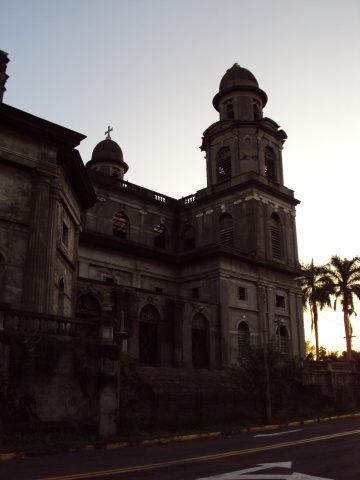
The Old Cathedral holds the quiet dignity of a city that has endured upheaval. Built in the early 20th century, it has witnessed decades of change and destruction. Today, it stands in partial ruin, its weathered walls and fractured arches telling a story of resilience. Decay here carries its own kind of beauty—some things retain their power even in collapse.
The architecture blends neoclassical elements with local influences. The facade, with its tall columns and arched windows, was imposing in its prime. Now, time and disaster have left their mark. Inside, fragments of murals cling to the walls. The remains of the altar hint at the cathedral’s former purpose. Sunlight filters through broken stained glass, casting uneven patterns across the floor.
Construction began in 1925. The cathedral was consecrated a few years later, meant to symbolize progress and faith for a city still finding its shape. In 1972, an earthquake struck, flattening much of Managua and killing thousands. The cathedral survived but was badly damaged. Instead of restoring it, the city built a new cathedral elsewhere. The old one became a monument to the disaster.
Now, it serves as both a historical landmark and a place of remembrance. Locals visit to honor those lost in the earthquake. Travelers come to imagine the city before destruction. A small park surrounds the ruins, where occasional open-air concerts and art displays take place. The atmosphere is contemplative, but not without hope. The ruins feel honest—a reminder of human fragility against nature.
The cathedral was never truly abandoned. Even after the earthquake, services were held here, though irregularly. The people of Managua treated it with reverence, respecting its survival through suffering. Today, it’s open to visitors. You can walk inside, examine the surviving details, and climb to the balcony for a view of the city.
Managua is a city of contrasts. Modern buildings stand alongside ruins. Quiet corners exist where you least expect them. The Old Cathedral is one such place. It doesn’t fit the mold of a typical tourist attraction. There are no flashy displays—just silence, light through shattered windows, and a sense that time has paused.
For anyone interested in Nicaragua’s history, the cathedral matters. It offers a glimpse into the city’s past, not through plaques or guided tours, but through its presence. You can trace the cracks in the walls or sit on a bench in the park, listening to the city behind you. The place speaks for itself.
The Old Cathedral is a symbol of endurance. Life persists even after the worst disasters. It doesn’t demand attention, but it doesn’t let go. It simply exists, as much a part of Managua as its streets and people.