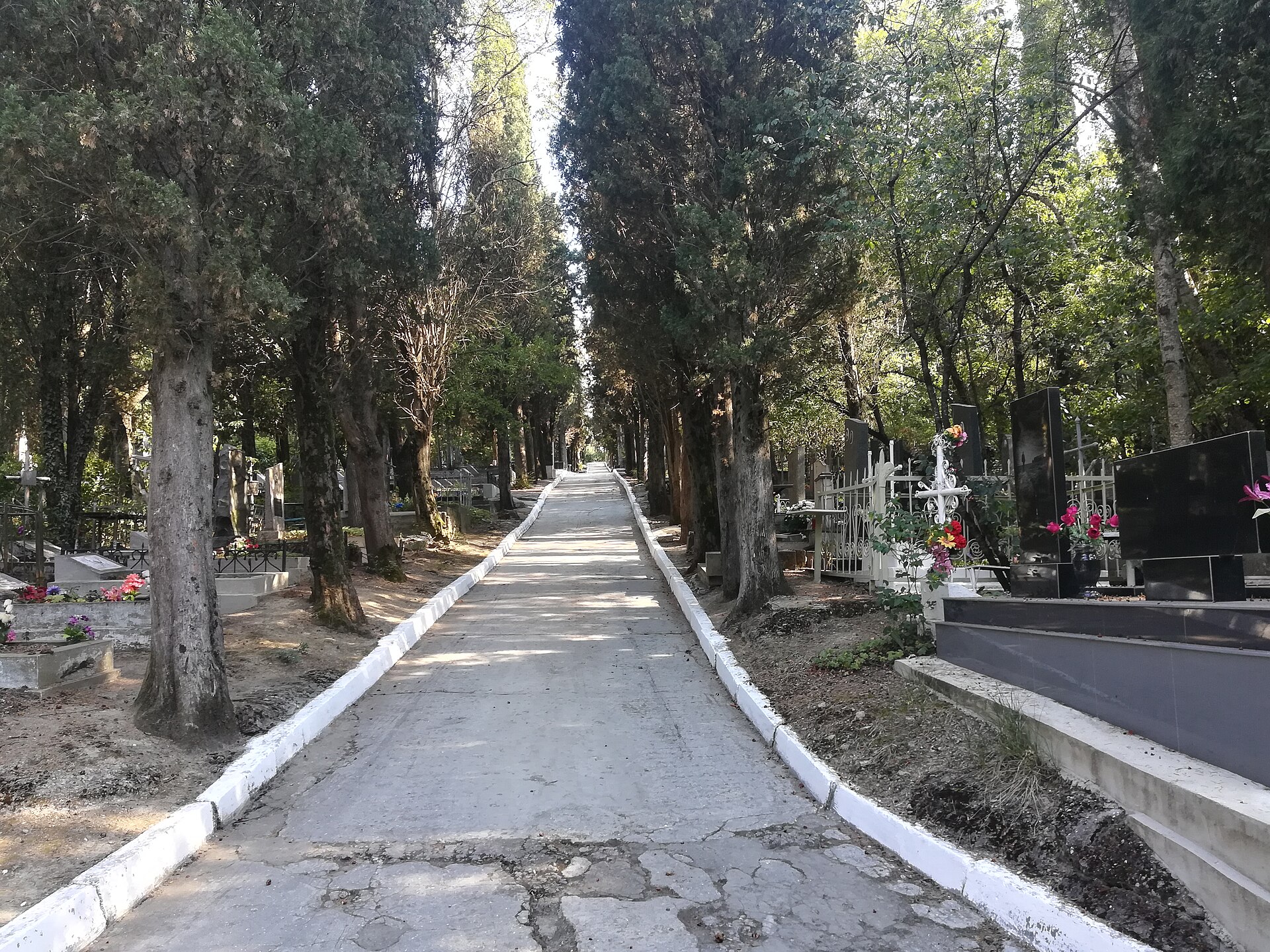
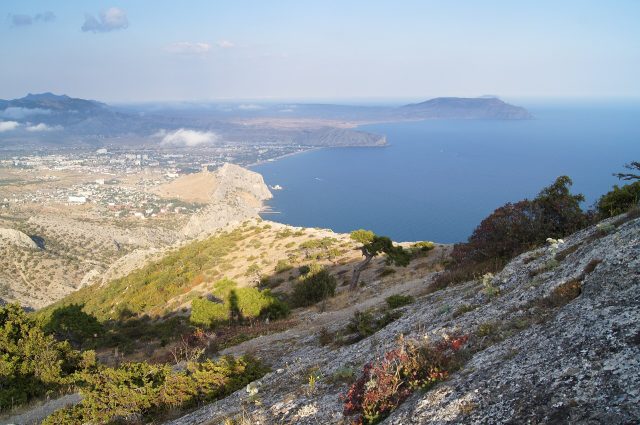
Yalta’s Old City Cemetery is one of those places where time seems to slow down, almost as if the hillside itself is holding its breath. Perched above the town, it overlooks the sea, and from here, the boundary between nature and history feels blurred, as though the land has quietly absorbed the stories of those who rest beneath it. The cemetery dates back to the mid-19th century, when Yalta was transforming from a modest fishing village into a fashionable retreat for Russia’s elite. It became a final resting place not just for locals, but for visitors who never left—some by chance, others by choice. Among the graves are the names of those who shaped the town: physicians who treated its residents, merchants who built its fortunes, artists who captured its light, and soldiers who defended it. Some tombstones still bear traces of their former grandeur, while others have been worn smooth by decades of wind and rain, yet each one carries the weight of a life once lived in this corner of the Crimea.
The architecture here is a quiet testament to the tastes and beliefs of different eras. Classical marble obelisks stand beside Gothic chapels, their pointed arches softened by time, while simple wooden crosses lean against more elaborate family vaults. The most striking are the private mausoleums, their stained-glass windows and wrought-iron gates hinting at the importance of lineage and remembrance in the past. A few were crafted by skilled artisans, though their names have long faded from memory. Now, their work endures, weathered by salt air and the slow creep of ivy, blending into the landscape as if it has always been here. Walking through the cemetery, the shift in styles becomes apparent—near the entrance, newer graves stand in orderly rows, but deeper in, the older sections feel almost wild, with moss-covered stones half-hidden beneath overgrown branches.
Some of those buried here left a mark beyond their lifetimes. The grave of composer Vasily Nemirovich-Danchenko, brother of the renowned theater director Vladimir Nemirovich-Danchenko, lies among them. Nearby is the resting place of Dr. Fyodor Tarasov, a physician who tended to both locals and visitors in the late 1800s. There are also memorials to soldiers who fell during the Crimean War, to those who perished in the upheavals of revolution, and to others who did not survive the hardships of World War II. Each grave is more than just a marker—it’s a fragment of history, a reminder of how Yalta has changed over the decades, shaped by war, migration, and the ebb and flow of empires.
Unlike the rigid symmetry of many urban cemeteries, this one feels almost organic. Trees and shrubs grow where they please, their branches casting shifting shadows over the graves. In summer, the air is thick with the scent of pine and cypress, while in winter, the silence is broken only by the crunch of dry leaves underfoot. On clear days, the sea is visible from nearly every corner, its endless blue a stark contrast to the stillness of the hillside. Locals sometimes come here not just to visit family, but to escape the noise of the town, to sit and think in a place where time moves differently. For visitors, the cemetery is an unexpected discovery—one that doesn’t appear in most guidebooks, but leaves a lasting impression on those who wander its paths.
In recent years, the Old Cemetery has begun to show its age. Some graves have crumbled, their inscriptions erased by time, while others have been swallowed by creeping vines. Yet even in its state of gentle decay, the place retains a strange vitality. There are no guided tours or informational plaques here—just the quiet presence of the past, carried on the wind. Occasionally, a few dedicated locals will tend to a neglected grave, but such efforts are rare. Perhaps it’s this very imperfection that gives the cemetery its character. It doesn’t pretend to be pristine; it simply exists, a quiet witness to the lives that once filled the streets of Yalta.
Yalta has always been a city of contrasts—luxury and simplicity, bustling promenades and quiet backstreets, the fleeting energy of tourists and the enduring weight of history. The Old Cemetery embodies that duality. It’s a place where the glamour of the resort town fades into something deeper, something more permanent. There’s no rush here, no need to fill the silence. Instead, there’s only the slow passage of time, preserving the past in its own imperfect way. For some, it’s a place of sorrow; for others, a source of peace. But for everyone who visits, it offers a moment to reflect on what remains when life is over.
If you find yourself in Yalta and want to see the city beyond its postcard-perfect facade, the Old Cemetery is worth a visit. It doesn’t demand much—just a respect for stillness and memory. You could spend an hour or two wandering its paths, reading the names on the stones, and imagining the lives they represent. You won’t uncover any grand historical revelations here, but you might feel something real, something that lingers long after you’ve left. It’s the kind of place that doesn’t reveal itself all at once, but stays with you, a quiet echo of the past in a town that’s always looking toward the future.