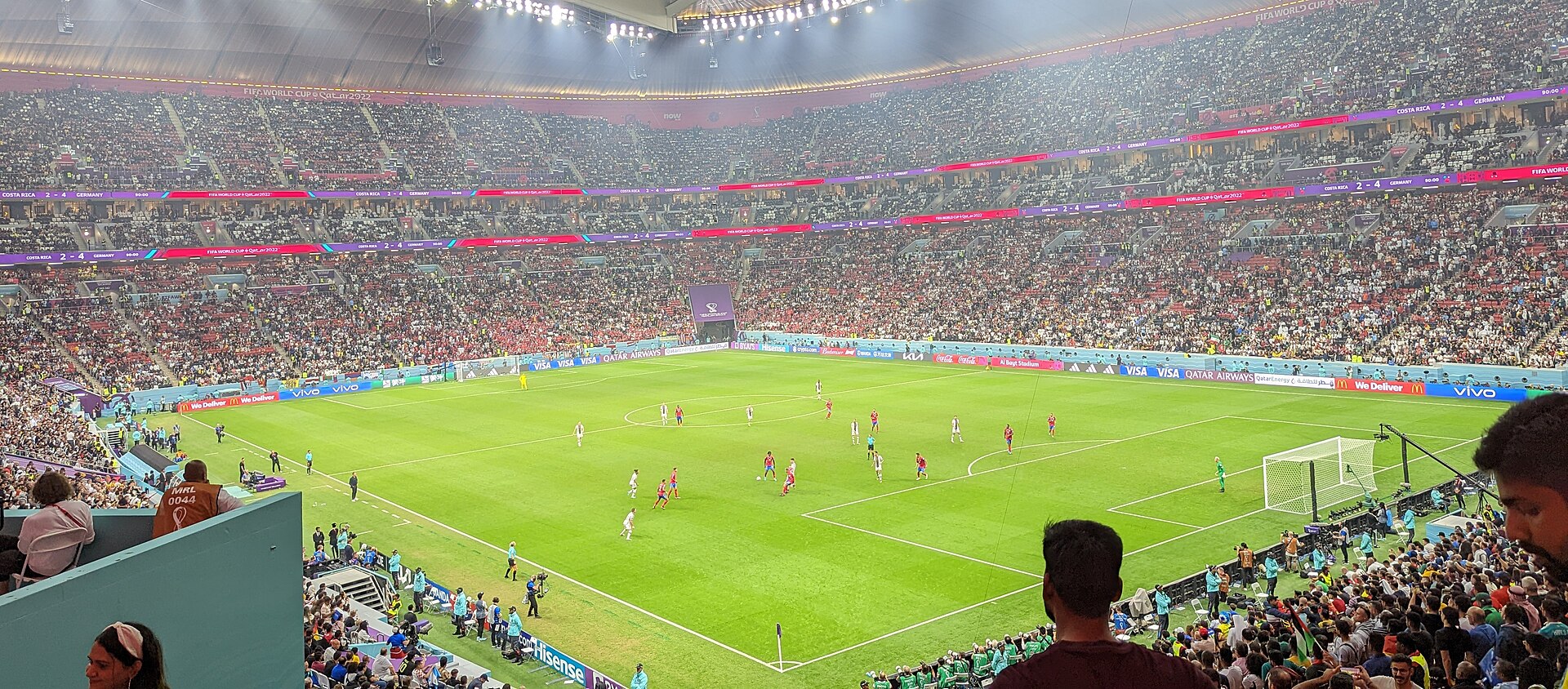
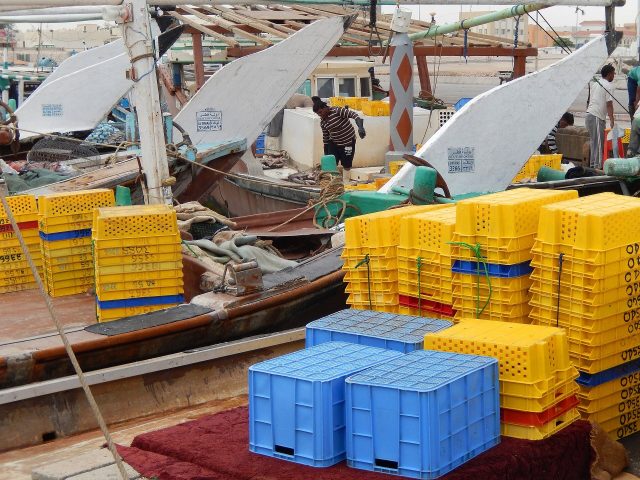
Al Khor is a quiet coastal city in northern Qatar, often overshadowed by the glitz of Doha, but it holds its own with a slower pace and a strong sense of tradition. Among its most striking landmarks is the Al Bayt Stadium, a structure that feels both futuristic and deeply rooted in the region’s heritage. Built for the 2022 FIFA World Cup, the stadium has since become a symbol of Qatar’s ambition to blend modernity with cultural identity, though its presence here, in a city more known for fishing and pearl diving than global events, adds an unexpected layer to its story.
The stadium’s design is impossible to ignore. Its massive tent-like structure, inspired by the *bayt al sha’ar*—the traditional black tents used by Bedouin nomads—dominates the skyline. The exterior is clad in a membrane that mimics the woven fabric of those tents, its peaks and curves creating a silhouette that shifts with the light. At night, the facade glows with soft illumination, casting long shadows across the surrounding desert. The architects didn’t just borrow the aesthetic; they reimagined it at a monumental scale, turning a functional sports venue into something that feels almost like a piece of land art.
Inside, the stadium is just as carefully considered. The seating bowl is designed to maximize shade, a practical nod to Qatar’s climate, while the open-air design allows breezes to flow through. The pitch itself is a lush green, a stark contrast to the arid landscape beyond the walls. Capacity-wise, it’s one of the largest in the country, though during the World Cup, it felt intimate compared to the cavernous stadiums of other host nations. That intimacy is part of its charm—there’s a sense that the crowd, no matter how large, is part of something shared rather than lost in a sea of spectators.
What makes Al Bayt Stadium unusual is how it sits within its surroundings. Al Khor is not a city built for tourism; it’s a place where life moves at the rhythm of the sea and the desert. The stadium, with its grandeur, feels like a visitor itself, though one that has been thoughtfully integrated. The area around it is still developing, with wide roads and empty plots that hint at future growth. For now, the contrast between the stadium’s polished modernity and the raw, unfinished edges of the city creates an interesting tension—one that reflects Qatar’s broader push to redefine itself while holding onto its past.
The stadium’s legacy extends beyond the World Cup. It was designed with a modular upper tier that could be dismantled after the tournament, reducing its capacity but ensuring it wouldn’t become a white elephant. The removed sections were donated to countries in need of sports infrastructure, a gesture that aligns with Qatar’s stated goals of using the event to foster global connections. Locally, the stadium has hosted league matches, concerts, and community events, though its use remains sporadic. For many residents of Al Khor, it’s still a place they visit for special occasions rather than a daily fixture.
The choice to build such a landmark in Al Khor rather than Doha was deliberate. The Qatari government has long sought to decentralize development, and the stadium was part of a broader effort to bring investment to the northern regions. Whether that strategy will succeed in the long term remains to be seen, but for now, the stadium has given Al Khor a new identity. It’s no longer just a stop on the way to somewhere else; it’s a destination in its own right, even if only for a few hours.
Visiting the stadium today, you might find it quiet on non-event days. The parking lots are empty, the entrances locked, and the only sounds are the wind and the occasional passing car. But that stillness doesn’t diminish its presence. If anything, it makes the structure feel more like a monument than a stadium—a place that exists as much for what it represents as for what it hosts. The surrounding area is slowly filling in, with new developments promising to turn this part of Al Khor into a proper district, but for now, the stadium stands alone, a striking reminder of how quickly a place can change.
For those who come to see it, the experience is as much about the journey as the destination. Driving north from Doha, the landscape shifts from urban sprawl to open desert, the road cutting through dunes before giving way to the flat coastal plains of Al Khor. The stadium appears suddenly, its dark silhouette rising against the horizon. There’s no grand approach, no landscaped boulevard—just the stark beauty of the desert and the sea. It’s a reminder that in Qatar, even the most modern creations are shaped by the land itself.
Al Bayt Stadium may have been built for a global audience, but its future lies in how it fits into the lives of those who live nearby. For now, it remains a work in progress, both in terms of its physical surroundings and its role in the community. But that’s part of its appeal. It’s not just a relic of a single event; it’s a space that’s still finding its place, much like the city it calls home.