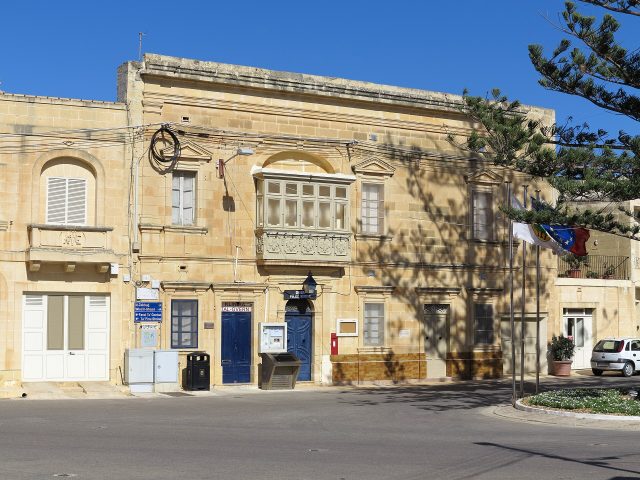
St. George’s Basilica stands at the quiet heart of Victoria, the capital of Gozo, where the island’s layered history feels especially close. The church rises from a small square, its pale limestone facade blending into the labyrinth of narrow streets that wind through the old town. Unlike the grand cathedrals of Europe that dominate skylines, this basilica doesn’t announce itself with towering spires or ornate gates. Instead, it waits, unassuming, until you step inside and find yourself surrounded by something far more striking than its modest exterior suggests.
Construction began in the mid-1600s, a time when Gozo was under the rule of the Knights Hospitaller. The knights brought with them not just military discipline but a taste for the dramatic, and their influence shaped the basilica’s baroque style. The design is often credited to Giovanni Barbara, a Maltese architect whose work helped define the island’s religious architecture. Yet the church wasn’t completed in a single era—its interiors evolved over decades, with the final touches added in the late 1700s. The result is a space where every detail, from the gilded moldings to the painted ceilings, feels deliberate, as if each generation left its mark without erasing what came before.
Inside, the basilica unfolds like a jewel box. The high vaulted ceilings are covered in frescoes depicting scenes from the life of St. George, their colors still vivid despite centuries of candle smoke and incense. Gold leaf glints in the dim light, catching the eye as it traces the curves of altars and cornices. The main altar, carved from marble and crowned with statues of saints, holds a revered 17th-century icon of St. George. Locals attribute the church’s survival through the devastating 1693 earthquake to this image, and even today, it draws pilgrims who come to pray or simply to stand in its presence.
For the people of Gozo, the basilica is more than a place of worship—it’s a living part of their community. The island’s most important religious festivals revolve around it, none more so than the feast of St. George in April. During these celebrations, the square outside transforms. Strings of lights crisscross overhead, bands play traditional music, and fireworks burst over the rooftops late into the night. The festivities blend deep devotion with unabashed joy, a reminder that faith here isn’t solemn but shared, something that spills into the streets and brings people together.
Art lovers will find plenty to admire beyond the religious significance. The basilica houses works by some of Malta’s most celebrated artists, including Mattia Preti, whose paintings grace the side altars. One of the most intriguing pieces is the wooden statue of St. Michael in the chapel dedicated to him. Carved in the 1700s, it’s still carried through the streets during processions, a tradition that connects the present to the past in a way that feels almost tangible. The statue’s worn surface tells its own story, one of countless hands that have lifted it over the years.
Gozo is an island where history isn’t confined to museums or ruins—it’s woven into the fabric of daily life. St. George’s Basilica has stood through pirate raids, earthquakes, and shifting empires, yet it remains a constant, a place where the island’s resilience is quietly celebrated. Visitors often find themselves lingering longer than they intended, drawn not just by the art or architecture but by the sense of continuity. There’s something about the way the light filters through the stained glass, or how the scent of old wood and incense lingers in the air, that makes the outside world feel distant.
If you visit Victoria, take a moment to step inside. The basilica isn’t a place to rush through. Sit on one of the wooden pews and let your eyes adjust to the soft glow of candles and gold. Listen to the silence, broken only by the occasional echo of footsteps or the distant chime of bells. This isn’t a monument frozen in time—it’s a place where history is still unfolding, where the past and present coexist without effort. And perhaps that’s why people keep coming back, not just to see, but to feel something deeper, something that lingers long after they’ve left.