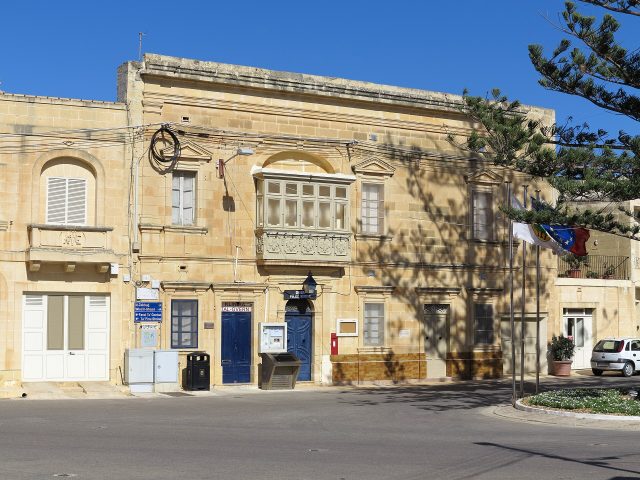
The Sacred Heart of Jesus Church in Fontana is one of those quiet places in Malta that doesn’t demand attention but lingers in the mind long after you’ve left. Tucked away on the edge of Victoria, in a small village where life moves at its own unhurried pace, it stands as a subtle presence under the Mediterranean sun. Unlike the grand cathedrals of Valletta or the well-trodden tourist paths, this church is woven into the daily rhythm of local life—a place people visit not for spectacle, but for solace and familiarity.
Fontana itself owes its name and existence to water. The village grew around a freshwater spring, a precious resource on an island where droughts were once a constant threat. Long before the church was built, chapels and shrines dotted the area, marking the importance of these natural sources. By the early 20th century, Fontana had become an independent parish, and in 1924, the Sacred Heart of Jesus Church was constructed to serve as its spiritual heart. For nearly a century, it has been a steady presence in the lives of those who call this corner of Gozo home.
The church’s architecture is unassuming, reflecting its purpose rather than any grand ambition. Built from local globigerina limestone—a soft, golden-hued stone that mellows beautifully with age—it’s a modest single-nave structure. The façade is simple, with a small portal and a round window above the entrance, flanked by two low bell towers. Inside, there’s no overwhelming opulence, just a sense of quiet dignity. Wooden pews line the nave, sunlight filters through plain stained glass, and the altar, dedicated to the Sacred Heart, anchors the space with its understated devotion.
A few details inside the church hint at its deeper connection to the community. The walls bear faded frescoes painted by local artists, their brushstrokes telling stories of faith passed down through generations. In the side chapels, statues of saints stand as silent witnesses to decades of prayer. One of the most revered is a figure of the Virgin Mary, brought from Rome in the mid-20th century. Locals speak of its miraculous qualities, and during feast days, the church fills with pilgrims seeking its blessing. Another point of pride is the small organ, installed in the 1950s. Though modest in size, its sound carries clearly through the nave, filling the space with music during Sunday services.
The church is more than just a building; it’s a gathering place for the milestones of village life. Baptisms, weddings, and funerals all take place here, binding the community together. The most vibrant time of year is June, when the feast of the Sacred Heart of Jesus is celebrated. For days, the church is adorned with flowers, and the streets of Fontana come alive with processions, music, and the scent of traditional Maltese sweets. The festivities draw not just locals but visitors from nearby villages, turning the quiet church into the center of a joyful, communal celebration.
Fontana itself is the kind of place that offers a glimpse into Malta beyond the postcard images. Its narrow streets wind past stone houses and old wells, where the past lingers in small, everyday details. Women still gather at the public washhouses, just as their grandmothers did, scrubbing laundry in the same spots where water has flowed for centuries. The church is part of this landscape, a quiet landmark that has watched over the village through generations. Walk beyond its walls, and you’ll find terraced fields, abandoned farmhouses, and the remnants of ancient aqueducts—all traces of a way of life shaped by the land and its resources.
The best time to visit the Sacred Heart of Jesus Church is on a weekday, when the doors are open and the space is empty. Step inside, sit on one of the wooden pews, and listen to the stillness, broken only by the occasional chirp of birds outside. If you’re lucky, you might encounter a local stopping by to pray or simply to escape the midday heat. They won’t intrude, but if you strike up a conversation, they’ll likely share stories about the church, the village, or what it’s like to live on an island where history is never far from the surface.
Malta is often seen through the lens of its beaches and ancient ruins, but places like Fontana remind you that the island’s soul lies in its quieter corners. The Sacred Heart of Jesus Church doesn’t try to impress; its charm lies in its simplicity. It’s a place where you can feel the weight of history, the resilience of a community, and the quiet beauty of a life lived in harmony with the land. For those who take the time to visit, it offers something far more lasting than a photograph—a sense of connection to the people who have kept its doors open, year after year.