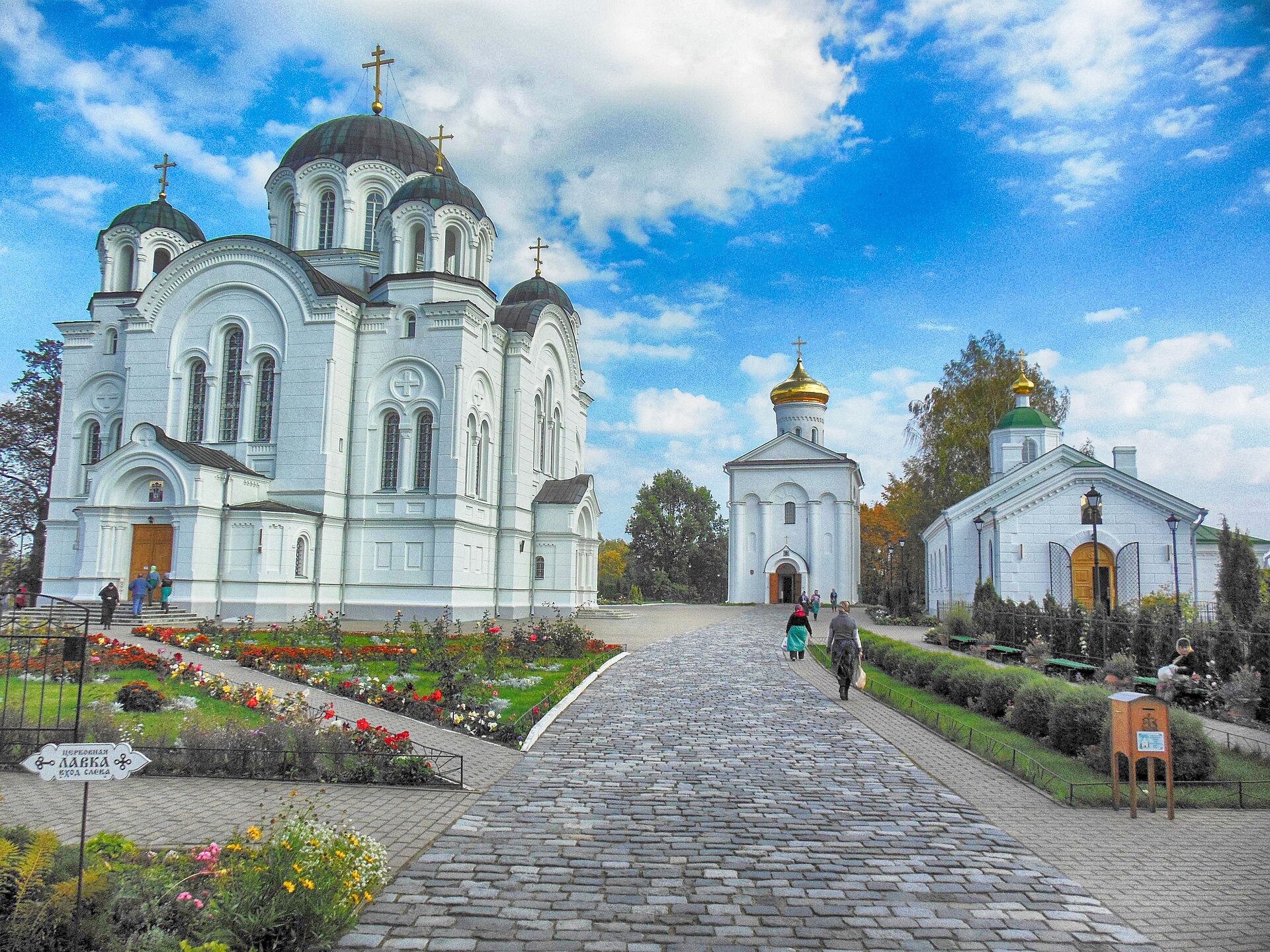
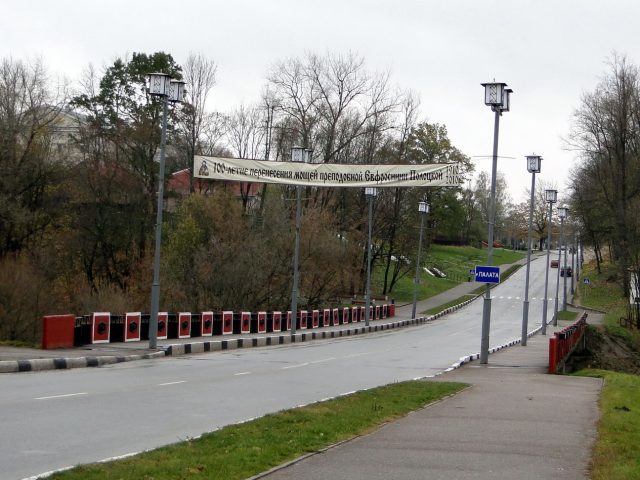
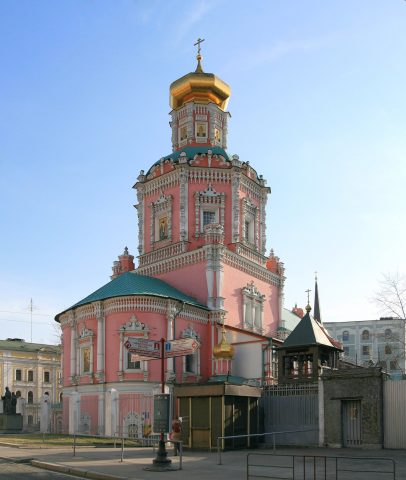
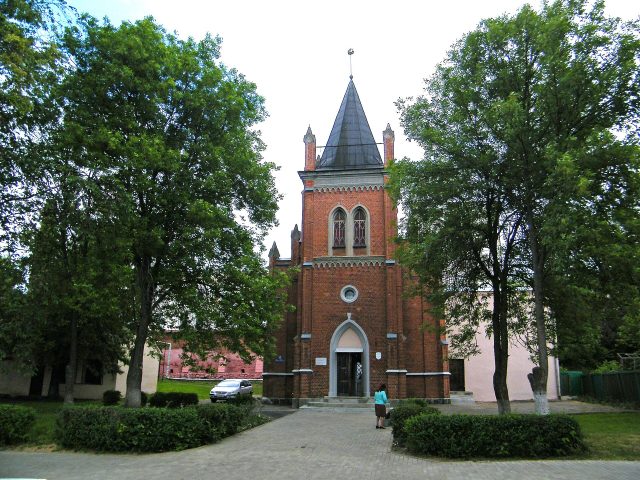
Polotsk’s Spaso-Evfrosiniya Monastery stands on the banks of the Western Dvina River. The green hills around it slope gently, and the monastery itself seems to grow from the earth rather than dominate it. Centuries have passed here, yet the place retains a quiet pulse—history, faith, and daily life intertwine without fanfare.
The monastery was founded in the 12th century by Euphrosyne of Polotsk, a saint revered in Orthodox Christianity. Born into a princely family, she left court life to establish a convent. Under her leadership, the monastery became a center of learning. A school operated here, scribes copied manuscripts, and Euphrosyne wrote religious texts that survive to this day. Her relics, discovered after her death, were kept here for centuries, attracting pilgrims from across medieval Rus.
The oldest structure, the Transfiguration Cathedral, dates to the mid-12th century. Built from narrow red bricks called plinths, its walls still hold fragments of ancient frescoes. The design is simple: tall vaults, slender windows, and sturdy columns. Unlike later churches with elaborate carvings, this one relies on clean lines and restraint—a defining feature of early Belarusian architecture.
Over time, the monastery expanded. In the 17th century, a bell tower was added, one of the tallest in Polotsk at the time. Its tiers rise like steps, and the old bells still hang inside. Nearby, the 19th-century Church of St. Euphrosyne stands smaller but no less enduring. Its walls have heard generations of prayers.
The monastery’s history has known turmoil. It survived invasions, neglect, and repurposing. During the Soviet era, it served as a museum and later a warehouse. Yet by the late 20th century, restoration began. Frescoes were repaired, walls reinforced, and the buildings returned to their original state.
Today, the monastery is an active convent. Nuns continue the work Euphrosyne began nearly nine hundred years ago.
The courtyards are quiet. The stone paths are worn smooth. The air feels still, yet alive with the presence of those who have walked here before—people who prayed, worked, and found meaning within these walls.
Polotsk is a city rich in history, but the Spaso-Evfrosiniya Monastery is its quiet core. It doesn’t seek attention or impress with grandeur. Instead, it offers something simpler: the weight of time made tangible. The stones remember the hands that laid them. The air carries centuries of whispered prayers. The place doesn’t feel like a monument—it feels like a living piece of the past.