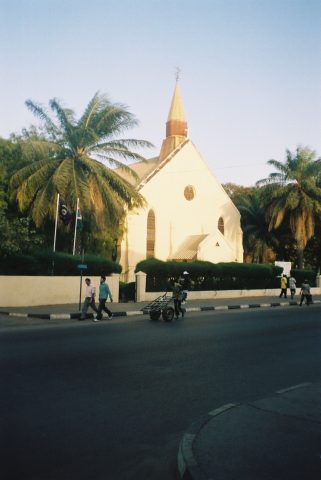
Banjul’s Cathedral of the Assumption of Mary is one of those quiet places that doesn’t demand attention but lingers in the mind long after you’ve left. Tucked away on a central street in the Gambian capital, it stands among low-rise buildings, palm trees, and the hum of everyday life. Unlike the grand cathedrals of Europe, its facade is unassuming—whitewashed walls, a modest bell tower, and an air of understated simplicity. There’s no attempt to overwhelm visitors with grandeur; instead, it invites you in, offering a moment of stillness in a city that rarely slows down.
The cathedral’s history is woven into the fabric of The Gambia itself. Christianity arrived here in the late 19th century, brought by British colonial officials, traders, and missionaries. As the colony took shape, so did the need for a permanent place of worship. Built in the early 20th century, the Cathedral of the Assumption became one of the first Catholic churches in the region. Over the decades, it has witnessed the country’s transformation—from colonial rule to independence, from economic struggles to political upheavals. Yet for the local congregation, it has always been a steady presence, a place of continuity in a changing world.
Architecturally, the cathedral is simple but harmonious, blending neoclassical elements with subtle colonial influences. Inside, the space feels open and airy, with high ceilings, wooden pews, and a restrained altar. The stained glass, if present, is unobtrusive, casting soft, shifting patterns of light across the walls when the sun is right. But the true heart of the cathedral lies in its people. The congregation is small but devoted, drawing not only Gambian Catholics but also visitors, expats, and even curious passersby seeking respite from the heat and noise outside.
Beyond its religious role, the cathedral serves as a cultural crossroads in a predominantly Muslim country. The Gambia has long been known for its religious tolerance, and the Catholic community in Banjul, though modest in size, plays an active part in local life. The parish organizes charity events, supports those in need, and runs educational programs for children. During major holidays like Christmas and Easter, the cathedral comes alive with hymns, shared meals, and a sense of community that spills beyond its walls.
For travelers, the cathedral offers more than just a historical landmark. There are no crowds here, no souvenir stalls, no pushy guides—just a quiet space to sit, listen, and observe. Locals come to pray, to reflect, or simply to escape the midday sun. Occasionally, the cathedral hosts concerts of sacred music or small art exhibitions, events that might go unnoticed in most guidebooks but add to the sense of place. It’s the kind of spot where you can linger without purpose, soaking in the atmosphere of a city that moves at its own unhurried pace.
A small garden surrounds the cathedral, filled with mango trees and flowering plants. It’s a welcome refuge from the heat, especially in the late afternoon when the air cools and the light turns golden. Nearby, the streets of Banjul tell their own stories—old colonial buildings, the bustling Albert Market with its spices and crafts, and the waterfront where the Gambia River stretches toward the horizon. Together, they create a sense of timelessness, as if the city has paused just long enough to let you catch your breath.
The Cathedral of the Assumption of Mary is more than just a building; it’s a living piece of Banjul’s history. It has endured wars, political shifts, and economic hardships, yet remains a place where people find solace and connection. For some, it’s a house of worship; for others, a quiet corner of the city or a glimpse into Gambia’s layered past. Whatever brings you here, it’s a reminder that this small West African nation is more than just beaches and wildlife—it’s a place where different faiths and traditions coexist, shaping a culture that’s as resilient as it is welcoming.