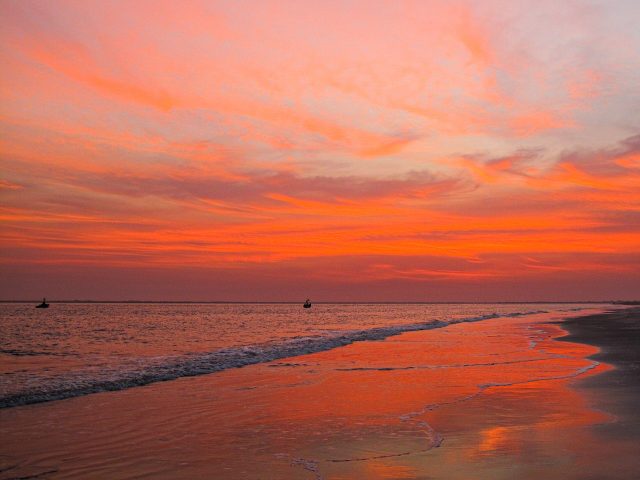
Niumi National Park is one of those rare places where the wild still feels untamed. Stretching across the northern edge of The Gambia, where the country brushes against Senegal, the park covers the vast delta of the Gambia River as it spills into the Atlantic. There are no paved roads here, no crowds, no signs pointing you toward the next attraction—just mangroves twisting into the water, sandbars shifting with the tide, and savannah that seems to stretch forever. It’s a landscape that hasn’t changed much in centuries, where the rhythm of life is set by the river and the seasons rather than by human schedules.
The park was established in the mid-1980s to protect this fragile ecosystem, and it remains one of the best-preserved corners of West Africa. The delta is a crossroads for wildlife, where freshwater and saltwater meet, creating a habitat that supports everything from dolphins riding the tide into the river’s mouth to hippos wallowing in the shallows. Crocodiles sun themselves on muddy banks, and if you’re lucky, you might spot a manatee gliding through the water—one of the rarest sights in the region. But the real spectacle here is the birds. Pelicans, flamingos, herons, and dozens of other species nest in the mangroves or stop here during migration. In the peak season, the sky darkens with their numbers, their calls blending into a constant, living hum.
The land shifts dramatically with the seasons. During the rainy months, from June to October, the river swells, flooding the mangroves and turning the delta into a maze of narrow channels. Some islands become accessible only by boat, and the water rises high enough to lap at the roots of the trees. When the dry season arrives, the river recedes, leaving behind exposed sandbars and mudflats. The savannah dries out, the grass bleaching to gold, and animals gather around the shrinking waterholes. This is when the park feels most alive—elephants, buffalo, and antelope venture into the open, while predators like leopards and hyenas grow bolder, drawn by the promise of an easy meal.
The people who call this place home have lived alongside the delta for generations. The communities here, mostly Mandinka and Wolof, have always relied on the river for their livelihoods—fishing, gathering oysters, and hunting small game. Some of the villages inside the park have stood for centuries, their way of life largely unchanged. You might see fishermen pushing off in narrow wooden canoes at dawn or women collecting mangrove shoots to weave into roofs. Visitors often stay in these villages, sleeping in simple guesthouses and eating meals of grilled fish or thick, earthy stews made from baobab leaves. There’s no tourist menu here, just the food that’s been cooked the same way for as long as anyone can remember.
Exploring Niumi is an adventure in the truest sense. The best way to move through the park is by boat, gliding along the waterways where crocodiles bask on the banks and monkeys chatter in the trees. In the dry season, safari drives take you deep into the savannah, following dusty tracks to watering holes where animals congregate. But even a walk along the shore can feel like stepping into another world. The sand is marked with the prints of birds, crabs, and sometimes the unmistakable paw of a leopard. There are no guided paths, no fences, no signs telling you where to go—just the land as it is.
This isn’t a place for those who expect luxury or convenience. There are no high-end lodges, no restaurants with international cuisine, no souvenir shops selling mass-produced trinkets. What you’ll find instead is silence, broken only by the cry of a bird or the rush of the tide. At night, the stars hang so low you could almost reach up and touch them. The air smells of salt and damp earth, and the sense of being somewhere untouched by time is overwhelming. For anyone who’s ever wanted to see Africa beyond the postcard images—without the crowds, the tour buses, the carefully curated experiences—Niumi offers something far more real.
That said, visiting the park requires a bit of planning. The roads are rough, and infrastructure is minimal. It’s best to come with a guide who knows the area and can arrange transportation, lodging, and meals. The rainy season can make parts of the park inaccessible, and mosquitoes are relentless, so packing the right gear is essential. But none of that matters once you’re there. The inconveniences fade into the background when you’re watching a herd of elephants drink from a watering hole at dusk or listening to the chorus of birds at dawn. Niumi isn’t just a park—it’s a reminder of what the world used to be like, before maps and borders and schedules. And for a little while, you get to step into that world.