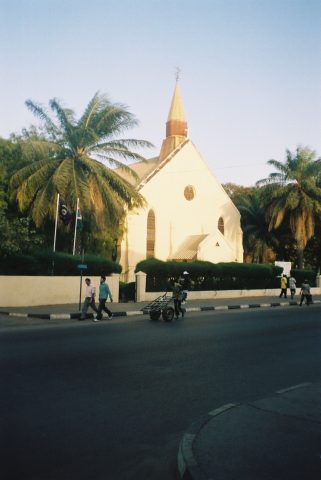
The Gambia National Museum in Banjul is one of those quiet places that doesn’t announce itself with grand facades or tourist crowds, yet holds the kind of stories that slowly unfold the longer you stay. Housed in a modest colonial-era building near the city center, it feels more like a well-kept secret than a major attraction. The museum opened in 1985, not as a monument to wealth or power, but as an attempt to preserve the fragments of a nation’s past that might otherwise slip away. Inside, the air is cool and still, the kind of quiet that makes you lower your voice without thinking, as if the weight of history here demands a certain respect.
The exhibits begin with the earliest traces of human life in the region, though Gambia’s archaeological record is sparse compared to some of its neighbors. Stone tools and pottery shards hint at ancient settlements along the river, where people lived in small communities long before the arrival of outsiders. The River Gambia has always been the country’s lifeline, shaping its culture, trade, and even its borders, and the museum does a quiet job of reminding visitors just how central it has been. There’s a sense of continuity here—people have always moved along this waterway, trading, fishing, and telling stories that stretch back centuries.
One of the most compelling sections focuses on the transatlantic slave trade, a painful but necessary part of Gambia’s history. The museum doesn’t shy away from the brutality of the era, though it presents the facts without sensationalism. Maps show the routes of slave ships, while artifacts like shackles and manacles serve as stark reminders of the human cost. What’s striking is how the museum ties this history to the present, showing how the legacy of slavery shaped the country’s social and economic structures. Nearby, displays on resistance and abolition highlight the ways Gambians fought against oppression, from local uprisings to the eventual push for independence.
The colonial period is another key theme, though the museum treats it with a light touch. Exhibits on British rule are more about daily life than grand political narratives—photographs of early 20th-century Banjul, traditional clothing, and household items paint a picture of a society adapting to foreign influence while holding onto its own identity. There’s a certain irony in seeing these artifacts now, displayed in a building that was once part of the colonial administration itself. The museum doesn’t dwell on bitterness, though; instead, it seems more interested in showing how Gambians navigated these changes, blending outside influences with their own traditions.
A large portion of the museum is dedicated to Gambia’s cultural heritage, and this is where the exhibits feel most alive. Masks, musical instruments, and textiles from different ethnic groups—Mandinka, Wolof, Fula, Jola, and others—reveal a country rich in diversity. The displays on traditional music are particularly engaging, with drums and koras (a stringed instrument central to West African music) that seem to hum with the rhythms of past performances. There’s a sense of movement here, as if the objects are waiting for the next festival or ceremony to bring them back to life. The museum also highlights oral traditions, emphasizing how stories, proverbs, and songs have kept Gambian culture vibrant across generations.
One of the most understated but meaningful parts of the museum is its collection of photographs. Black-and-white images of Banjul in the mid-20th century show a city that was small but bustling, with markets, streets, and waterfront scenes that feel both familiar and distant. These photos capture moments of ordinary life—fishermen mending nets, women selling goods, children playing—that might otherwise be forgotten. They serve as a bridge between past and present, showing how much has changed and how much has stayed the same. The museum doesn’t try to romanticize the past; instead, it presents these images as they are, letting them speak for themselves.
The museum’s architecture is worth noting, though it’s easy to overlook. The building itself is unassuming, a two-story structure with high ceilings and large windows that let in soft, diffused light. It was originally built in the early 20th century, likely as an administrative office during British rule, and its colonial design—wide verandas, wooden shutters, and a central courtyard—gives it a sense of solidity and permanence. There’s something fitting about housing a museum of Gambian history in a space that has witnessed so much of it. The building doesn’t dominate the exhibits; instead, it provides a neutral backdrop, allowing the artifacts to take center stage.
What makes the Gambia National Museum special isn’t its size or its flashy displays, but its honesty. It doesn’t try to impress with grandeur or spectacle; instead, it offers a quiet, thoughtful look at a country’s past. There are gaps in the story, of course—some periods are glossed over, and certain artifacts feel like they’re missing context. But that’s part of the museum’s charm. It doesn’t claim to have all the answers; it simply invites visitors to sit with the questions, to look closely at the objects and imagine the lives behind them. For those willing to spend time here, it’s a place that lingers in the mind long after you’ve left.