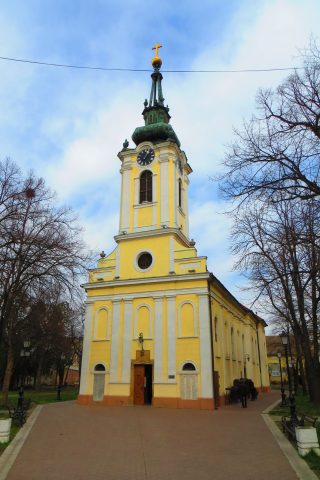
St. John of Nepomuk Cathedral stands quietly in the heart of Zrenjanin, a town where the past lingers in the details of everyday life. Built in the late 18th century, the cathedral is one of the most recognizable landmarks in Vojvodina, a region shaped by centuries of shifting borders and cultural influences. Its pale yellow facade, softened by time, rises above the low-slung buildings of the old town, a reminder of the Habsburg era when Zrenjanin—then known as Veliki Bečkerek—was part of the Austro-Hungarian Empire. The cathedral’s presence is unassuming yet enduring, a place where history feels less like a distant story and more like a living layer of the city.
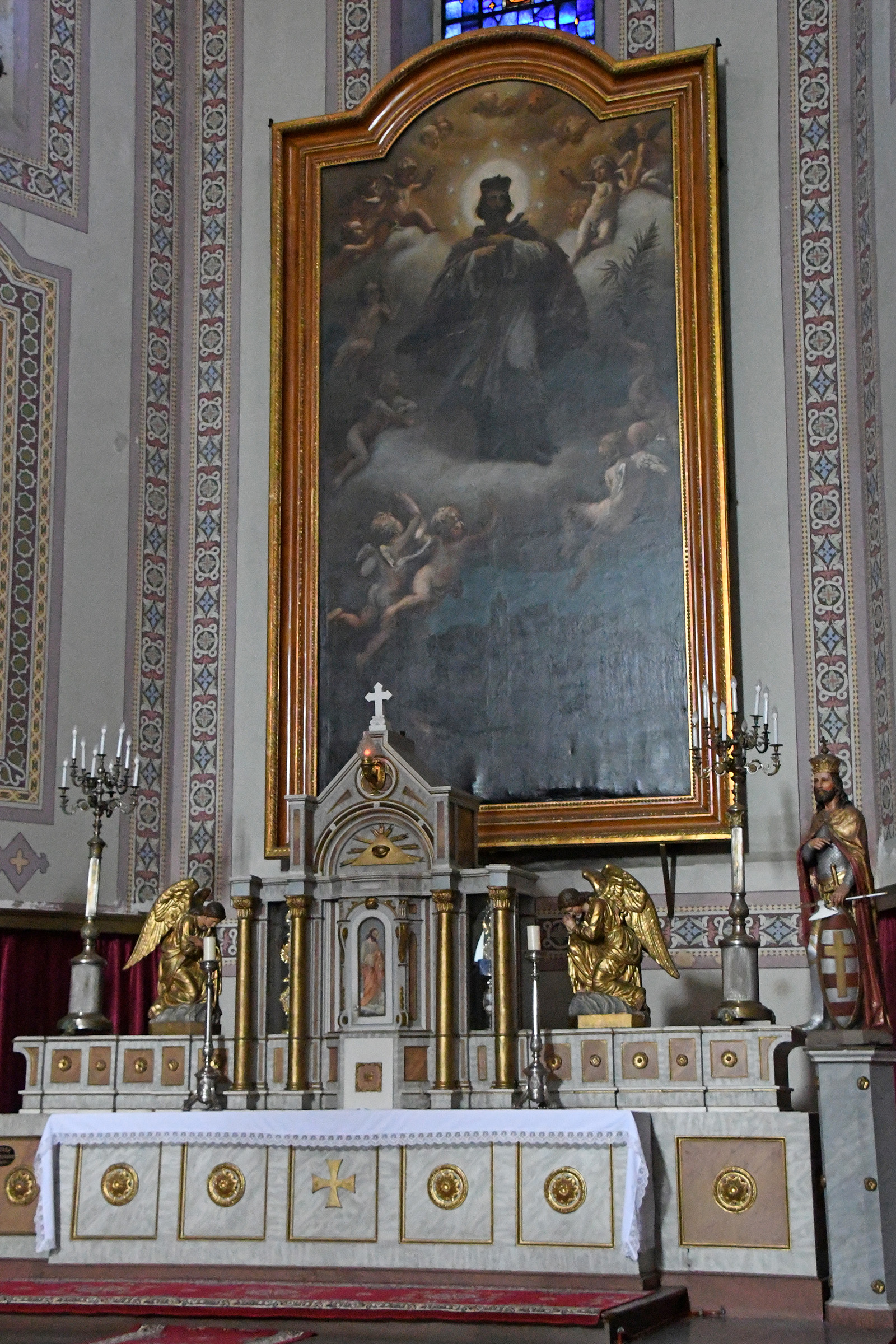
The architecture of the cathedral reflects the transitional style of its time, blending late Baroque elements with the emerging neoclassical influences that were spreading across Central Europe. The exterior is marked by clean lines and a sense of symmetry, with a modest bell tower that doesn’t dominate the skyline but instead harmonizes with the surrounding streets. Inside, the space opens up into a light-filled nave, where the high vaulted ceilings draw the eye upward. The altars, though not overly ornate, carry the weight of devotion, their details worn smooth by generations of hands and prayers. The cathedral was never meant to be grand in the way of Vienna’s cathedrals or Rome’s basilicas, but rather a place of quiet reverence for the community that built it.
St. John of Nepomuk holds a special place in the religious and cultural life of Zrenjanin. The cathedral is dedicated to the Bohemian saint, John of Nepomuk, a figure venerated across Central Europe as the patron of bridges, confessors, and those who protect secrets. His statue, often depicted with a halo of stars, can be found in many towns that were once under Habsburg rule, and Zrenjanin’s cathedral is no exception. The choice of this saint was no accident—it reflected the ties between the Catholic communities of the empire, a shared identity that transcended language and nationality. For the people of Zrenjanin, the cathedral became a symbol of their place within this larger world, a connection to a faith that endured despite political upheavals.
The history of the cathedral is intertwined with the history of the town itself. Zrenjanin has always been a crossroads, a place where different peoples and traditions met and mingled. In the 18th century, when the cathedral was constructed, the town was a thriving center of trade and craftsmanship, its streets lined with the workshops of German, Hungarian, Serbian, and Jewish artisans. The cathedral served not only as a spiritual center but also as a gathering place, a space where the community could come together regardless of background. Over the centuries, as empires rose and fell, the cathedral remained a constant, its walls witnessing the ebb and flow of life in Zrenjanin.
Today, the cathedral is still an active place of worship, its doors open to those who come to pray, reflect, or simply take a moment away from the pace of modern life. The interior is kept with care, though the passage of time is visible in the slight cracks in the plaster and the faded edges of the frescoes. The atmosphere inside is one of quiet dignity, a space that invites contemplation rather than spectacle. On Sundays, the sound of the organ fills the nave, its notes echoing through the high ceilings, while the scent of incense lingers in the air. For locals, the cathedral is a familiar presence, a part of the rhythm of the town. For visitors, it offers a glimpse into the layers of history that make Zrenjanin what it is.
The cathedral’s location in the old town makes it easy to visit as part of a wider exploration of Zrenjanin. The streets around it are lined with buildings that tell their own stories—pastel-colored facades, wrought-iron balconies, and the occasional Art Nouveau detail that hints at the town’s prosperity in the early 20th century. Nearby, the Town Hall, with its striking red-brick clock tower, stands as another reminder of the town’s Habsburg past. The cathedral doesn’t demand attention in the way that more famous landmarks might, but that’s part of its charm. It exists as it always has, a quiet anchor in a town that has seen its share of change.
For those who take the time to step inside, St. John of Nepomuk offers more than just a historical curiosity. It’s a place where the past feels tangible, where the weight of centuries is present in the worn stone steps and the flickering candlelight. The cathedral doesn’t offer grand narratives or dramatic revelations, but rather a sense of continuity, a reminder that some things endure. In a world where so much is fleeting, that alone can feel like something worth pausing for. Whether you come for the architecture, the history, or simply the chance to sit in silence, the cathedral has a way of making the ordinary feel a little more meaningful.