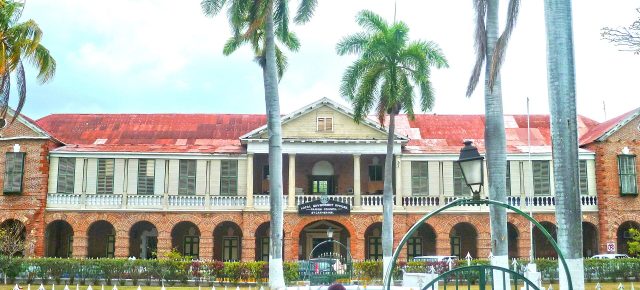
St. Jago de la Vega Cathedral in Spanish Town is one of those rare places where time seems to stand still, preserving not just the rituals of faith but the layered history of Jamaica itself. Built in the late 17th century, when the island was still under Spanish rule, the cathedral has witnessed the rise and fall of empires, the shifting tides of colonial power, and the slow emergence of a nation. Its walls hold stories of conquest and resilience, of cultures clashing and blending, and of the quiet endurance of a place that has outlasted the forces that shaped it.
The architecture of St. Jago is a study in understated grandeur. Unlike the ornate cathedrals of Europe, with their gilded altars and towering spires, this building carries its history in its bones. Thick stone walls, tall arched windows, and heavy wooden doors speak of a structure designed not just for worship but for survival. The interior is spacious and airy, with simple yet sturdy beams supporting the vaulted ceiling, creating an atmosphere of quiet strength. There’s no excess here—just the solid, unadorned beauty of a building that has weathered centuries.
Spanish Town was once the capital of Jamaica, and St. Jago was at the heart of its colonial life. The cathedral wasn’t just a place of prayer; it was where the island’s fate was decided. Governors were crowned within its walls, and the elite of Jamaican society were laid to rest beneath its floors. The worn tombstones embedded in the cathedral’s stonework bear the names of those who once ruled these lands—names that now feel like echoes of a distant past. Walking across these slabs, you can almost hear the whispers of history beneath your feet.
The cathedral has survived more than its share of trials. Earthquakes, hurricanes, and fires have all threatened its existence, yet each time, it was rebuilt, its original character preserved. The 18th century was particularly harsh, as Jamaica became a battleground for European powers vying for control of the Caribbean. During those turbulent years, St. Jago often served as a refuge for townspeople fleeing pirate raids or military skirmishes. Perhaps that’s why it still feels like a sanctuary—not just in the religious sense, but as a symbol of endurance.
Today, the cathedral remains an active place of worship, though its significance extends far beyond Sunday services. It’s a place where history feels tangible. Run your fingers along the rough stone walls or trace the grain of the old wooden pews, and you can almost see the generations of people who have passed through its doors. In the quiet hours, when the cathedral is empty, the silence feels heavy with the weight of centuries. It’s easy to imagine the prayers offered here, the hopes and sorrows of those who sought solace within these walls.
Outside, a small but well-tended garden surrounds the cathedral, filled with swaying palms and vibrant tropical flowers. It’s a peaceful spot, perfect for a slow stroll or a moment of reflection on a bench, watching the sunlight play across the ancient stones. Unlike the crowded tourist spots elsewhere on the island, this place feels removed from the noise of the modern world. There’s a sense of timelessness here, as if the garden and the cathedral exist in their own quiet rhythm.
St. Jago de la Vega isn’t just a relic of the past; it’s a living piece of Jamaica’s history. It reminds you that even in the most unexpected corners of the world, there are places where the past isn’t just remembered—it’s still alive. For those who visit Spanish Town, the cathedral isn’t just another stop on a tour. It’s a place where you can feel the pulse of the island’s history, where the stories of those who came before are still being told. And in a world that moves too fast, that’s a rare gift.