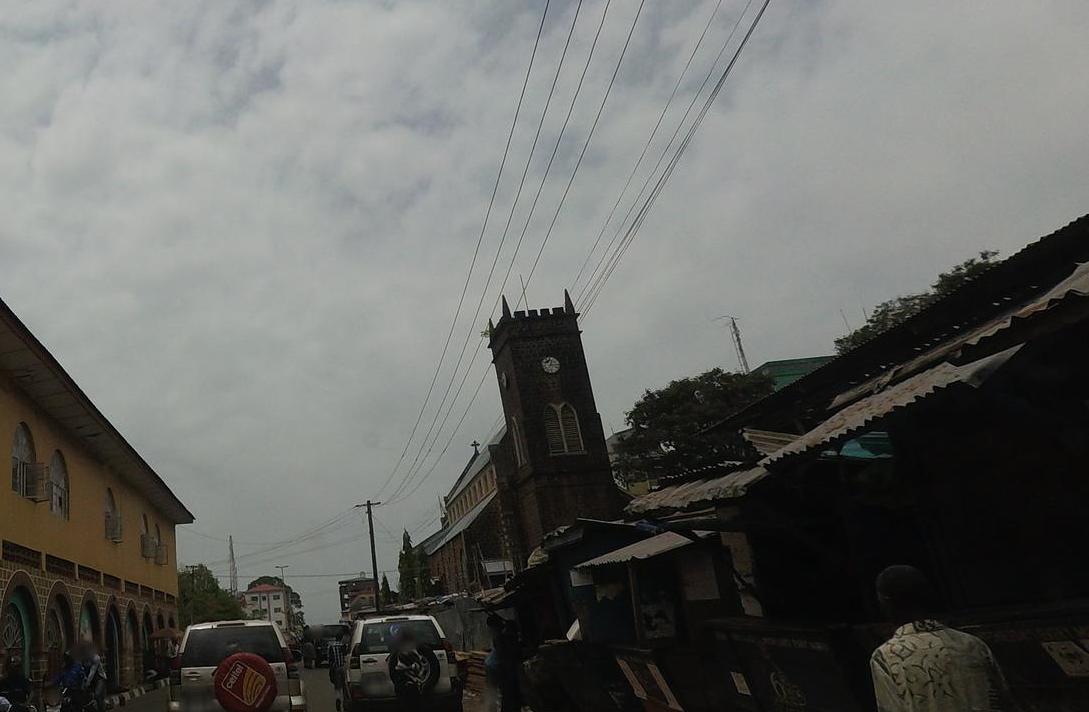
St. George’s Cathedral in Freetown is the kind of place that doesn’t demand attention at first glance, but slowly reveals its quiet significance. Perched on a hill in the heart of Sierra Leone’s capital, it overlooks the city and the ocean beyond, a modest structure that carries the weight of history in its unassuming architecture. Unlike the towering spires and stained glass of European cathedrals, this building tells a different story—one shaped by colonialism, liberation, and the gradual forging of a new community.
The cathedral was built in the mid-19th century, a time when Freetown had already established itself as the center of a British colony founded for freed slaves. The Anglican Church played a crucial role here, serving not just as a place of worship but as a foundation for those rebuilding their lives after bondage. St. George’s became a symbol of that process, a gathering point for people from across Africa and beyond, each carrying their own stories of displacement and hope.
Its architecture reflects the practicality of colonial Freetown. Designed in a restrained Gothic Revival style, the cathedral lacks the ornate flourishes of its European counterparts. Instead, it stands with simple dignity: tall, narrow windows, thick walls of local stone, and a modest spire above the entrance. Inside, the space is airy and bright, with wooden pews and an unadorned altar. There are no elaborate frescoes or gilded decorations, just a sense of quiet reverence that lingers in the stillness.
Over the years, the cathedral has witnessed some of Sierra Leone’s most pivotal moments. During the civil war in the late 20th century, it suffered damage like much of Freetown, but was later restored. Today, it remains an active place of worship, where services are held in both English and Krio—the creole language that has become a unifying thread for Sierra Leoneans. On Sundays, families fill the pews, and hymns blend African and European traditions, a reflection of the country’s layered identity.
A small garden surrounds the cathedral, offering a rare pocket of calm in the bustling city. Locals often sit here, enjoying the shade, and occasionally visitors wander in, drawn by curiosity or a desire to understand Freetown’s history. While St. George’s isn’t a major tourist attraction, it holds a special place for those who seek out the stories that shaped Sierra Leone. It’s a place where the past feels tangible, where the echoes of colonialism, liberation, and resilience still resonate.
Beyond its religious role, the cathedral serves as a cultural hub. Concerts, exhibitions, and lectures are sometimes held within its walls, often focusing on the country’s history or the church’s influence on society. For many Sierra Leoneans, it’s a place of memory—a space to connect with the roots of their culture and reflect on how their identity was formed. The conversations that happen here, whether about the legacy of slavery or the challenges of rebuilding, are part of what keeps the cathedral relevant.
Freetown is a city in flux, growing and modernizing, but places like St. George’s Cathedral offer a counterpoint to the rush of change. They remind us that the city’s history isn’t just about the horrors of the slave trade or the struggles of independence, but also about the quiet, everyday work of building a community. The cathedral stands as a testament to that effort, a place where people have come together for generations, finding solace and strength in shared faith and shared history.
There’s something deeply human about St. George’s. It doesn’t try to impress with grandeur or spectacle, but instead offers a sense of continuity—a connection to the past that feels personal rather than monumental. For those who take the time to visit, it’s a chance to step away from the noise of the city and consider what it means to belong, to rebuild, and to carry forward the stories of those who came before. In its own understated way, the cathedral is as much a part of Freetown’s soul as the ocean that stretches beyond its hill.