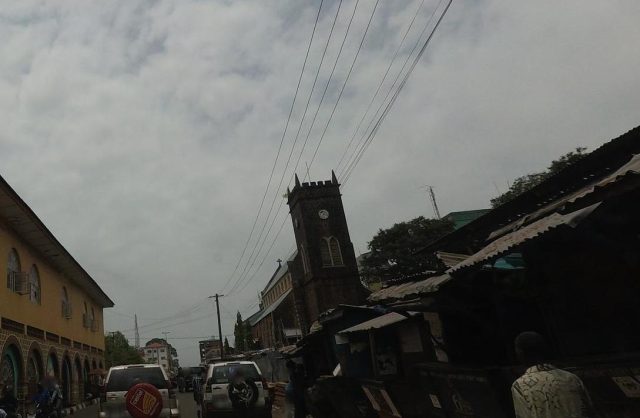
Freetown’s Fula Town Mosque stands quietly along the city’s eastern edge, where the urban sprawl gives way to the softer rhythms of residential life. It’s not the largest or most ornate mosque in Sierra Leone, but its presence carries a weight that goes beyond its physical size. Built in the early 20th century, the mosque has become a focal point for the Fula community, one of the country’s most historically significant ethnic groups. The Fula, known for their long-standing role in trade and Islamic scholarship across West Africa, settled in this part of Freetown generations ago, and the mosque has since served as both a spiritual anchor and a gathering place for their descendants.
The architecture of Fula Town Mosque is modest yet deliberate, reflecting the practical needs of its congregation rather than grand religious ambition. The building is constructed from local materials—brick, wood, and corrugated metal—materials that speak to the resourcefulness of its builders. The prayer hall is simple, with high ceilings that allow for ventilation in Freetown’s humid climate, and a small minaret that rises just enough to be seen from the surrounding streets. Unlike the towering mosques of North Africa or the Middle East, this one feels grounded, almost unassuming, as if it grew naturally from the earth rather than being imposed upon it.
What makes the mosque particularly interesting is its role in the broader story of Freetown. The city itself was founded in the late 18th century as a settlement for freed slaves, many of whom returned from the Americas and Britain with their own religious traditions. Over time, Islam took root alongside Christianity, brought by traders, scholars, and migrants from the interior. The Fula, in particular, were instrumental in spreading Islamic influence, and Fula Town Mosque became one of the early centers of Muslim life in the city. It’s a place where history isn’t just remembered but lived—where Friday prayers still draw families who have worshipped here for decades, and where the call to prayer mingles with the sounds of children playing in the nearby streets.
The area around the mosque has a character all its own. Fula Town is one of Freetown’s older neighborhoods, a mix of narrow lanes, small shops, and homes built close together. The streets are lively but not chaotic, with vendors selling everything from fresh fruit to handmade leather goods. On days when the mosque is busiest, the air fills with the scent of spiced tea and grilled meat from the stalls that set up nearby. It’s a neighborhood that feels lived-in, where people know each other by name, and where the mosque isn’t just a place of worship but a part of the daily fabric of life.
For visitors, the mosque offers a glimpse into a side of Sierra Leone that isn’t always visible in the usual travel narratives. There are no grand tours or guided visits here—just the quiet rhythm of a community going about its day. If you’re lucky, someone might invite you to sit and share a cup of ginger tea, or explain the significance of a particular architectural detail. The mosque isn’t a monument to be admired from a distance; it’s a place where faith and everyday life intersect, where the past and present coexist without fanfare.
That said, it’s worth approaching with respect. This isn’t a tourist attraction in the traditional sense, and the congregation values its privacy. Dress modestly if you choose to enter, and be mindful of prayer times, when the mosque is at its most active. The best time to visit is during the day, when the light filters through the open windows and the sounds of the neighborhood drift in. There’s no need to rush—just take a moment to sit on one of the benches outside and watch the world go by.
Fula Town Mosque may not be the most famous landmark in Freetown, but it’s one of those places that feels authentic in a way that’s increasingly rare. It tells a story of migration, faith, and resilience—of a community that has carved out a space for itself in a city shaped by many different histories. In a country where the past is often overshadowed by more recent struggles, the mosque stands as a quiet reminder of the layers that make up Sierra Leone. It’s not just a building; it’s a living piece of the city’s soul.