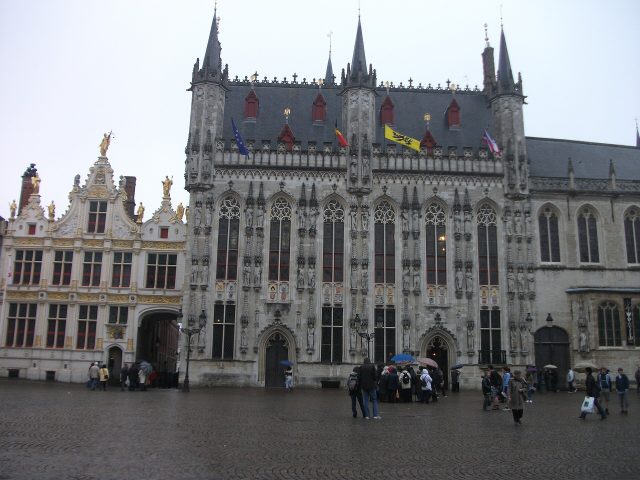
St. Bavo’s Cathedral in Ghent is one of those rare places where time seems to settle into a quiet rhythm, as if the centuries themselves have paused to let you step inside. It isn’t just a church—it’s a layered story of faith, art, and the city’s own rise and fall, told through stone, light, and the brushstrokes of masters. The cathedral stands where a small wooden chapel once did, back in the 9th century, but what you see today is the result of centuries of expansion, ambition, and craftsmanship. By the time Ghent was a powerhouse of medieval Europe, a center of trade and textile wealth, the cathedral had become more than a place of worship. It was a statement, a symbol of the city’s prosperity and the pride of its merchants and guilds.
The architecture is unmistakably Gothic, though not in the heavy, shadowed way you might expect. The tower soars upward, its spire a needle against the sky, while the flying buttresses and pointed arches give the structure both strength and grace. Inside, the space feels surprisingly airy. The high vaults, supported by slender columns, draw the eye upward, and the stained glass filters daylight into soft, shifting hues. The choir stalls, intricately carved from wood, are a testament to the skill of medieval artisans—each figure, each flourish, tells a story of devotion and craft. It’s easy to linger here, tracing the details with your eyes, imagining the hands that shaped them.
Yet the cathedral’s true treasure isn’t its architecture, but what it holds within. The Ghent Altarpiece, painted by the van Eyck brothers in the 15th century, is one of the most celebrated works of European art. It’s a polyptych, a multi-paneled masterpiece that unfolds like a visual sermon. The realism is startling—fabrics, faces, even the play of light on metal are rendered with such precision that you almost forget you’re looking at paint. The central panel, the Adoration of the Mystic Lamb, is particularly striking, with its vivid colors and symbolic depth. The altarpiece has had a tumultuous history, stolen, divided, and nearly lost, but today it rests here, where it belongs, open to those who come to see it.
St. Bavo’s isn’t a museum, though. It’s a living church, where services are still held and the sound of the organ fills the nave on Sundays. The atmosphere is one of quiet reverence, the kind that makes you lower your voice without thinking. Unlike some tourist-heavy sites, where crowds and noise can overwhelm the experience, here you can wander at your own pace. The side chapels hold their own secrets—old tombs, faded frescoes, the occasional flicker of candlelight. There’s a sense of continuity here, as if the prayers of past centuries still linger in the air.
The cathedral’s history is woven into Ghent’s own. In the Middle Ages, the city was a hub of commerce, its wealth built on wool and trade, and the cathedral reflected that prosperity. It was here that the counts of Flanders were crowned, where decisions shaping the region were made. The Reformation brought turmoil—some of the cathedral’s treasures were lost, and for a time, it served as a Protestant church. But it was eventually restored to the Catholic faith, and today, it stands as a bridge between eras, a place where the past is still very much alive.
For visitors, St. Bavo’s offers more than just a glimpse into history. It’s a place to slow down, to sit on a wooden pew and let the silence settle around you. The cathedral is especially moving during major religious holidays, when candlelight and choral music transform the space. But even on ordinary days, there’s a sense of timelessness here, a reminder of the things that endure. The Ghent Altarpiece alone is worth the visit, but the cathedral has other treasures too—sculptures, paintings, and architectural details that reward close attention.
Ghent itself is a city where the past and present coexist effortlessly, and St. Bavo’s is at the heart of that balance. It sits on St. Bavo’s Square, surrounded by buildings that whisper of the city’s former grandeur. Nearby, you can still see fragments of medieval fortifications, while just beyond the square, modern life carries on in cafés and shops. The cathedral is a quiet anchor in all of it, a place where you can step out of the present and into something older, something deeper.
If you find yourself in Ghent, don’t rush past the cathedral. Step inside, climb the tower for a view of the city, or simply sit on the steps and watch the square come to life. St. Bavo’s isn’t just a building—it’s a piece of the city’s soul, a place where history feels tangible. And if you’re lucky, you might just catch that quiet magic that makes Ghent so unforgettable.