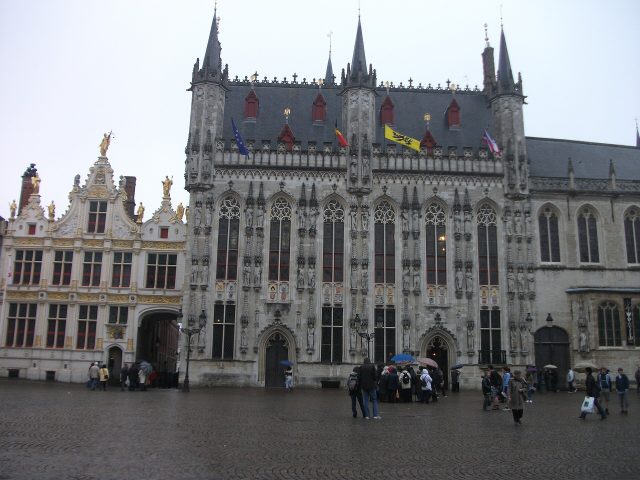
Saint Michael’s Church in Ghent is one of those places that doesn’t demand attention but lingers in your memory long after you’ve left. Tucked along the banks of the Leie River, just off the main tourist paths, it feels like a quiet pause in the city’s rhythm. From the outside, the church appears unassuming—late Gothic architecture softened by Baroque touches, its grey stone and tall, pointed windows blending into the surroundings. But step inside, and it becomes clear why this church holds such significance for Ghent.
Its history stretches back to the 12th century, when a small Romanesque chapel stood on this site. Over the centuries, it expanded and evolved, its structure shaped by the city’s fortunes. Construction of the current building began in 1440 and dragged on for nearly three hundred years, interrupted by financial struggles and political upheavals. The most striking evidence of these delays is the unfinished tower—originally meant to be crowned with a spire, it instead wears a simple dome, giving the church a distinctive, almost humble silhouette.
Inside, the space feels vast and airy. The high vaults, supported by slender columns, create a sense of lightness, while the stained glass—subtler than in other Belgian churches—filters daylight into soft, muted hues. The main altar, a Baroque masterpiece, gleams with gilded carvings, and the side chapels each tell their own story. The Chapel of Saint Michael is particularly striking, home to a wooden statue of the archangel slaying the dragon. Though small, the sculpture’s intricate detail and golden finish draw the eye, embodying the quiet craftsmanship that defines the church.
Saint Michael’s has always been more than just a place of worship. In the Middle Ages, it was a hub of civic life, where guilds gathered and city affairs were discussed. During times of war, it offered refuge to the people of Ghent. Even in the 19th century, as Belgium industrialized, the church stood as a symbol of tradition amid change. Today, it remains an active part of the city’s fabric, hosting services, organ concerts, and exhibitions.
The church’s organ is a treasure in its own right. Installed in the 18th century and restored several times since, it may not be the largest in Belgium, but its sound is considered among the finest in the region. During summer concerts, the music of Bach, Vivaldi, or local composers fills the space, the high vaults deepening the resonance in a way that even those unfamiliar with classical music find moving.
Outside, the small square around the church is a favorite spot for locals. In warmer months, students read on the benches, while older residents stroll along the river. From here, the view of Ghent is one of the best—the old houses across the Leie, the bridges arching over the water, and in the distance, the spire of Saint Bavo’s Cathedral. As evening falls and the streetlights flicker on, the scene takes on a dreamlike quality.
What makes Saint Michael’s special is its unassuming presence. Unlike Ghent’s more famous landmarks, it doesn’t draw crowds, and that’s part of its charm. There’s no rush here, no noise—just the quiet weight of history and an atmosphere that invites you to linger. If you find yourself in Ghent, take a moment to step inside, sit by the river, or listen to the organ. It’s in places like this that the city’s true spirit reveals itself.