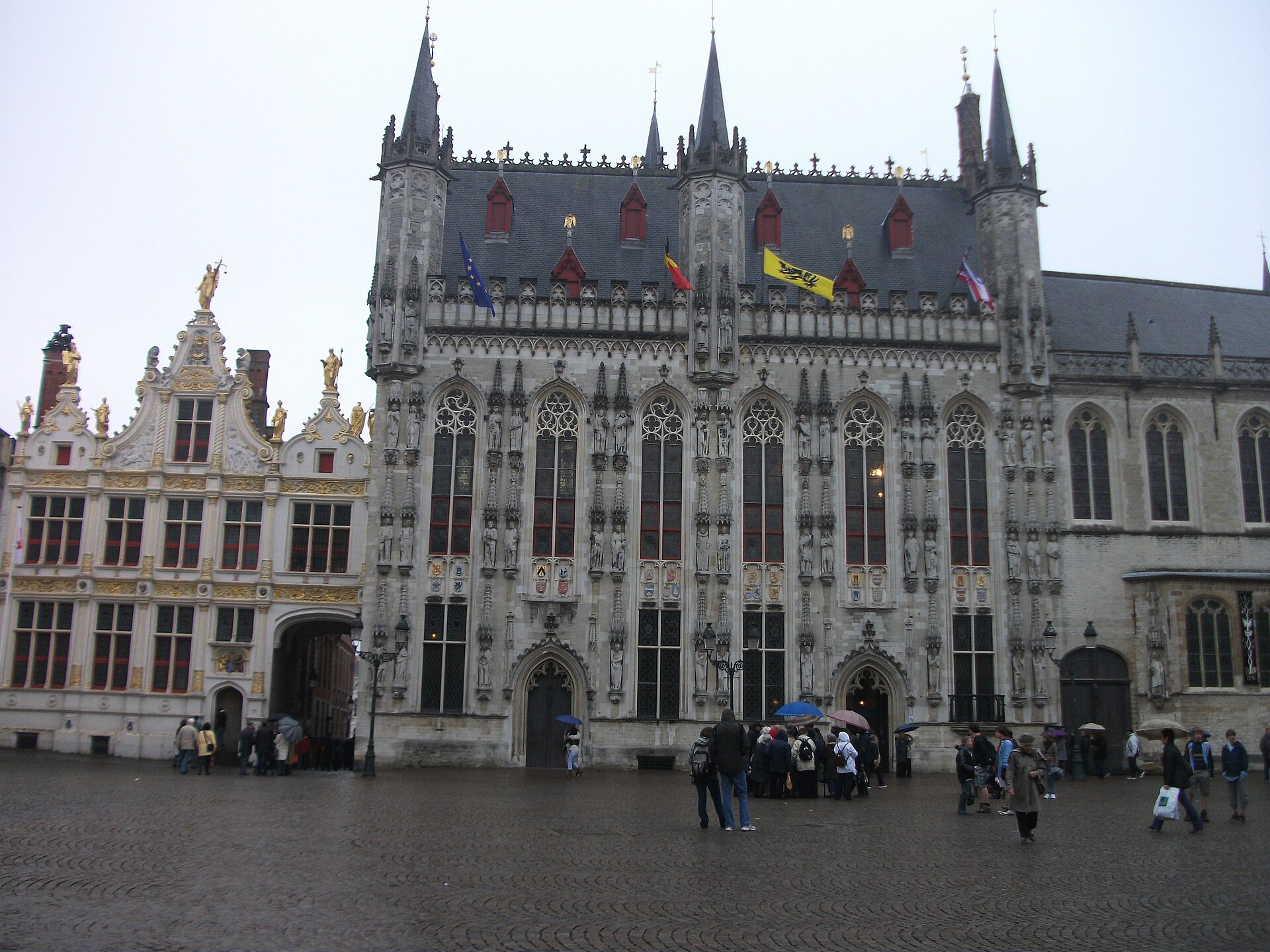
Ghent’s Town Hall is one of those buildings that doesn’t just stand in the city—it seems to hold the weight of centuries in its stones. From the outside, it’s a striking mix of styles, as if different eras had taken turns shaping it, each leaving their mark without quite erasing what came before. The oldest part, facing Botermarkt, is a late Gothic masterpiece, its facade adorned with intricate carvings and tall, narrow windows that hint at the craftsmanship of the 16th century. Then, just a few steps away, the Renaissance wing unfolds with a completely different character—sleek, symmetrical, and almost restrained in comparison, built when Ghent was reimagining itself as a city of trade and influence.
The contrast between the two wings isn’t just architectural; it reflects the city’s own contradictions. Ghent has always been a place of tension—between tradition and progress, between defiance and diplomacy. The Gothic section was completed in 1518, a time when the city was a powerhouse of the wool trade, rich enough to challenge even the authority of the Burgundian dukes. The Renaissance addition came later, in the 1580s, when Ghent was trying to rebuild after the iconoclastic fury of the Protestant Reformation had swept through, leaving churches stripped and old certainties shaken. The Town Hall, in a way, is a physical record of that struggle—a building that had to adapt to survive.
Inside, the halls and chambers tell their own stories, though access isn’t always straightforward. The Pacification Hall, with its soaring wooden ceiling and walls lined with portraits of Ghent’s past rulers, feels like a space designed to impress. It was here, in 1576, that the Pacification of Ghent was signed, a rare moment of unity when the provinces of the Low Countries briefly set aside their differences to resist Spanish rule. The treaty didn’t last, but the room remains, a quiet reminder of how fragile alliances can be. Nearby, the Wedding Chapel is a smaller, more intimate space, its stained glass and delicate carvings offering a glimpse into the personal side of civic life—where generations of Ghentenaars came to mark one of life’s milestones.
What makes the Town Hall more than just a historical monument is how it fits into the rhythm of the city today. Ghent isn’t a place that lives in the past, but it doesn’t ignore it either. The building sits at the heart of the old center, surrounded by the same medieval streets where traders once haggled over wool and grain. On market days, the square in front buzzes with stalls selling everything from fresh produce to handmade lace, and the Town Hall looms over it all, a silent witness to the daily life that has flowed around it for centuries. It’s not a museum piece, cordoned off and untouchable—it’s still very much in use, hosting city council meetings, official receptions, and the occasional public event.
The best way to appreciate the Town Hall is to see it from different angles. From the Graslei, the row of guildhalls along the river, it appears almost like a backdrop, its towers rising above the rooftops. At night, when the lights come on, the Gothic facade takes on a dramatic quality, the shadows playing across the stonework in a way that makes the carvings seem almost alive. But the real surprise comes from the back, where the Renaissance wing faces the quiet square of Poeljemarkt. Here, the building feels more approachable, its clean lines and orderly windows a counterpoint to the ornate front. It’s a reminder that Ghent has always been a city of layers, where the grand and the humble exist side by side.
There’s something reassuring about a building that has seen so much and yet remains standing. The Town Hall has survived wars, revolutions, and the slow creep of time, and it still serves the same purpose it was built for—to be the heart of the city. It’s not just a relic; it’s a living part of Ghent’s identity. When you walk past it, you’re not just seeing a monument; you’re stepping into a story that’s still being written, one that began long before you arrived and will continue long after you’ve left. That, perhaps, is the most remarkable thing about it—not the grandeur of its architecture, but the way it connects the past to the present, quietly and without fuss.