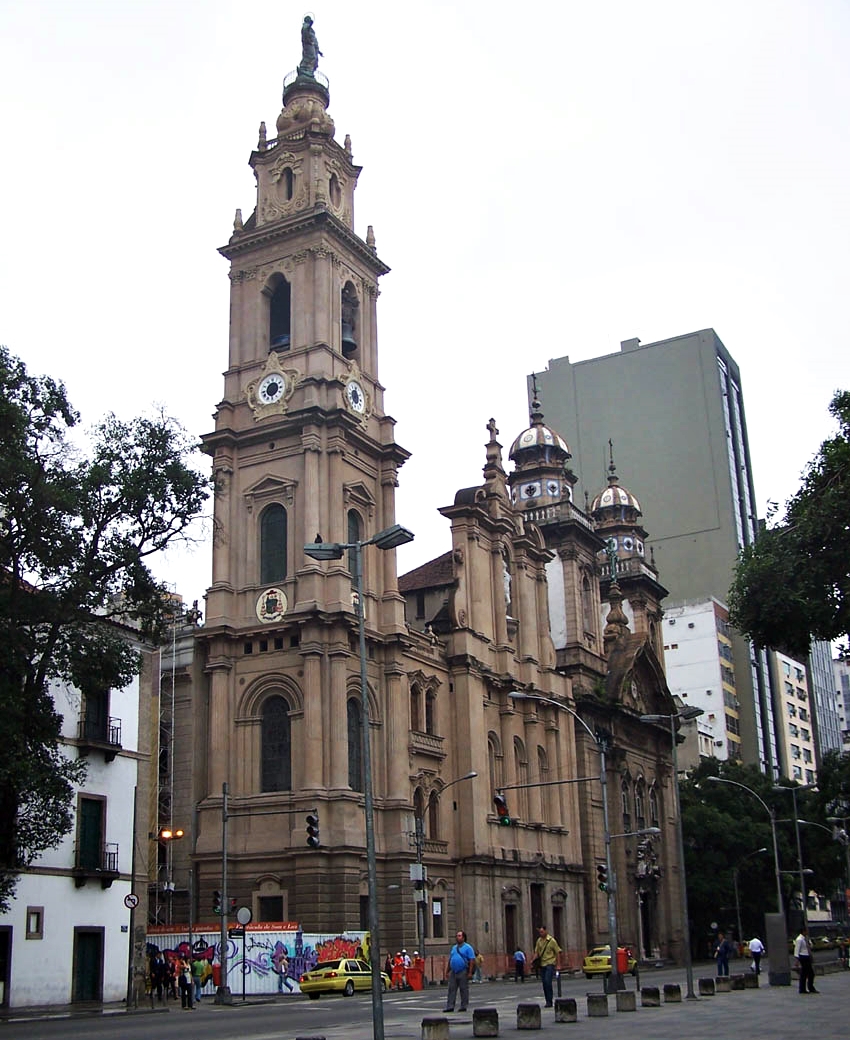
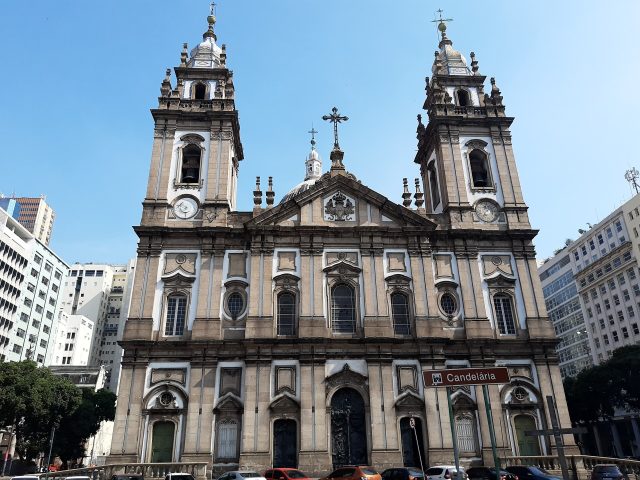
The Church of Our Lady of Mount Carmel stands in the heart of Rio de Janeiro’s historic center, a quiet witness to the city’s transformation over centuries. Built in the 18th century, it has seen Rio evolve from a Portuguese colonial outpost to the capital of an empire, and later, to the vibrant metropolis it is today. The church’s walls hold echoes of coronations, state ceremonies, and the shifting tides of Brazilian history, making it more than just a place of worship—it’s a living archive of the nation’s past.
The architecture blends Brazilian Baroque with subtle colonial influences, evident in the ornate facade adorned with saints’ statues and intricate reliefs. Inside, the space feels expansive, bathed in natural light from tall windows. The main altar gleams with gold leaf, a testament to the craftsmanship of Portuguese artisans who once worked here. Wooden pews, carved with delicate patterns, line the nave, while frescoes depict scenes from the lives of the Virgin Mary and the Carmelite saints. Every detail reflects the fusion of faith and artistry that defined colonial Brazil.
Originally part of a Carmelite monastery, one of the first religious orders in Rio, the church gained prominence in the 18th century when the city became the capital of the Viceroyalty of Brazil. It was here that emperors were crowned and pivotal state events unfolded. Even after Brazil declared independence in 1822, the church remained a symbol of continuity, bridging the old world with the new. Its role in national ceremonies cemented its place in the country’s collective memory.
Today, the church functions as both an active place of worship and a museum. Its collection includes ecclesiastical vestments, relics, paintings, and sculptures by Brazilian and Portuguese masters. Among the most striking pieces are 18th-century silver monstrances and crosses, their craftsmanship a reminder of the era when religion and art were inseparable. The artifacts offer a glimpse into the spiritual and cultural life of colonial Rio, where the church was not just a religious institution but a center of community and power.
Stepping inside, the modern city fades away. The air is still, broken only by the occasional murmur of visitors or the soft notes of the organ. On weekdays, the church is a place of quiet reflection, where one can sit undisturbed and admire the architecture. Sundays bring a different energy, with services drawing locals and those curious to experience a slice of old Rio. The rituals, unchanged for centuries, connect the present to the past in a way few places in the city can.
Outside, the streets buzz with life—cafés, markets, and festivals pulse with energy. But the moment you cross the threshold, time seems to slow. The church stands at the intersection of eras, a silent observer of Rio’s evolution. It’s easy to imagine the city as it once was: the cobblestone streets filled with Portuguese merchants, the distant murmur of imperial decrees, and the solemnity of ceremonies held within these very walls.
Unlike the iconic Christ the Redeemer or Sugarloaf Mountain, the Church of Our Lady of Mount Carmel doesn’t draw crowds of tourists. That’s part of its charm. Here, history isn’t packaged for spectacle; it’s preserved in the quiet dignity of the space. For those who appreciate architecture or the layers of a city’s past, it’s a rare find—a place where the weight of history feels tangible, yet unobtrusive.
If you find yourself in Rio, take a moment to visit. You don’t need to be religious or a history buff to feel the pull of this place. Sometimes, all it takes is a few minutes of stillness to understand why certain spaces endure. The church doesn’t demand attention; it simply offers a pause, a chance to step out of the rush and into something timeless. And in a city as dynamic as Rio, that’s a gift in itself.