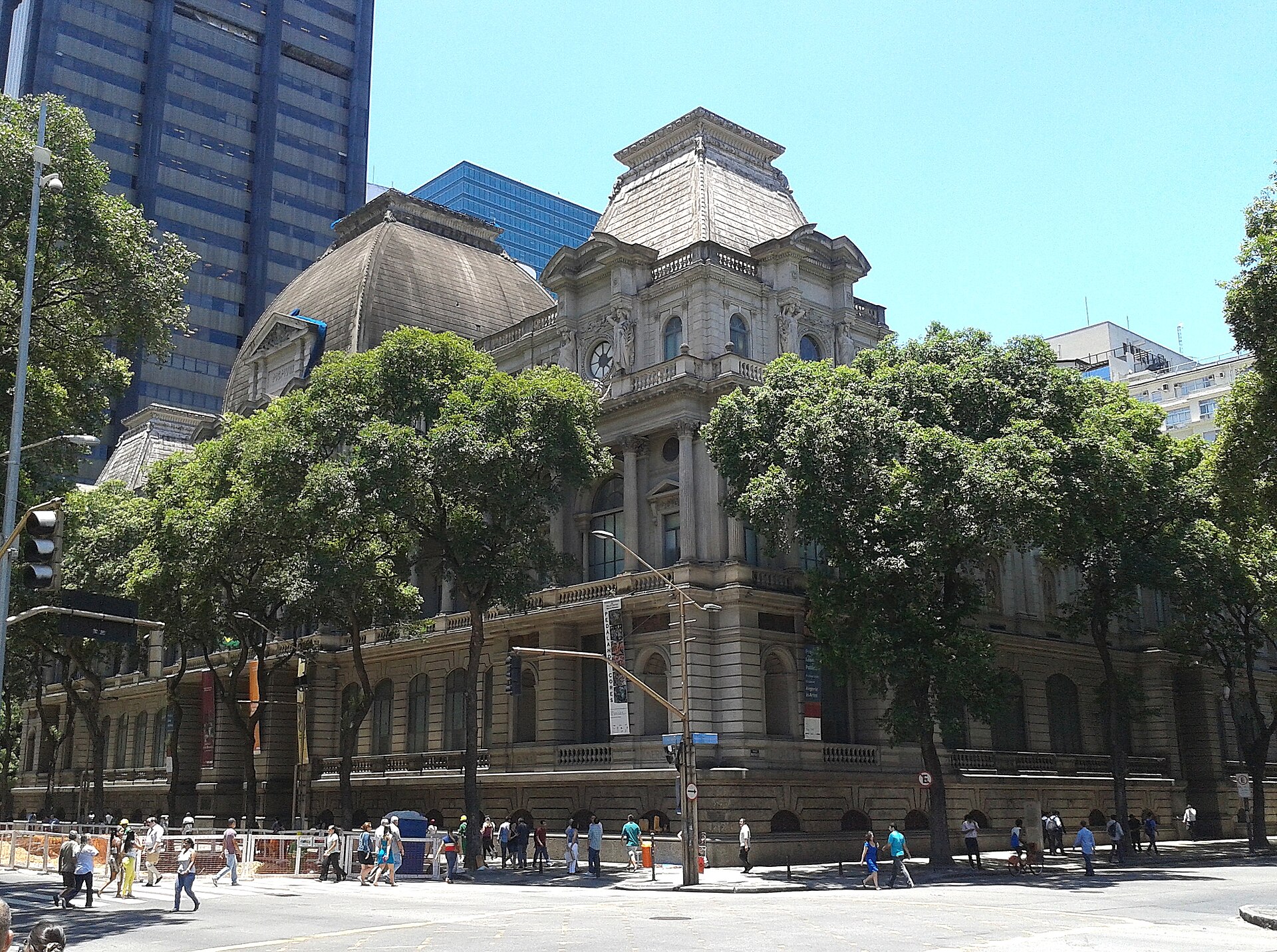
The National Museum of Fine Arts in Rio de Janeiro is one of those rare places where art doesn’t just hang on the walls—it feels alive, as if it’s breathing in rhythm with the city itself. Tucked in the heart of downtown, the museum occupies a building that’s a work of art in its own right. Its neoclassical façade, with tall columns and grand windows, was constructed in the early 20th century, a time when Brazil was beginning to carve out its identity as a cultural force. The museum opened in 1937, but its roots stretch back further, growing from the collection of the National School of Fine Arts, established in the 19th century under Emperor Pedro II. Back then, art was more than aesthetics—it was part of a larger vision, a way for Brazil to assert itself not just politically, but culturally on the world stage.
Stepping inside, the pace slows. There’s none of the usual tourist bustle that defines so much of Rio, though visitors do come—mostly those with a genuine interest in art. The collection spans centuries, but its heart lies in Brazilian art, from the colonial era to the present day. The galleries hold works by 19th-century masters like Victor Meirelles and Pedro Américo, whose paintings capture more than just landscapes. They tell stories: battles for independence, the quiet rhythms of provincial life, the aspirations of a young nation finding its voice. The academic style dominates here—formal, meticulous, almost ceremonial—reflecting the tastes and ambitions of a country still shaping its identity.
Yet the museum isn’t solely focused on Brazilian art. There’s a smaller but notable collection of European works, primarily from 18th- and 19th-century French artists. These pieces arrived in Brazil through various paths—some brought by European painters who worked at the imperial court, others acquired later as the museum expanded its holdings. While the names aren’t always household ones, the collection offers a glimpse into how Brazil once looked to Europe, and how European influences seeped into its artistic sensibilities.
The building itself is worth lingering over. Designed by architect Adolfo Morales de los Ríos, it draws inspiration from the École des Beaux-Arts in Paris. Inside, the spaces are airy, with high ceilings and large windows that bathe the galleries in soft, natural light. The layout is intuitive, guiding visitors without rushing them. Staircases and corridors connect the rooms in a way that feels organic, inviting you to pause in front of a painting and notice details that might otherwise go unnoticed. Some of the original plasterwork and murals remain, hinting at the building’s past life as a place where artists once trained.
The museum doesn’t just preserve art—it tries to bring it to life. Temporary exhibitions, lectures, and workshops pop up regularly, though the schedule can be unpredictable. Occasionally, there are small concerts or poetry readings, often held in one of the inner courtyards. The atmosphere is intimate, almost like a private gathering, where art feels less like an exhibit and more like a conversation. It’s the kind of place where you might overhear a debate about a painting’s brushstrokes or find yourself lost in thought in front of a landscape that suddenly feels familiar.
For those used to the crowds of major museums, the National Museum of Fine Arts can feel quiet, even a little old-fashioned. But that’s part of its charm. There’s no pressure to follow a tour group or race through the galleries. You can wander at your own pace, stopping where something catches your eye, reflecting on how Brazilian art has evolved over time. At moments, the museum feels less like a collection of paintings and more like a diary of the country itself, with each era leaving its mark.
It hasn’t always been this way. In the mid-20th century, the museum fell into decline—funding dwindled, the collection grew slowly, and the building itself needed repairs. But in recent decades, interest in Brazil’s artistic heritage has revived, and the museum has regained its place in Rio’s cultural life. Today, it’s not just about preserving the past but also about engaging new audiences, especially younger visitors who might see 19th-century art as distant or irrelevant. Efforts are made to bridge that gap, to show how these works still resonate.
If you find yourself in Rio and want to see the city beyond its beaches and mountains, this museum offers a different perspective. There’s no noise from Copacabana, no crowds on Ipanema—just a quiet space to connect with a history that isn’t always visible on the surface. The art here doesn’t demand attention; it simply exists, as much a part of the city as its streets and its people. Maybe that’s why, despite all the distractions Rio has to offer, the museum still feels essential—a place where the past and present coexist, unhurried and unforced.