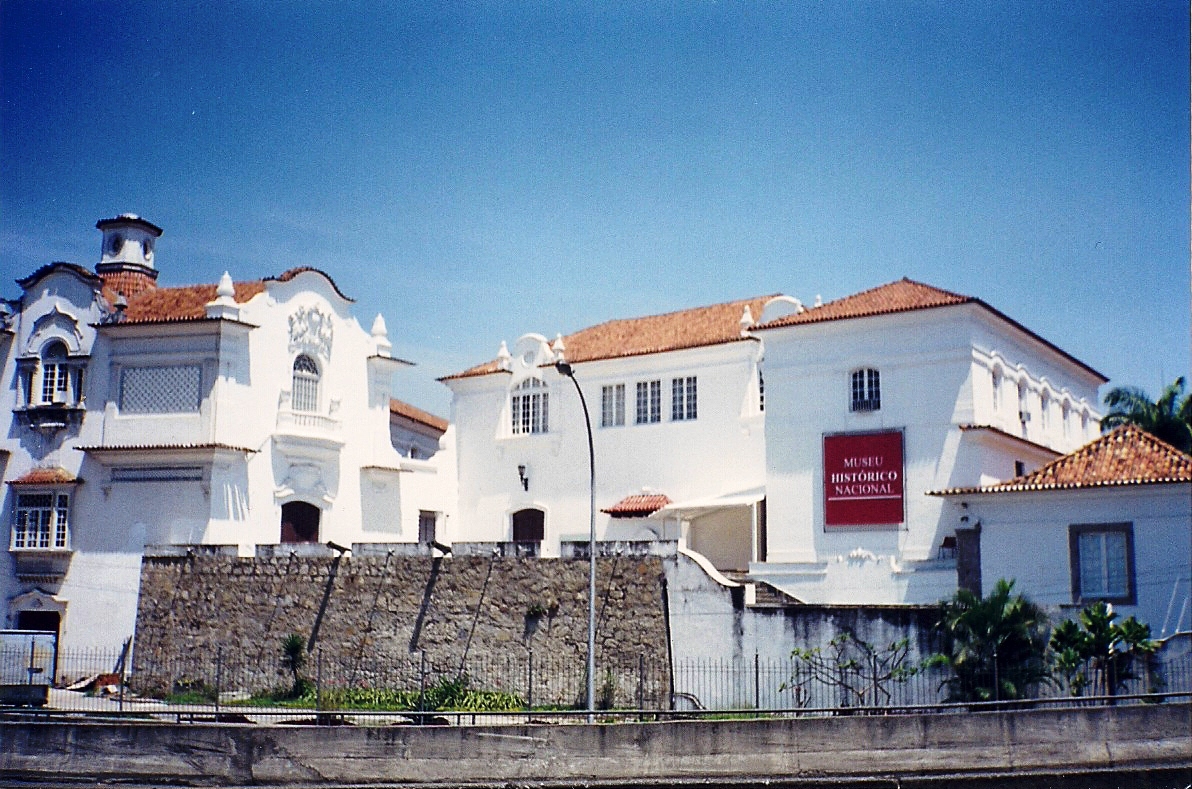
The National Historical Museum of Brazil stands as a quiet witness to the country’s layered past, tucked away in the heart of Rio de Janeiro’s downtown. Housed in a building that has seen centuries of transformation, it began its life as a colonial Portuguese arsenal in the early 1800s, its thick walls and sturdy arches built to withstand far more than the passage of time. Over the years, the structure was reshaped, its military purpose softened by the addition of neoclassical touches—columns, arched doorways, and a courtyard that now feels more like a private garden than a fortress. The building itself tells a story, its architecture a blend of the practical and the grand, reflecting the shifts in power and identity that have defined Brazil.
Founded in 1922, the same year Brazil celebrated its centennial of independence, the museum was conceived as a place to preserve the nation’s memory. Its collection, numbering over 300,000 items, spans everything from pre-Columbian artifacts to relics of the modern era. Walking through its halls, you encounter the personal effects of emperors—worn leather gloves, a child’s toy soldier, a handwritten letter from Dom Pedro II—alongside the tools and trinkets of everyday life: a fisherman’s net, a slave’s shackles, a schoolteacher’s desk. The museum doesn’t just display history; it lets it breathe, revealing the human stories behind the grand narratives of conquest, empire, and revolution.
The exhibits unfold in chronological order, beginning with the indigenous peoples who inhabited these lands long before European ships arrived. Ceramic pots, woven baskets, and stone tools offer glimpses into societies that thrived along the Amazon and the coast, their cultures shaped by the rhythms of the land. The next sections plunge you into the colonial era, where maps of trade routes and models of 16th-century galleons illustrate how Brazil became the jewel of Portugal’s empire. One of the most striking displays is a collection of navigational instruments, their brass surfaces still gleaming after centuries, a reminder of the daring and greed that drove exploration.
The imperial period, when Brazil briefly stood as an independent monarchy, occupies some of the museum’s most vivid spaces. Here, the opulence of the court contrasts sharply with the realities of a nation still finding its footing. A gilded throne, its velvet upholstery faded, sits near a simple wooden chair used by a provincial governor. Portraits of Dom Pedro I and his son, Dom Pedro II, hang alongside letters from ordinary citizens petitioning for land or justice. The effect is intimate, almost voyeuristic—you’re not just learning about history, but peering into the lives of those who lived it. A display case holds the tiny shoes of Princess Isabel, who would later sign the law abolishing slavery, a detail that makes the weight of that decision feel all the more personal.
Slavery, and its long, brutal legacy in Brazil, is given unflinching attention. The museum doesn’t shy away from the horrors of the trade, displaying iron collars, branding irons, and the ledgers of slave ships, their pages filled with names reduced to numbers. One particularly haunting exhibit is a set of manacles, their rusted surfaces bearing the marks of countless hands. Nearby, documents from abolitionist movements show the slow, painful fight for freedom, culminating in the 1888 Lei Áurea, which made Brazil the last country in the Western Hemisphere to outlaw slavery. The section is difficult to walk through, not because it’s graphic, but because it forces you to confront the human cost of progress.
The museum’s later galleries trace Brazil’s turbulent 20th century, from the rise of the republic to the dark years of military dictatorship. Photographs capture moments of both hope and despair: a crowd celebrating the end of Getúlio Vargas’s authoritarian rule, a student protest met with armed soldiers. One wall is covered in newspaper clippings from the 1960s and 70s, their headlines a mix of propaganda and defiance. The exhibits don’t offer easy answers, instead presenting history as a series of choices—some noble, some tragic—that shaped the country’s path. A display on the 1988 constitution, which restored democracy, feels like a quiet triumph, its pages still crisp and unmarked by time.
Beyond its permanent collection, the museum regularly hosts temporary exhibitions that dig into lesser-known corners of Brazilian history. Past shows have explored the evolution of samba, the role of women in the abolitionist movement, and the cultural impact of Japanese immigration. These exhibits often feel like conversations, inviting visitors to engage with history rather than just observe it. The museum also serves as a gathering place, hosting lectures, film screenings, and even concerts, its halls echoing with voices that connect the past to the present.
What makes the National Historical Museum special is its refusal to simplify history. It doesn’t present Brazil as a land of unbroken progress or inevitable greatness, but as a place shaped by conflict, compromise, and resilience. The building itself, with its creaking floors and sunlit courtyards, adds to the sense of stepping into another era. As you wander through the galleries, the weight of the past feels tangible—not as a distant abstraction, but as something lived, struggled over, and ultimately passed down. It’s a place that asks you to look closely, to question, and to remember.
For anyone trying to understand Brazil beyond its beaches and carnivals, the museum offers a deeper kind of journey. It’s not just about seeing artifacts, but about feeling the currents of history that have shaped the country. Whether you’re drawn to the grandeur of the imperial era, the raw humanity of the abolitionist struggle, or the complexities of modern Brazil, the museum meets you with honesty. It doesn’t offer easy narratives, but it does offer something rarer: a chance to see history as it truly was—messy, moving, and still unfolding.