Sandakan’s St. Mary’s Cathedral is one of those quiet places that tell a story not just of faith, but of the people who built the city around it. Perched on a hill, its white walls have stood for over a century, watching the town grow from a bustling colonial port into the place it is today. In the late 1800s, Sandakan was a melting pot of traders, laborers, and settlers—Chinese, Filipino, Indian, and European—each bringing their own traditions. The Catholic community, though small at first, needed a home, and so the cathedral took shape, becoming a spiritual anchor in a city defined by movement and change.
The building itself is unassuming but striking in its simplicity. Its design blends colonial practicality with subtle Gothic touches—tall, pointed windows, sturdy buttresses, and a facade that has been carefully maintained over the years. Inside, the space feels open and airy, with rows of wooden pews leading to a modest altar. The most notable feature is the stained-glass window behind it, depicting the Virgin Mary in soft, shifting hues that catch the light differently depending on the time of day. There’s nothing ostentatious about it, yet it leaves an impression, much like the cathedral itself.
The war years were hard on Sandakan, and the cathedral didn’t escape unscathed. Bombings damaged parts of the structure, and for a time, its future was uncertain. But after the war, the community came together to rebuild it—not just Catholics, but people of all backgrounds who understood what the place meant to the city. The restoration took years, and today, the cathedral stands as a testament to resilience. It’s not just a repaired building; it’s a symbol of how a community can heal and hold on to what matters.
For Sandakan, the cathedral is more than a place of worship. It’s woven into the fabric of the city, hosting not only services but also concerts, gatherings, and cultural events. On holidays like Christmas and Easter, the area around it buzzes with activity, drawing people from all walks of life. Some come to pray, others to meet friends, and many simply to enjoy the quiet. Even those who don’t consider themselves religious often stop by, drawn to the cool stillness inside its thick walls.
A small garden surrounds the cathedral, offering a place to sit and reflect. There’s no tourist hustle here, just the occasional passerby, the rustle of leaves, and the distant chime of bells. In recent years, more travelers have started to visit, curious about the city’s history and architecture. But the cathedral hasn’t turned into a museum. It remains a living space where children attend Sunday school, elderly parishioners chat after mass, and the rhythms of daily life continue uninterrupted.
Sandakan has seen its share of ups and downs—boom times, decline, war, and renewal. The cathedral has witnessed it all, standing steady through the changes. It’s seen generations come and go, yet its role has never wavered: to be a place where people find comfort and connection. That’s why it resonates with so many. There’s no grandeur here, just a quiet sincerity that feels genuine.
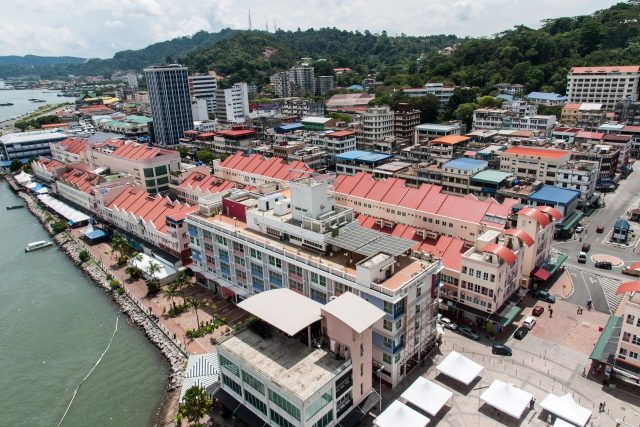
Walk through the surrounding streets, and you’ll see how the cathedral fits into the city’s landscape. Nearby, old colonial houses stand alongside narrow lanes leading to the waterfront, while modern buildings slowly encroach on the historic core. Yet the cathedral remains, a quiet anchor in a changing city. For many locals, it’s a reminder that Sandakan isn’t just a port or a trading hub—it’s a place with a soul, shaped by the people who’ve called it home.
Visiting St. Mary’s isn’t about expecting something spectacular. There are no golden domes, no elaborate frescoes, no priceless relics. Instead, its charm lies in its understated presence. It’s a place where history feels tangible, not because of flashy displays, but because of the stories embedded in its walls. That’s why those who wander in often linger—sitting in the quiet, listening to the murmur of prayers, and thinking about the lives that have passed through this space over the decades.
The cathedral doesn’t demand attention. Its beauty reveals itself slowly, much like Sandakan’s own story. Here, faith, history, and everyday life intertwine so naturally that they become impossible to separate. And perhaps that’s the point. St. Mary’s isn’t just a building; it’s a living part of the city, a place where the past and present coexist without fuss. For those who take the time to notice, it offers something far more meaningful than spectacle.