The Cathedral of Our Lady of the Immaculate Conception in Manaus is one of those quiet places where the city’s past and present flow together without fuss. Built in the late 19th century, when Manaus was booming from the rubber trade, the cathedral stands as a reminder of that brief, glittering era. Wealthy merchants and plantation owners, flush with money, poured funds into grand buildings, and the church was no exception. Its design reflects the European tastes of the time—local elites, eager to mimic the capitals of the Old World, favored neoclassical styles, and the cathedral’s clean lines and columns fit neatly into that vision.
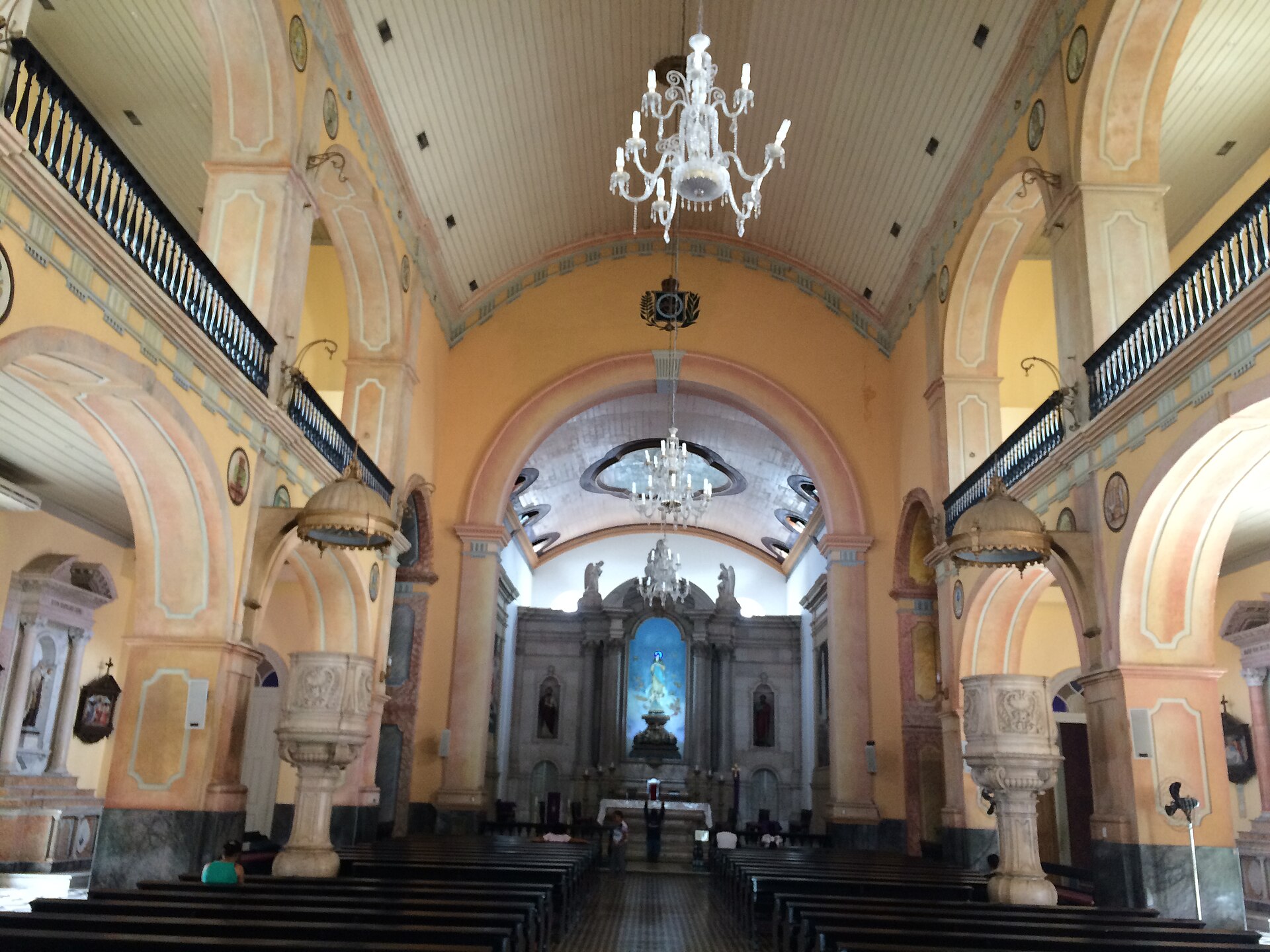
From the outside, the building is unassuming yet elegant. The white facade, with its triangular pediment and tall columns, echoes the temples of ancient Greece, while the dome and high windows give it a sense of dignity. Inside, the space feels airy and bright, though the decor is modest. The altar is adorned with wooden saints, and the walls bear simple frescoes that may not be masterpieces but still carry a quiet warmth. Unlike some of Brazil’s more ornate cathedrals, this one doesn’t dazzle with gold or marble. Instead, its understated charm makes it feel more human, more rooted in the everyday life of the city.
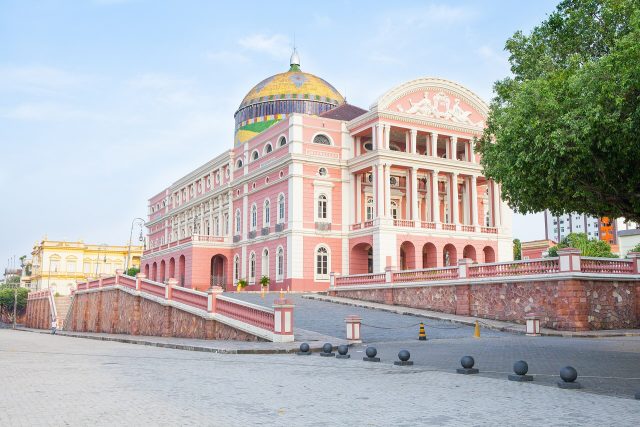
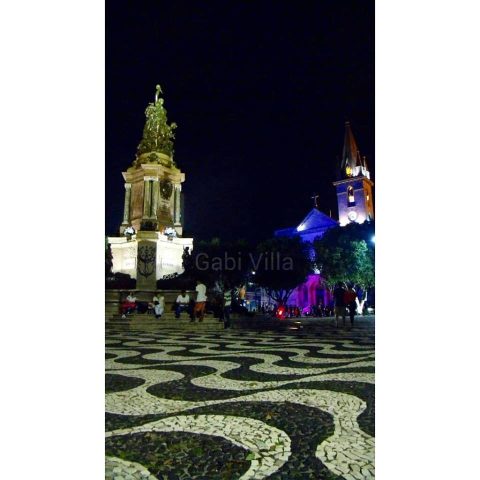
The cathedral sits in the heart of Manaus, on a square that was once the city’s bustling center. Nearby stand other remnants of the rubber boom—Teatro Amazonas, the Palace of Justice—making it easy to wander from one historic site to another. The area is always lively. Locals come for mass, tourists pause for photos, and vendors sell cold drinks from stalls. On feast days, the square fills with music and crowds, and the cathedral becomes the focal point of celebrations. Even on ordinary days, there’s a sense of movement around it, a rhythm that belongs to the city itself.
Manaus grew almost overnight during the rubber boom, and the cathedral was one of the first stone structures in a town that had been mostly wooden. Its construction marked a shift—not just in architecture, but in the city’s identity. When the boom ended, Manaus fell into decline, and many of its grand buildings were left to decay. The cathedral, though, remained in use, a constant presence in the community. Today, it’s still an active place of worship, where baptisms, weddings, and daily services take place. That continuity gives it a different kind of significance, one that goes beyond its architectural value.
For those curious about the Amazon’s history, the cathedral offers more than just a pretty facade. It’s a small but telling piece of the region’s past, showing how European influences blended with local life. Inside, you might stumble upon a modest exhibit about Manaus’s history, though nothing as polished as what you’d find in a museum. Still, even these small displays hint at the layers of time embedded in the city—how it rose, fell, and rose again, always shaped by the river and the forest around it.
A visit here doesn’t take long, but it’s a chance to step away from the usual tourist path. Unlike Teatro Amazonas, which can feel crowded with visitors, the cathedral has a slower, more relaxed pace. You can sit on a bench outside, watching the city go by, or duck inside to escape the midday heat. In the evening, the facade is softly lit, and the building takes on a different character, its white walls glowing against the dark sky.
What makes the Cathedral of Our Lady of the Immaculate Conception special isn’t its fame or grandeur, but its authenticity. It’s not a place that tries to impress; it simply exists, as it has for over a century, woven into the fabric of Manaus. There’s no touristy sheen here, just the quiet hum of daily life—people coming and going, the sound of footsteps on the square, the occasional chime of the bells. For anyone who wants to understand Manaus not just as a gateway to the Amazon, but as a city with its own story, the cathedral is one of those places that lingers in the memory long after you’ve left.