The Amazon Theatre isn’t just a building in Manaus—it’s a monument to a city that once dreamed of grandeur in the middle of the jungle. Built at the height of the rubber boom in the late 19th century, when fortunes were made overnight and the elite of Manaus wanted nothing less than European sophistication, the theatre was their answer. Its opening in 1896 was an event that echoed far beyond Brazil, a declaration that even here, in the heart of the Amazon, culture could flourish. For a time, the theatre was the jewel of the city, hosting operas with Italian singers and drawing audiences who arrived by steamboat along the Rio Negro, eager to witness something extraordinary.
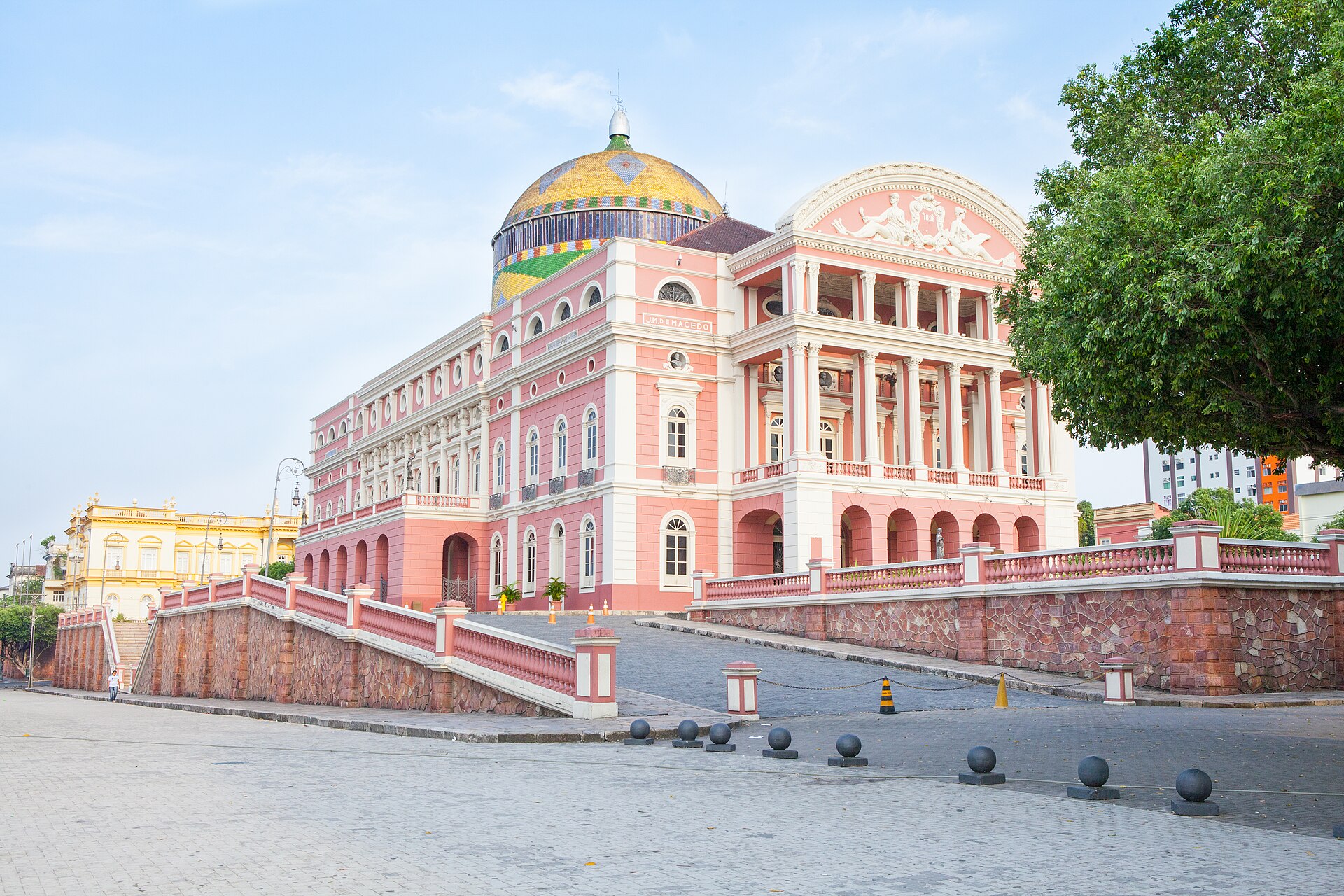
From the outside, the theatre is impossible to ignore. Its pink façade, framed by white columns and topped with a dome covered in 36,000 ceramic tiles in the colors of the Brazilian flag, looks like it belongs in a different era. The architects took inspiration from the Palais Garnier in Paris but gave it a distinctly Amazonian twist. The frontispiece features allegorical figures representing music, dance, and tragedy, while inside, murals depict the region’s lush landscapes. The result is a building that feels both transplanted and perfectly at home in Manaus, as if it has always been part of the city’s fabric.
Step inside, and the opulence is overwhelming. The auditorium, with its 700 seats, is a masterpiece of red wood sourced from the surrounding rainforest, its walls and balconies adorned with gold leaf and intricate carvings. A massive chandelier hangs from the ceiling, which is painted with scenes from Greek mythology, casting a warm glow over the space. The theatre has preserved much of its original splendor, though it hasn’t always been this way. After the rubber boom faded, Manaus fell into decline, and the Amazon Theatre shared its fate, serving as a cinema, a warehouse, and at times, little more than an abandoned relic.
For decades, the theatre stood as a reminder of what Manaus had lost. It wasn’t until the 1980s that a restoration effort began, slowly bringing the building back to life. Today, it’s once again a vibrant cultural space, hosting classical concerts, modern Brazilian music, and the occasional opera. But more than that, it’s a bridge between past and present, a place where the ambitions of the rubber barons meet the realities of modern Amazonia. The theatre’s history is a story of resilience—of a city that refused to let its golden age fade into obscurity.
To the people of Manaus, the Amazon Theatre is more than a tourist attraction; it’s a symbol of their identity. The city is often seen as little more than a gateway to the jungle, but the theatre gives it a cultural weight that lingers in the imagination. Locals bring their children here to learn about the city’s history, while visitors wander through its halls, snapping photos of the grand staircase and the ornate ceilings. Musicians, too, find inspiration within its walls, drawn to the echoes of performances past.
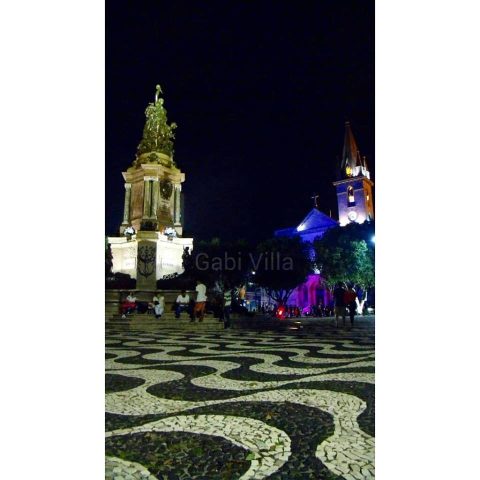
The area around the theatre is just as lively. The square in front buzzes with activity—vendors selling handmade crafts, street performers playing samba, and the hum of conversation filling the air. Nearby, the old mansions of the rubber barons stand as silent witnesses to a time when Manaus was one of the wealthiest cities in the world. The architecture shifts from block to block, from the lavish eclecticism of the theatre’s era to the more modest buildings that hint at the city’s later struggles. It’s a reminder that Manaus’s prosperity was fleeting, but its cultural legacy endured.
Visiting the Amazon Theatre is about more than admiring its architecture. It’s a chance to step into the spirit of a city that once believed it could rival the great capitals of Europe. The theatre still carries the energy of that era, when Manaus was a place of ambition and excess, where fortunes were made and lost in the blink of an eye. It’s a testament to how fragile such grandeur can be, but also to how culture can outlast even the most dramatic shifts in fortune. Even if opera isn’t your thing, the theatre is worth a visit—if only to see how art and history can come together in a place that feels both timeless and utterly unique.
Today, the Amazon Theatre stands as a reminder that Manaus was never just a city on the edge of the wilderness. It was once the capital of the rubber boom, a magnet for adventurers and entrepreneurs from around the world. The theatre witnessed the rise and fall of that era, and now, as tourists flock to the Amazon for its natural wonders, it offers a different kind of experience—one that tells the story of a city that dared to dream big, even in the middle of the jungle. It’s a story of how ambition can take physical form, how a building can become a symbol, and how the past can still feel alive in the present.