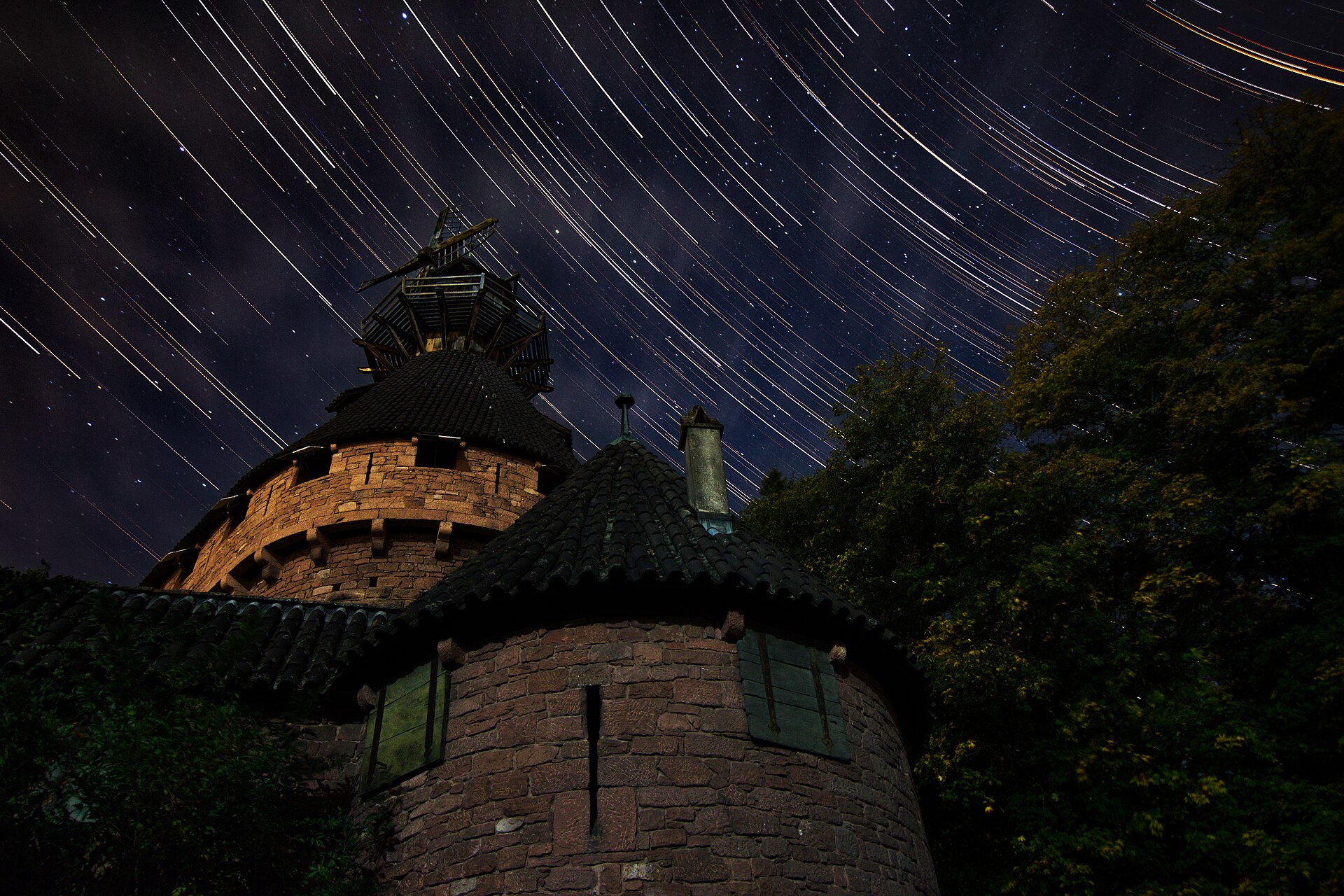
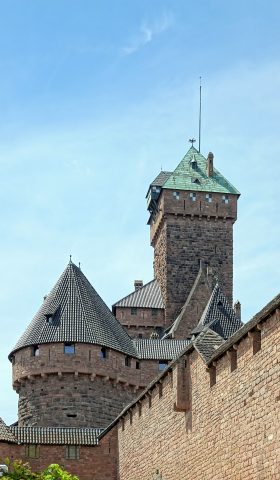
Perched on a rocky ridge in the Vosges Mountains, the Upper Koenigsbourg Castle is a place where history feels both tangible and carefully curated. Built in the twelfth century as a stronghold for the Hohenstaufen dynasty, the castle has seen centuries of conflict, decay, and eventual rebirth. Its current appearance is the result of an early twentieth-century reconstruction ordered by Wilhelm II, who sought to revive the romantic ideal of a medieval fortress. The architect Bodo Ebhardt was tasked with this ambitious project, blending historical elements with the imagination of what a castle should have been. Today, the castle functions as a museum, its halls filled with suits of armor, intricate tapestries, and antique weaponry, each piece telling a story of a bygone era.
The journey to the castle begins long before you reach its gates. A winding road cuts through dense forests, where towering trees cast long shadows even on the sunniest days. The air is cool and fragrant with the scent of pine and damp earth, a quiet prelude to the grandeur that awaits. As you ascend, the castle gradually comes into view, its imposing silhouette rising above the treetops. The first glimpse is striking—battlements, drawbridges, and courtyards evoke images of knights and sieges, a scene straight out of a medieval chronicle. Yet the true magic of this place lies not within its walls, but beyond them.
On the eastern side of the castle, a viewing platform juts out from the edge of the cliff, offering a panorama that stretches far beyond the Vosges. Below, the Rhine Valley unfolds in a patchwork of vineyards, villages with terracotta roofs, and the winding ribbon of the river. On clear days, the Black Forest and the Jura Mountains rise in the distance, their outlines softened by haze. The view is especially breathtaking at sunset, when the golden light bathes the castle in warmth, and the shadows of its towers stretch across the slopes like silent sentinels. It’s a moment that lingers, a reminder of how landscapes shape history and how history, in turn, shapes the way we see them.
Inside the castle, the experience is one of stepping into a carefully constructed past. The narrow corridors, stone staircases, and dimly lit chambers create an atmosphere of quiet reverence. The chapel, with its stained-glass windows, offers a moment of stillness, while the armory and great hall display artifacts that, though not all original, evoke the lives of those who once walked these halls. The reconstruction was less about historical accuracy and more about capturing the spirit of the Middle Ages, a romanticized version that reflects the ideals of its time. It’s a fascinating contrast—the castle as both a monument to history and a product of its own era’s imagination.
Beyond the castle walls, the surrounding forests invite exploration. Hiking trails weave through beech and oak groves, leading to other ruins like Frankenburg Castle or the remnants of Ortenberg. The paths are quiet, frequented only by the occasional forager or hiker, and the air is thick with the scent of wild herbs and damp leaves. These woods have witnessed centuries of change, from the comings and goings of medieval lords to the modern-day visitors who now tread the same ground. The trails offer a chance to step away from the castle’s grandeur and into the quieter, wilder side of the Vosges.
For those who venture down into the valley, the landscape shifts once more. The road leads to small Alsatian towns where half-timbered houses line narrow streets, and wine cellars offer a taste of the region’s renowned vintages. This is a place where time moves at its own pace, where the rhythm of life is dictated by the seasons and the slow, steady work of the vineyards. The villages feel untouched by the rush of modern tourism, their charm lying in their simplicity and authenticity. A meal here is a celebration of local flavors—sauerkraut with sausages, *flammekueche* topped with cheese and onions, or *choucroute* with fish, all paired with a glass of Riesling or Gewürztraminer from a nearby vineyard.
The drive to Upper Koenigsbourg is part of the experience. From Strasbourg or Colmar, the journey takes about an hour, winding through rolling hills and past villages where life seems to move a little slower. The vineyards stretch endlessly, their rows of vines a testament to the region’s winemaking heritage. Along the way, the landscape shifts from the flat plains of the Rhine to the rugged foothills of the Vosges, each turn in the road revealing another layer of Alsace’s beauty.
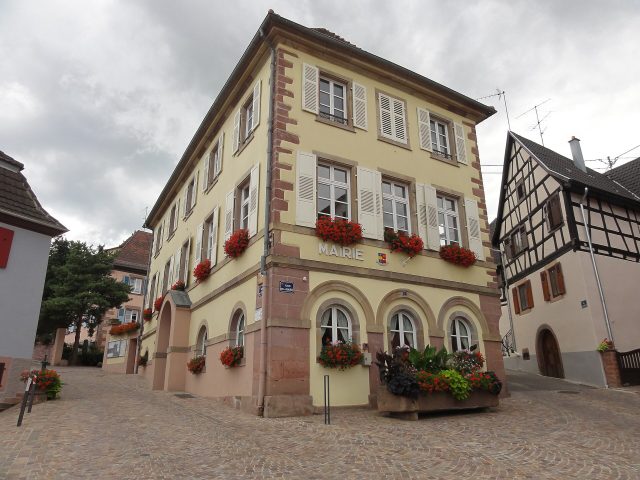
Orschwiller, the closest village to the castle, is a quiet place where the past and present coexist. Here, the local cuisine is a reflection of the region’s history—German influences mingling with French traditions. The food is hearty and flavorful, a reminder of the land’s bounty and the generations of people who have called this place home. A visit to a local *winstub*, or wine tavern, is a chance to savor these flavors while soaking in the unhurried atmosphere of the village.
Upper Koenigsbourg is more than just a castle; it’s a place where history is both preserved and reimagined. The reconstruction under Wilhelm II was as much about politics as it was about heritage, a statement of power and identity in a time of shifting borders. Yet, despite its carefully crafted narrative, the castle feels alive with the echoes of the past. The viewing platform, in particular, is a place of reflection—a spot where you can stand between the grandeur of the fortress and the vastness of the landscape, pondering the layers of history that have shaped this corner of Alsace. It’s a reminder that the past is never truly gone, but rather woven into the fabric of the present, waiting to be discovered anew.