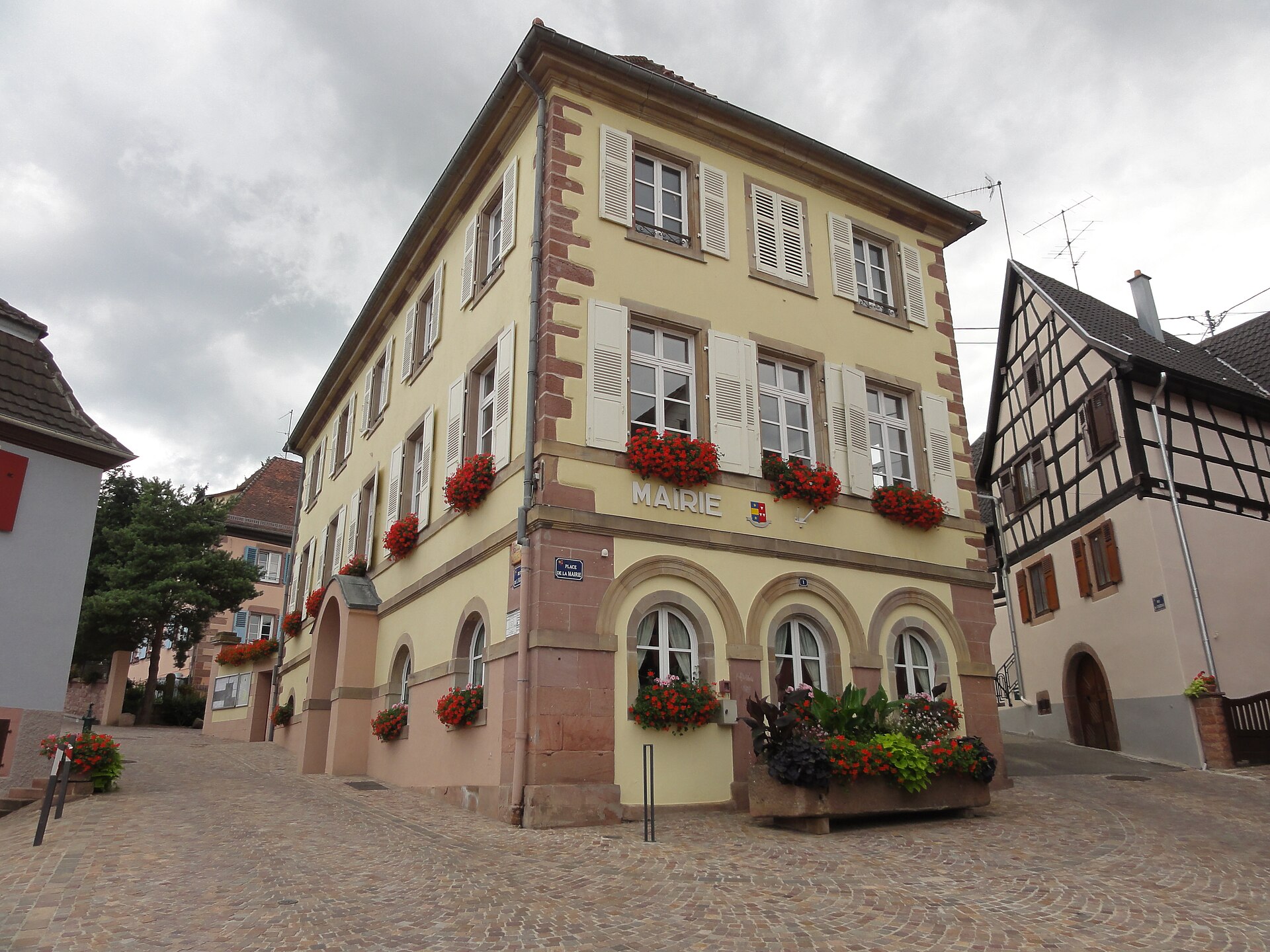
Orschwiller’s town hall doesn’t stand out at first. It’s tucked into a small Alsatian village near the German border, where French and German influences have blended for centuries. The building is plain—no grand arches or towering spires—but its architecture tells a story. Clean lines from French classicism meet the sturdy timber frames typical of German design. Unlike many historic buildings now preserved behind barriers, this one still serves its original purpose: council meetings, marriage registrations, and the everyday work of the village happen here.
The town hall dates back to the 18th century, when Alsace changed hands between powers more than once. Orschwiller was never a major city, but it was a trading hub, and its leaders needed a building to match. The earliest version was likely smaller, expanded over time as the village grew. Records from that era are sparse, but the building itself has endured. Locals still share stories of justice administered within its walls, deals struck in its halls, and festivals that once filled the cobblestone square outside.
The façade is built from pale Alsatian sandstone, giving it a warm, understated look. Tall windows with wooden shutters add dignity, while the interior reveals its age: exposed wooden beams, a staircase worn smooth by centuries of footsteps. The coat of arms above the entrance has faded, but the structure remains solid. Today, the mayor’s office and municipal services still operate here. Step inside on a weekday, and you’ll see modern life unfolding within walls that have stood for over two hundred years.
What makes this town hall different is its lack of fuss. There are no crowds, no souvenir stands, no guided tours—just a building that has quietly witnessed village life for generations. The small square in front is where farmers set up stalls in the morning, neighbors gather in the evening, and café tables appear in summer. It doesn’t try to impress; it simply exists, a backdrop to daily routines.
For those interested in Alsace’s history, the town hall offers a quiet insight. It’s not as famous as Strasbourg’s or Colmar’s grand civic buildings, and that’s its appeal. Here, you can stand in the square and imagine past market days—the clatter of carts, the voices of merchants haggling over goods. Alsace is a region where history feels tangible, and Orschwiller is no exception. Even in a small village, the past lingers if you know where to look.
The town hall reflects Alsace’s cultural duality. Orschwiller is a place where French lightness meets German thoroughness. Street signs often bear two names, and locals switch between languages effortlessly. Inside the town hall, this blend is visible in bilingual documents, the occasional German word in conversation, and traditions from both sides of the border coexisting. It’s not just an administrative building; it’s a symbol of how two cultures can shape a place without erasing what makes each unique.
If you visit Orschwiller, pause by the town hall. Step inside if the doors are open, or sit on a bench across the square and watch the village go by. You might see a wedding spilling onto the steps or a harvest festival filling the air with music and the scent of fresh bread. In those moments, the town hall becomes more than a building—it’s part of the community’s fabric.
This isn’t a place you’ll find in most guidebooks. It doesn’t demand attention; it just is. And that’s what makes it worth noticing. History isn’t only about grand events or famous figures—it’s also about the quiet, unremarkable moments of daily life. There’s nothing staged here, nothing designed to dazzle. Just authenticity, and that’s what gives it value.