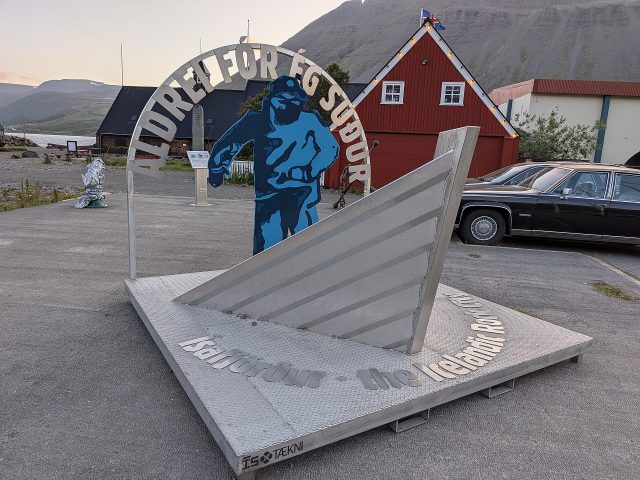
Ísafjörður clings to the edge of Iceland’s Westfjords, where the land stretches wide yet feels close enough to touch. Above it, Tungafell rises—a mountain that asks little but gives much.
The path up starts near the town center, winding through loose scree and patches of tough grass. It’s steep in places, but the reward comes quickly: within minutes, Ísafjörður shrinks below you, replaced by the raw sweep of the fjord. Moss clings to the slopes, peaks jag in the distance, and the water below shifts with the light. On clear days, the view stretches to other inlets and the faint blue of distant glaciers. In winter, the mountain is empty, save for those who come to watch the northern lights dance over the water.
The town below has always lived by the sea. For generations, its harbor was one of Iceland’s busiest, and from Tungafell’s summit, you can still see the boats coming and going. The houses—painted red, blue, green—stand out against the gray rock and water. The old church by the waterfront and the warehouses along the docks are remnants of a time when fishing fed the town. Even now, life here moves with the tides.
Tungafell doesn’t try to impress. There are no railings, no signs, no cafes selling overpriced coffee. Just wind, gulls, and the quiet shift of light over the fjord. Locals sometimes bring thermoses and sit on the rocks, watching the weather change the view—mist rolling in, sunlight breaking through, the water turning from gray to blue. Each moment feels like finding something you didn’t know you were looking for.
If you’re used to marked trails and guided tours, Tungafell might feel too simple. But that’s why it works. There’s nothing staged here. Just the land, the town below, and the sky above. Come in the morning, when fog hugs the fjord, or in the evening, when the sun turns the mountains pink. In those moments, you’ll understand why people come to Iceland—not for the spectacle, but for the quiet.
From the top, you can watch Ísafjörður wake up. Smoke curls from chimneys, boats head out to sea, children walk to school. By midday, a few tourists wander the streets, but the Westfjords stay quiet. By evening, the town’s lights glow like stars against the dark water. Tungafell watches it all, unchanged.
If you’re in Ísafjörður, climb this mountain. You don’t need hours—just enough time to sit, look around, and feel the space. It won’t give you grand stories or dramatic views. Instead, it offers something better: the chance to stop and realize that the most meaningful places are often the quiet ones, where the world feels both vast and deeply yours.