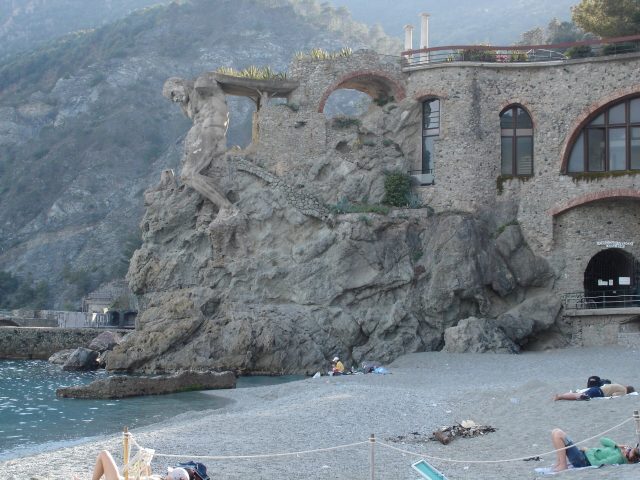
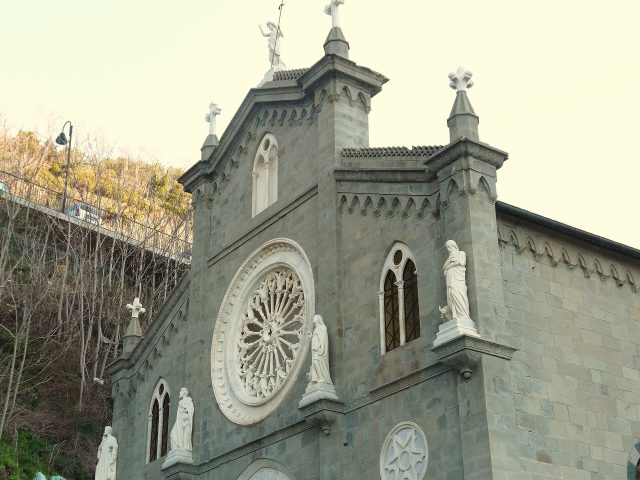
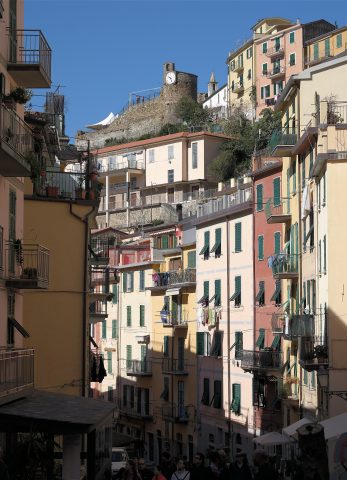
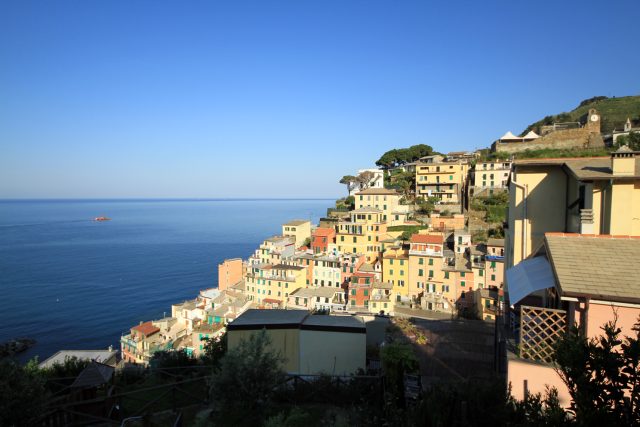
Riomaggiore is one of those rare places where time seems to slow down, almost as if the village itself is breathing. The houses, stacked tightly against one another, tumble down the steep hillside toward the sea, their pastel facades glowing in the sunlight. Narrow alleys twist between them, inviting you to wander without direction, to lose yourself in the quiet rhythm of the place. But if you climb just a little higher, the view from the lookout point makes every step worthwhile. This isn’t just another scenic overlook—it’s a place where you can take in the entire village at once, from the colorful buildings huddled along the shore to the fishing boats bobbing in the harbor and the endless expanse of the Ligurian Sea stretching beyond.
The lookout sits on a gentle slope above the village, offering a sweeping panorama of Riomaggiore and its surroundings. There are no crowds here, no bustling cafés or souvenir stands—just the sound of waves crashing against the rocks below and the occasional cry of seagulls overhead. Weathered wooden railings guide you along the path, while scattered benches invite you to sit and linger, watching the light shift across the water. The best time to visit is at sunset, when the fading sun paints the houses in warm gold and amber, casting long, soft shadows that blur the edges of the landscape.
Riomaggiore is the oldest of the five villages that make up Cinque Terre, with roots stretching back to the 12th century. It began as a small fishing community, where life was dictated by the sea—its moods, its rhythms, its dangers. The houses were built close together for protection, their narrow windows and winding streets designed to shield residents from both the harsh winds and the threat of pirates. Over the centuries, the village grew, but it never lost its raw, unpolished charm. The lookout point came later, when travelers began to discover this corner of Liguria. It wasn’t built as a tourist attraction but rather emerged naturally, as an extension of the paths locals had used for generations to reach the vineyards and olive groves above the village.
The architecture of Riomaggiore tells a story without words. The houses weren’t planned—they simply grew, adapting to the steep terrain, each one unique. Some are adorned with faded frescoes, others with simple wooden shutters painted in bold blues, reds, and yellows. From the lookout, you can see how these buildings blend into the landscape, their terraces cascading down the hillside like steps carved into the earth. On clear days, the neighboring villages of Manarola and Corniglia appear in the distance, tiny and perfect, as if part of a living postcard. The view makes it easy to understand why this place has captivated visitors for so long.
This isn’t a spot for those in a hurry. The lookout rewards patience—those who stay long enough to feel the pulse of the village rather than just snap a photo and move on. In the early morning, when fishermen return with their catch and locals open their shutters to the day, the air is filled with the quiet energy of a place that has woken up slowly, deliberately. You might see women hanging laundry on lines strung between houses, children playing near the harbor, or elderly men sitting on benches, talking in low voices. By evening, when the lights flicker on in the windows below, the village transforms into something magical, each house glowing like a lantern against the darkening sky.
The lookout is also part of the famous Cinque Terre trail, the network of paths that connects all five villages. The climb here isn’t easy—hundreds of steps wind up the hillside, testing your stamina—but the effort is worth it. The trail passes through vineyards where grapes are still grown for local wine, past ancient stone walls and tiny chapels that have stood for centuries. Signs along the way remind you that this route wasn’t made for tourists; it was carved by the people who lived here, who walked these paths long before the rest of the world discovered their home.
Riomaggiore isn’t just about the sea and the cliffs—it’s about the people who call this place home. Their lives are woven into the landscape, and the lookout offers a glimpse of that connection. There’s no rush here, no urgency. Time moves to the rhythm of the waves and the shifting light. You could spend hours on one of the benches, listening to the water below and watching the boats sway gently in the harbor. If you’re lucky, you might see fishermen mending their nets or preparing their boats for the next voyage, a scene that feels like a window into another era.
This isn’t a place for those seeking luxury or excitement. Riomaggiore is for those who appreciate quiet beauty, the kind that lingers in your memory long after you’ve left. The lookout isn’t just a viewpoint—it’s a doorway to a different way of life, one where time moves more slowly and the world feels a little simpler. That’s why people return, year after year, to watch the sun dip below the horizon, turning the sea into a canvas of pink and gold, while the village below becomes part of something timeless.