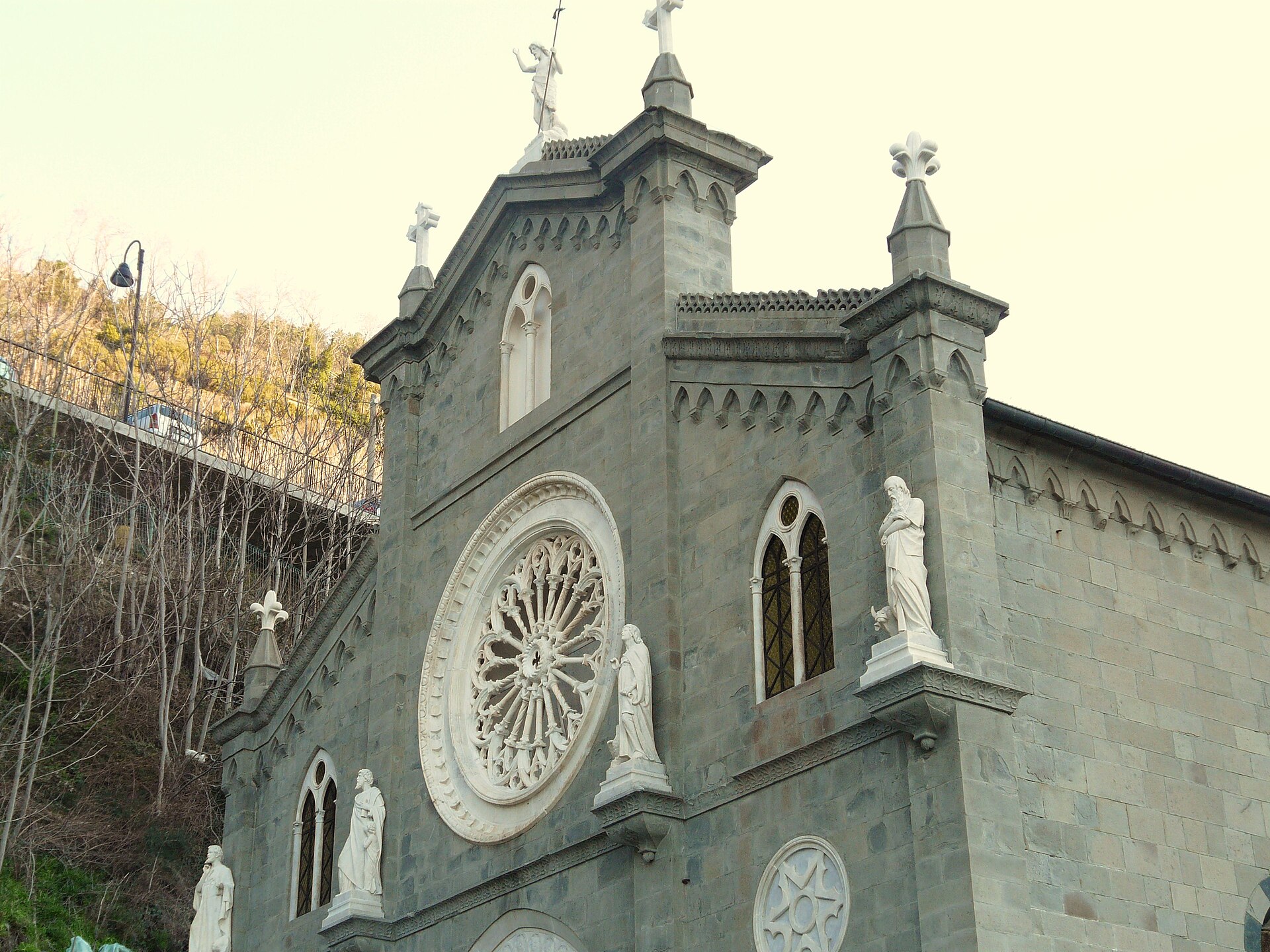
Perched on a small square in the heart of Riomaggiore, the Church of San Giovanni Battista feels like a quiet witness to centuries of life in this Ligurian village. Its unassuming stone facade blends into the narrow streets, where houses press close together and the hum of daily life spills out from open windows. From the outside, it might seem like just another small parish church, but step inside, and the weight of its history becomes immediately apparent.
The origins of the church stretch back to the 13th century, though no one knows exactly when it was first built. Some believe it stands on the site of an even older sanctuary, perhaps dating to Roman times, when this stretch of coastline was already settled. By the Middle Ages, it had become the spiritual and social center of Riomaggiore, a place where births, marriages, and deaths were marked, where fishermen prayed for safe voyages and families gathered for feast days. The church wasn’t just a building—it was the heartbeat of the village.
The architecture reflects the practical, unpretentious style of Liguria’s coastal towns, where Gothic and Romanesque influences merged with local traditions. The facade is simple, with a small rose window and a modest arched doorway, while the interior is divided into three low-ceilinged naves by sturdy columns. The space feels intimate, almost protective, as if designed to shelter rather than impress. The marble altar and the faded remnants of frescoes hint at a past when the walls were alive with color, though time and the damp sea air have worn much of it away.
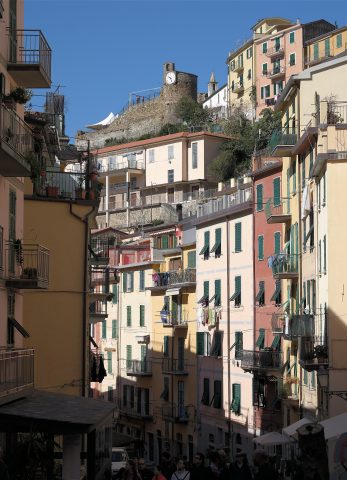
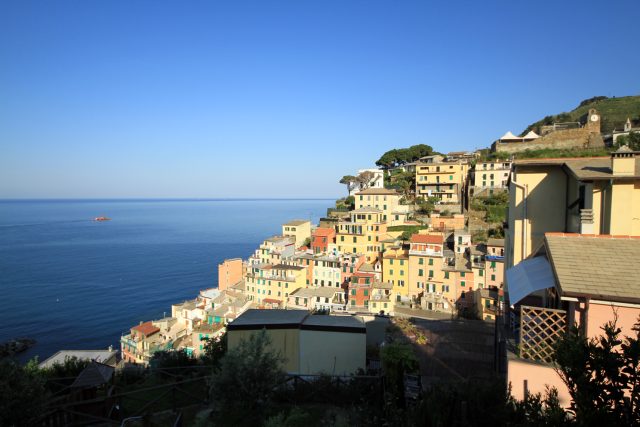
The bell tower, added in the 16th century, was more than just a call to prayer. In an era when pirate raids were a constant threat, it served as a lookout, its bells warning villagers of approaching danger. Locals would rush to the church for refuge, trusting in its thick walls and the protection of the saints. Today, the tower offers one of the best views of Riomaggiore, its winding staircase leading to a vantage point where the village unfolds like a postcard—terraced vineyards, pastel houses, and the endless blue of the sea.
Inside, a few treasures have survived the centuries. The most striking is a 15th-century wooden crucifix, its lifelike depiction of Christ capturing both suffering and serenity. The figure’s expressive face and posture make it feel almost alive, and locals still regard it with reverence, believing it holds a special power. Nearby, an 18th-century altarpiece of John the Baptist stands out with its bold, almost folk-art colors, a reminder of the simpler devotional art that once filled churches like this one.
Though Riomaggiore is now a popular stop for travelers, the church remains a place of quiet devotion. On Sundays, the pews fill with locals, and the scent of incense lingers in the air. The biggest celebration comes on June 24th, the feast day of John the Baptist, when the village erupts in festivities. The square outside the church becomes a market of sorts, with stalls selling sweet local pastries, wine, and handmade crafts, while fireworks light up the night sky over the water.
For visitors, the church offers a moment of respite from the bustle of the Cinque Terre’s tourist trail. It’s cool and dim inside, the thick stone walls muffling the sounds of the outside world. Even in high season, it’s rarely crowded, and the stillness makes it easy to imagine the generations of fishermen, wives, and children who once knelt here in prayer. The worn wooden benches, the flickering candlelight, the occasional creak of the door—it all feels deeply human, untouched by the gloss of modern tourism.
Riomaggiore moves at its own pace, and the Church of San Giovanni Battista is one of the places that makes that rhythm tangible. It doesn’t have the grandeur of Florence’s cathedrals or the fame of Rome’s basilicas, but that’s precisely why it feels so real. Here, history isn’t preserved behind glass or roped off for display—it’s woven into the fabric of everyday life. The church stands as it always has, a quiet constant in a village that has seen countless changes, yet remains, in many ways, the same.