Riomaggiore is one of those Italian towns where the sea feels like an extension of the streets, and the houses seem to grow straight out of the cliffs. There are no grand promenades or luxury beach resorts here—just a small, unassuming cove tucked between rocky shores and colorful buildings. It’s not the kind of place you visit for pristine sand or designer sunbeds, and that’s exactly what makes it special. Everything here is real: the crash of waves, the scent of salt and seaweed, the cries of gulls circling overhead in search of their next meal.
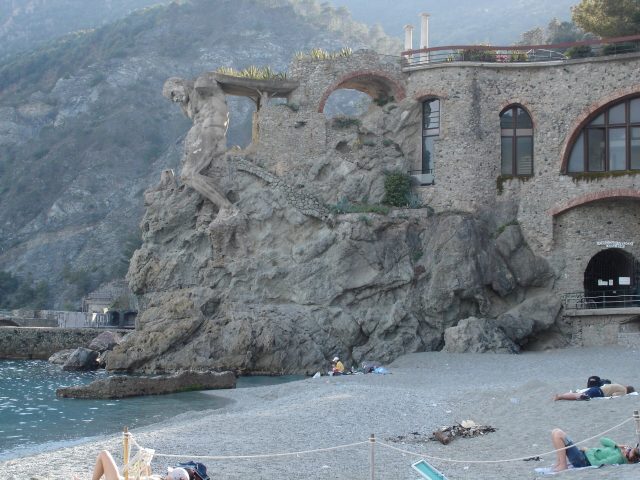
The beach at Riomaggiore is more of a hidden inlet than a traditional stretch of shore. A narrow strip of pebbles and rocks, squeezed between cliffs and a breakwater, accessible only by steep steps or a winding path that snakes between houses. The water is clear but cool, even in summer, because the sea here drops off quickly into deep, dark blue. People don’t come to sunbathe so much as to swim, dive from the rocks, or simply sit at the water’s edge, watching the light dance on the waves. On hot days, the cove can get crowded, yet the cliffs create a natural barrier, keeping the space feeling intimate and secluded.
Like the other villages of Cinque Terre, Riomaggiore’s history is tied to the sea. Once a humble fishing community, life here followed the rhythm of the tides. Fishermen set out at dawn and returned by evening with their catch, which they sold at the small market by the harbor. The beach wasn’t a place for leisure back then—it was a workspace. Nets were mended here, fish dried in the sun, and boats prepared for the next voyage. Today, that era is mostly gone, but traces remain: old stone piers, rusted anchors embedded in walls, and a few wooden boats that still rest on the shore, though they haven’t been used in years.
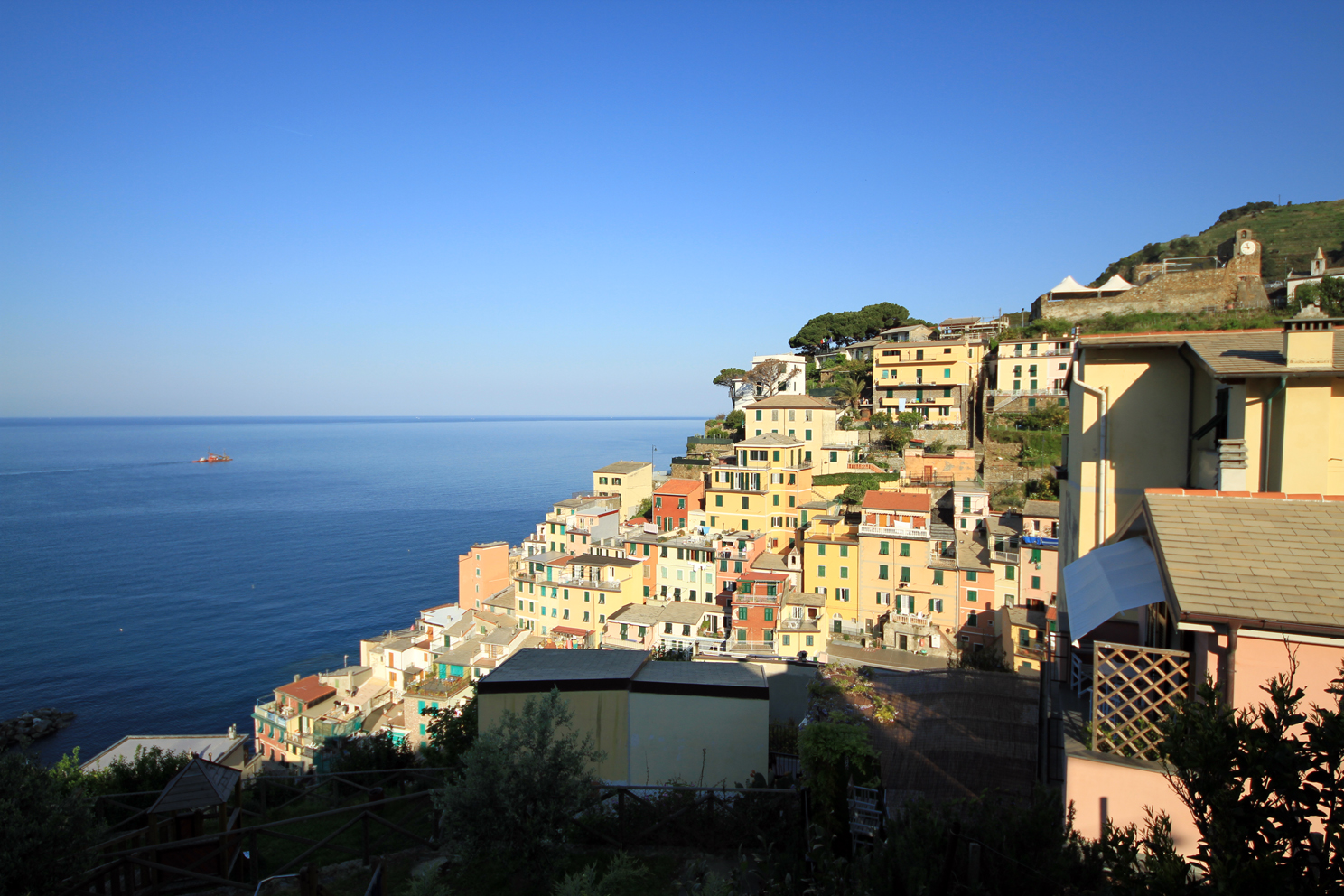
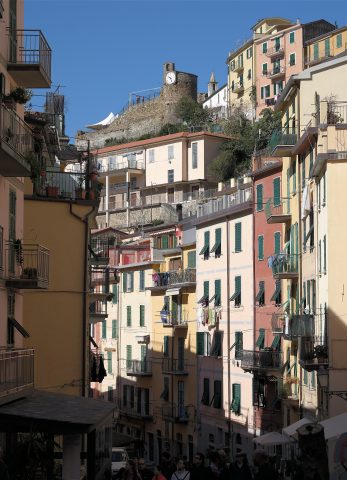
The architecture of Riomaggiore tells its own story. The houses are stacked in layers, clinging to the hillside as if defying gravity, their facades painted in bright hues—pink, yellow, orange, blue—that turn the town into a living postcard. These buildings aren’t just homes; they’re part of a landscape shaped over centuries. Many date back to the Middle Ages, when Riomaggiore was an important stop on the trade route between Genoa and Pisa. Back then, the town was known for its wine and olive oil, shipped to other Italian cities and beyond. Now, while many houses have been converted into guesthouses or cafés, their exteriors are carefully preserved, keeping the village’s character intact.
The beach is woven into the fabric of daily life here. In summer, it hums with activity—tourists arriving early to claim a spot on the pebbles, local teenagers leaping from the rocks into the water, elderly residents sitting on benches by the shore, watching the scene unfold. By evening, when the sun dips below the horizon, the cove empties but doesn’t feel deserted. The last golden light bathes the cliffs, and the sea begins to shimmer with reflected hues. Sometimes, you might see a fisherman lighting lanterns on a boat, making the water look like it’s scattered with stars.
Winter transforms the beach completely. The crowds vanish, leaving only the sound of waves and the wind whistling between the rocks. The sea turns rough, crashing against the stones with a raw, untamed energy. Locals rarely come down here in the colder months, but those who do say winter in Riomaggiore feels like stepping into another world—one without tourists, without noise, just the sea, the cliffs, and the wind.
Riomaggiore isn’t a place you visit just for the beach. It’s a town where the sea, the mountains, and the people exist in a quiet harmony, creating an atmosphere that’s hard to put into words. The cove is just one piece of that puzzle, but it’s the part that makes Riomaggiore feel alive, authentic, and just a little mysterious. There’s no luxury here, only something far more valuable: a sense of realness that draws people back year after year. Maybe that’s why visitors return—to breathe in the salt air, listen to the gulls, and watch the sun set behind the cliffs, painting the sea in shades of fire.