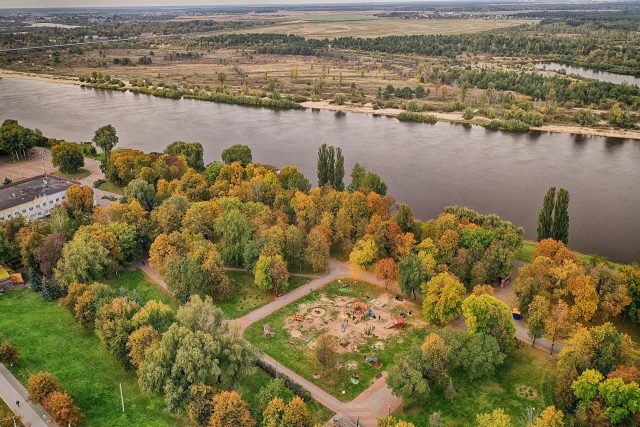
Perched above the slow-moving Pripyat River, Castle Hill is one of those rare places where the past isn’t just remembered—it lingers in the air, in the curve of the land, in the way the wind carries the scent of water and old earth. This modest rise on the edge of Mazyr isn’t just a vantage point; it’s a quiet witness to centuries of human presence, where the layers of history are as tangible as the soil beneath your feet.
Long before it became a favorite spot for evening strolls, the hill was a strategic stronghold. In the 16th century, a fortress stood here, built to guard the southern borders of the Grand Duchy of Lithuania against raids and shifting allegiances. The castle itself is gone now, reduced to little more than earthen ramparts and shallow ditches, but the hill’s purpose hasn’t faded. It still commands a view of the river’s wide, lazy bends, where in medieval times traders moved goods between Kyiv, Poland, and the Baltic lands. The Pripyat was both a highway and a barrier, and the fortress on the hill controlled the crossing. Archaeologists have found traces of even older settlements here—fragments of pottery and tools from the 10th to 12th centuries—proof that people have always been drawn to this spot, where the land and water meet in a way that feels almost deliberate.
Today, the hill is best known for the viewpoint at its summit, where the whole of Mazyr unfolds below. The town sprawls in a patchwork of low-slung houses with red-tiled roofs, their colors muted by time, and church steeples punctuating the skyline. The river glints in the distance, its banks lined with willows and reeds, while beyond it, the landscape softens into fields and forests that stretch toward the horizon. On clear days, you can make out the distant shapes of villages nestled among the trees, their presence announced only by a curl of smoke or the faint outline of a church dome. The view is especially striking at sunset, when the light turns the water to liquid gold and the shadows of the oaks on the hillside stretch long and thin across the grass.
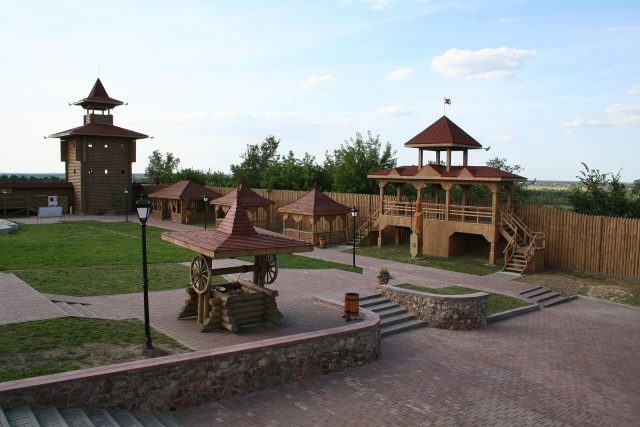
The hill has changed with the town, adapting to each era’s needs. In the 19th century, when the castle was already a ruin, a water tower was built here to supply Mazyr with drinking water. Its brick walls still stand, a relic of a more recent past, though the tower itself is no longer in use. Later, the hill was turned into a park, with paths winding through the trees and benches placed along the edges of the slopes. It’s a place where the past and present coexist without fuss—where children sled down the gentle inclines in winter, where couples walk hand in hand in the summer shade, and where old men sit on benches, watching the river flow as it has for centuries.
What makes Castle Hill special isn’t just the view, though that’s reason enough to visit. It’s the way the place feels alive with history, even in its silence. There are no reconstructed walls or museum displays here, no signs explaining what once stood in this exact spot. Instead, there’s the quiet certainty of the land itself—the way the ramparts still rise slightly above the surrounding ground, the way the wind carries the sound of the river up the slope, the way the light falls just so on the old water tower at dusk. You can walk along the edges of the former fortifications, imagining the wooden palisades that once topped them, or sit on the grass and watch the town below, where life goes on much as it always has, just out of reach of the past.
Mazyr is often called the city of seven hills, and Castle Hill is one of them—not the tallest, not the most dramatic, but perhaps the most revealing. It’s a place where the geography of the region comes into focus: the river as a lifeline, the hills as lookouts, the flatlands beyond as both a blessing and a vulnerability. For centuries, people have settled here, built here, fought here, and left their mark in ways both visible and invisible. The hill doesn’t tell those stories outright, but it holds them, waiting for anyone willing to listen.
In a way, Castle Hill is a reminder of how much of history is written in the land itself. The river still flows, the hills still stand, and the view from the top is much the same as it was hundreds of years ago. The town below has grown and changed, but from this height, it feels timeless—a quiet, unassuming place where the past isn’t just preserved in monuments, but woven into the fabric of everyday life. Whether you come for the view, the history, or simply a moment of quiet, the hill offers something rare: a connection to a place that has seen generations come and go, yet remains, patient and unchanged.